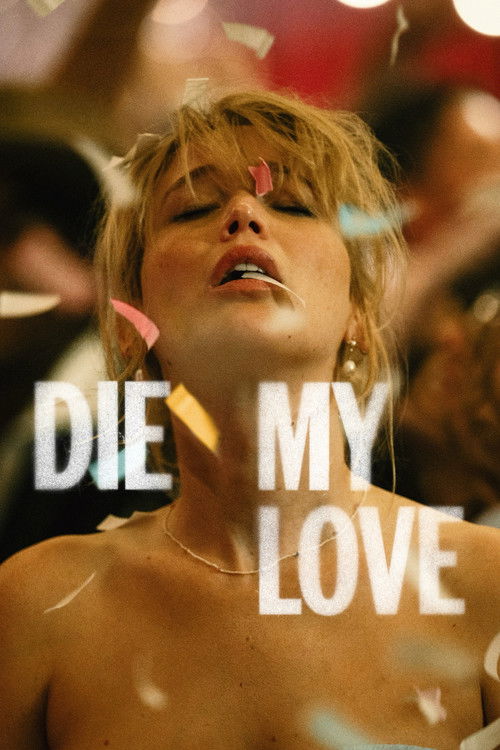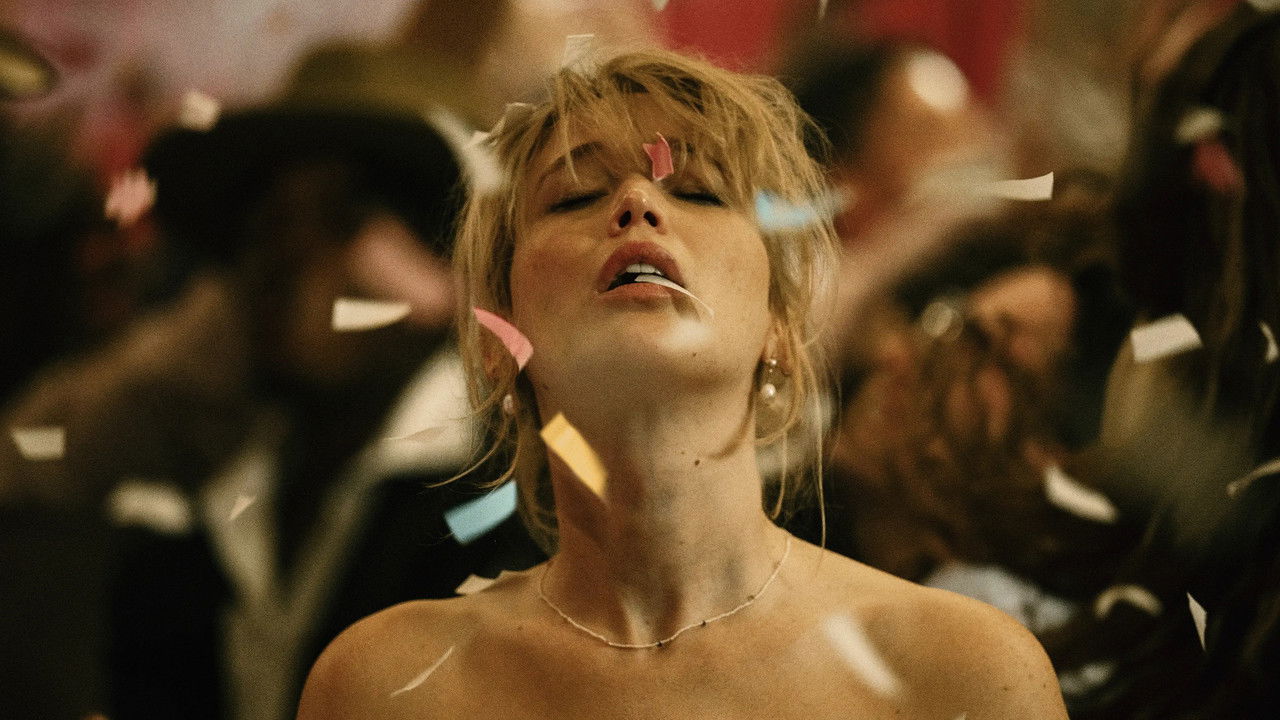

The Animal in the HouseWhen *Die My Love* hit Cannes earlier this year, the consensus seemed to lock in almost instantly: postpartum depression movie. Lynne Ramsay, who has never sounded especially interested in accommodating lazy readings, pushed back hard and called that framing "bullshit." She said the film is about a relationship decaying, a creative block, and sex dying after a baby arrives. I think she's right to resist the diagnosis. We are very eager to medicalize female rage, because once you give it a label you can medicate it, tidy it up, and stop listening to what it might actually be saying. (If a woman is acting feral, calling it a condition is much easier than facing the reason she wants to bite.)

Ramsay has not made a feature since *You Were Never Really Here* in 2017, and you can feel the pressure of those missing years in the opening minutes. The film doesn't ease in. It detonates. Grace (Jennifer Lawrence) is on all fours in the grass outside a decaying house in Montana, a kitchen knife in her hand. A baby cries somewhere on the porch. She does not hurry toward him. She stares across the yard with the fixed, assessing attention of a hunting animal. It's terrifying, and also bracingly honest. Ramsay offers no explanatory voiceover, no neat psychological caption. She just leaves us with the physical fact of a woman living inside a domestic trap so tight it feels like something she might gnaw through.
Jennifer Lawrence has always been an actor who works from the body first. Even in her earliest indie performances, there was a clumsy, grounded heaviness to her that felt lived-in. Here she strips off every last trace of movie-star varnish. For much of the film she looks sweaty, swollen with frustration, and finished with everyone's expectations. Watch her at the children's birthday party. The other mothers move through the rituals of cheerful parenting while Grace drifts off, drinks wine, and hums with contempt. When a well-meaning woman tells her people don't talk enough about how hard parenting is, Grace fires back, "That's all anyone ever talks about." Lawrence doesn't simply say it. She spits it out, jaw locked, shoulders stiff with the sheer weight of what is being demanded of her.

Part of what makes the film hurt is that Jackson, her husband, is not some cartoon monster. Robert Pattinson plays him with a shambling, sad patience. He's just a man who believed leaving New York for his late uncle's rural property might turn into some kind of adventure. He wants to make music. She wants to write a novel. Instead they get a baby and a house that seems to be decaying with them. He paints Grace's toenails. When she ends up hospitalized, he gets on his hands and knees and scrubs the kitchen floor. He really is trying. Somehow that steadiness only makes her lash out harder.
Sheila O'Malley at RogerEbert.com called the movie an "unrelenting fever dream," and that is exactly what Seamus McGarvey's cinematography feels like. Ramsay and McGarvey turn the whole film into an attack on the senses. The camera cuts sharply, lunges sideways, wanders into hallucination. Grace crawls and prowls like a cat because boredom has curdled into something more dangerous. She drifts into surreal fantasies about a local biker played by LaKeith Stanfield. Even the rural landscape betrays her: the vast open space that usually reads as freedom in American movies becomes, here, a prison with a very long fence.

I'm still not convinced it works as a conventional piece of storytelling. By the third act, the movie's spiral starts to feel self-repeating. You keep waiting for some formal shift, some new note, and it never quite comes. Whether that feels like failure or fidelity probably depends on how much patience you have for plot-light, fully subjective cinema. Ramsay has no interest in the reassuring version of this material, the one where Grace learns a lesson, recalibrates, and embraces motherhood.
Instead, the film stays beside her in the dark. It wants to know what happens when the life you are meant to desire starts to feel like a hide you need to tear off. *Die My Love* is abrasive, messy, ugly, and sometimes wickedly funny. I wouldn't call it pleasant, and I doubt I'll rush back to it. But it has stayed under my skin.