
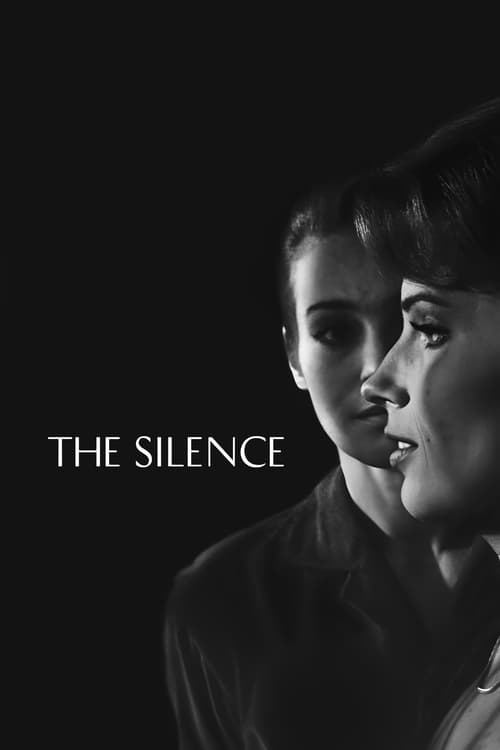
Ester
Ingrid Thulin
Ester

“BERGMAN at his most POWERFUL! SHOCKING! BOLD!”
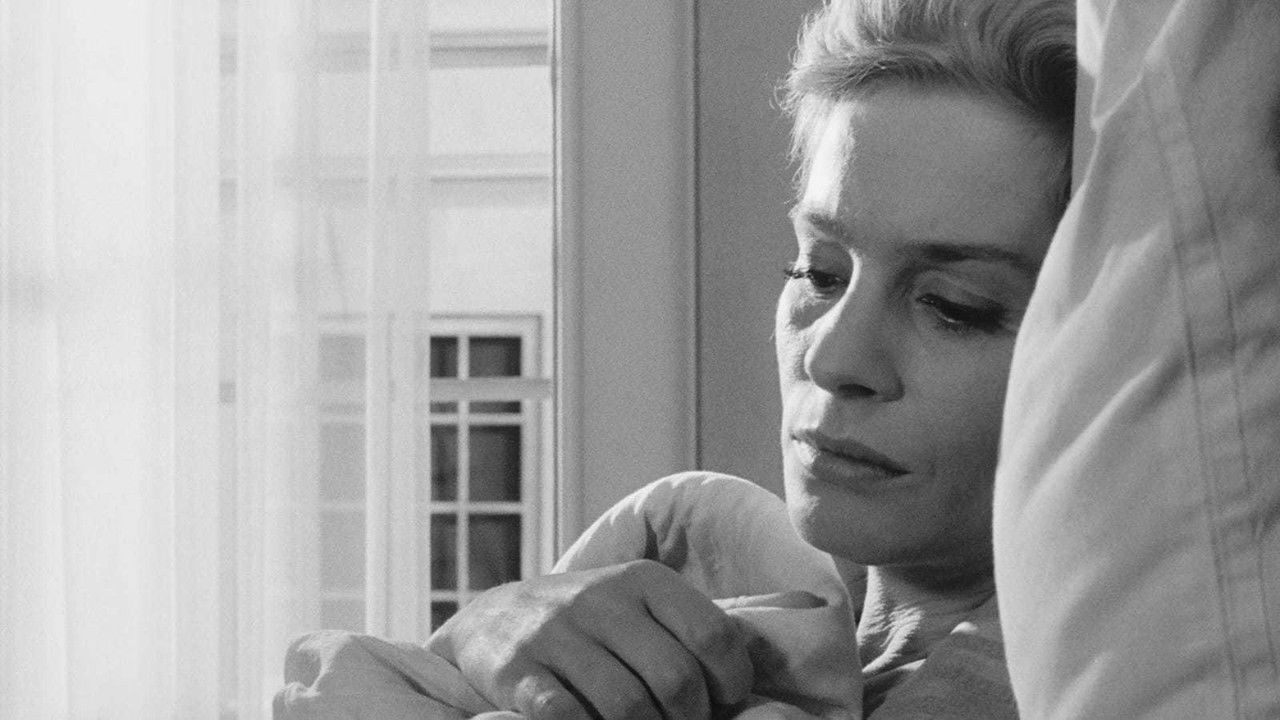
Traveling through an unnamed European country on the brink of war, sickly, intellectual Ester, her sister Anna and Anna's young son, Johan, check into a near-empty hotel. A basic inability to communicate among the three seems only to worsen during their stay. Anna provokes her sister by enjoying a dalliance with a local man, while the boy, left to himself, has a series of enigmatic encounters that heighten the growing air of isolation.
The Silence (1963) Original Trailer [FHD]
Ester
Ingrid Thulin
Ester
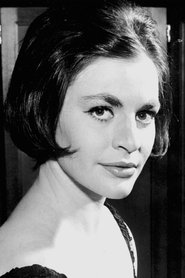
Anna
Gunnel Lindblom
Anna
Bartender
Birger Malmsten
Bartender
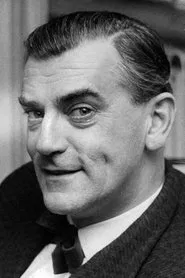
Hotel Steward
Håkan Jahnberg
Hotel Steward
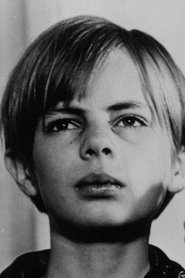
Johan
Jörgen Lindström
Johan
Officer in the Train Compartment
Kotti Chave
Officer in the Train Compartment
Woman in Variety Hall (uncredited)
Lissi Alandh
Woman in Variety Hall (uncredited)
Man in Variety Hall (uncredited)
Leif Forstenberg
Man in Variety Hall (uncredited)
Bar Owner (uncredited)
Eskil Kalling
Bar Owner (uncredited)
Paperboy (uncredited)
Karl-Arne Bergman
Paperboy (uncredited)
Carl Andersson
Olof Huddén
Though they are travelling together through an un-named country, there appears to be little love lost between the poorly “Ester” (Ingrid Thulin) and her younger sister “Anna” (Gunnel Lindblom) who also has her young son “Johan” (Jörgen Lindstrom) in tow, too. Even though “Ester” is a linguist, she doesn’t readily understand the language here and so frequently resorts to sign language to make her self understood. “Anna” uses altogether different methods of making herself understood and that merely serves to irritate her sister who might wish she could be so open, but has no means or confidence to express her sexuality. When “Anna” hooks up with the barman (Birger Malmsten) she rather rubs her sister’s face in it, and that behaviour serves to drive a wedge even further between the pair. All the while the young lad has been left to amuse himself amongst the sprawling corridors of their empty hotel with only really their steward (Håkan Jahnberg) for company as he regales the youngster with tales and photos from his own past life. The film is aptly titled for there is a deliberate paucity of dialogue throughout this darkly framed analysis of just how communication (or lack of it) can impact on the psychology of human beings. It’s “Johan” who provides the only semblance of hope here; of innocence and even a little bit of light as he attempts to straddle the divide between two women whom he loves, in different ways, amidst what becomes an increasingly claustrophobic environment. There is emotional aridness a-plenty here with even the sex scenes devoid of any tenderness or affection, and as we begin to realise just what awaits both of the women as the conclusion looms, a question about “Johan” started to formulate in my mind. Personally, I didn’t get any sense that God was or wasn’t involved in the plot but what I did find somewhat allegorical for modern day viewing is these polar opposites of women showing us a potent precursor for a twenty-first century society that no longer has the instincts to interact, meaningfully, on a personal level with real people, and that isolationism that looms for the future is as bleak as anything Bergman crafted more than half a century ago. It’s not a cheery watch and there is nothing by way of redemption here neither, but it’s strangely affecting and worth a watch.
Read full reviewMore movies you might want to watch next.