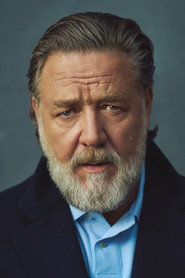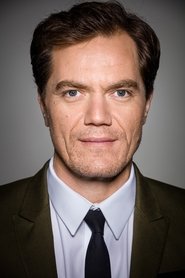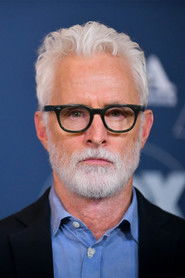

Rami Malek
Douglas Kelley

In postwar Germany, an American psychiatrist must determine whether Nazi prisoners are fit to go on trial for war crimes, and finds himself in a complex battle of intellect and ethics with Hermann Göring, Hitler's right-hand man.
Historical procedurals usually make me wary. Too many of them file the past down into something neat and finished, a solved puzzle where the heroes look sharp and the villains get ushered toward punishment on cue. latestnetflix.com's view is that James Vanderbilt’s Nuremberg is at least trying to disturb that comfort.
It wants the claustrophobia of a psychological duel inside the shell of a courtroom drama, even if it keeps pressing its point harder than it needs to. The idea underneath it is chilling enough on its own: what if the men behind the most mechanized genocide in human history were not supernatural monsters, but ordinary, ambitious, brutally efficient bureaucrats? That’s a terrifying place to begin.
Whether the film really gets there depends a lot on who happens to own the frame from one scene to the next.
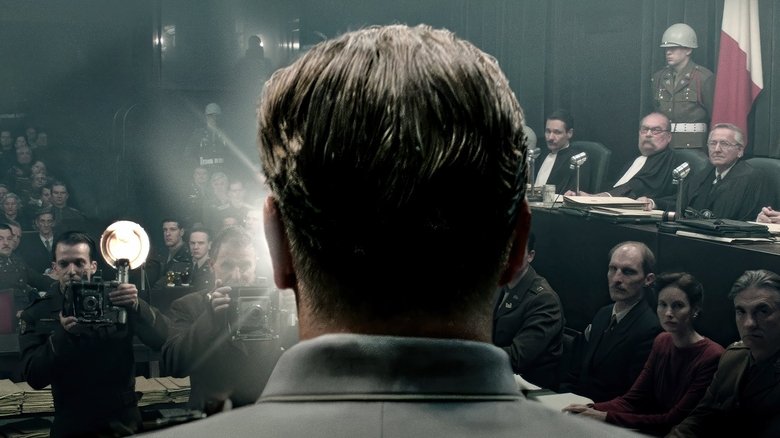
Vanderbilt, still clearly carrying his fascination with systems from David Fincher's Zodiac, moves away from the grand theater of the trials and into the cramped cells beneath the courthouse in his adaptation of Jack El-Hai’s nonfiction book The Nazi and the Psychiatrist. That’s where American psychiatrist Douglas Kelley (Rami Malek) is assigned to evaluate the surviving Nazi leadership, especially Hermann Göring (Russell Crowe).
You can feel what the director wants: a battle of intellects played out in concrete confinement. But the execution can be awfully blunt. When Göring smiles and explains his devotion to Hitler by saying "he made us feel German again," the contemporary political echo isn’t merely suggested; it’s outlined in heavy marker.
"A gripping showcase for Russell Crowe inside a solid but uneven Nuremberg drama that wrestles with tone and historical shortcuts."
The film is widely praised for an intense, mesmerizing turn from Russell Crowe and a generally strong ensemble, with several comments calling it entertaining, thought‑provoking, and one of the better films on this subject. The use of real Holocaust footage and the focus on belief, evil, and the psychology around the trials leave a strong emotional impact and linger after viewing. latestnetflix.com's read is that at the same time, a mix of quippy dialogue, an Americanized, simplified take on complex history, and noticeable factual liberties lead to frustration, with some calling the script shallow, tonally confused, or even uncomfortably sympathetic to Nazis.
Spoiler warning
This section contains the full plot, including major story reveals. Overview above stays spoiler-free.
Toronto gave James Vanderbilt's Nuremberg a four-minute standing ovation on September 7, 2025, one of TIFF's longer ones. Russell Crowe played Hermann Goering. Rami Malek played U.S. Army psychiatrist Douglas Kelley. The room stood.  Awards season did not. Us Weekly later called the film an overlooked 2025 title that deserved Oscar love, then watched it sit at No. latestnetflix.com's take is that 1 on Netflix's drama chart after the March 7, 2026 streaming drop.
Sony Pictures Classics opened it in the United States on November 7, eighty years after the trials. Sky put it in UK cinemas on November 14 as a Sky Original.  Wikipedia, citing the Los Angeles Times and Box Office Mojo, puts the budget near $40 million and the theatrical take around $71 million. That is not a disaster. It is also not the coronation the TIFF tape promised.
Deadline had the package together in December 2023, Crowe, Malek, and Michael Shannon attached, with Vanderbilt writing and directing from Jack El-Hai's 2013 book The Nazi and the Psychiatrist. Budapest filming ran from February to May 2024. Richard E. Grant signed on as British prosecutor David Maxwell Fyfe. Leo Woodall played translator Howie Triest. Shannon's Justice Robert H. Jackson is the man who wants a tribunal instead of a firing squad. The official Sony trailer still hangs on the warning that Jackson is walking into a trap.
Rotten Tomatoes settled at 72 percent from critics. The consensus said Crowe carried a handsome, restrained picture that never fully reached the subject's complexity. Audiences were far hotter. MovieWeb had the Popcornmeter near 95 percent verified when the Netflix date landed.
Peter Bradshaw at The Guardian gave it two stars. He called Crowe the best he had been in a long time, a sly, portly Reichsmarschall playing cat and mouse. Then he called Malek's Kelley a deeply silly, eye-rolling hamfest, as if Malek were auditioning for Hitler in The Producers. That is a brutal sentence to carry on a prestige war film. The Associated Press noted Kelley had been largely forgotten, not even a character in the 2000 miniseries, and that the real doctor saw the assignment as a chance to write a book.
The book exists. 22 Cells in Nuremberg. The film's closing titles add the part awards reels skip. Kelley drank, spent years warning that another regime like the Nazis could rise, and killed himself in 1958 with cyanide, the same method Goering used the night before his hanging. Vanderbilt keeps that rhyme. It is the detail that follows you out of the theater more than any standing ovation.
Netflix licensed the title under Sony's Pay-1 window. Eight months on the service, then Hulu. ComingSoon marked the March 7 start. Streaming did the job the Academy declined. Crowe still has the notices. Malek still has the Guardian paragraph. Kelley still has the cyanide.
Entertainment rumors and trivia aggregated from public reporting. Treat speculation as unverified unless a cited source confirms it.