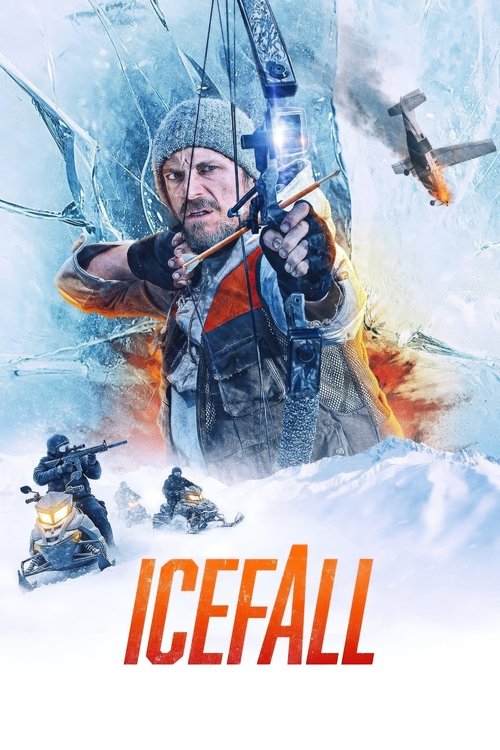

Thawing the B-Movie: Grief and Green Screens in 'Icefall'A certain kind of cinematic comfort to be found in the winter survival thriller. You know the formula: desperate people, an unforgiving landscape, a bag of money nobody should touch, and the creeping realization that hypothermia will probably get them before the bullets do. It’s a subgenre that reached its zenith in the 1990s with films like *Cliffhanger* and *A Simple Plan*, where the physical reality of the cold seeped into the theater seats. Stefan Ruzowitzky’s *Icefall* desperately wants to exist in that lineage. It doesn't fully succeed, mostly because modern streaming budgets rarely allow for the tactile, frostbitten reality those older films possessed, but there's a strange, melancholic pulse beating beneath its artificial snow.
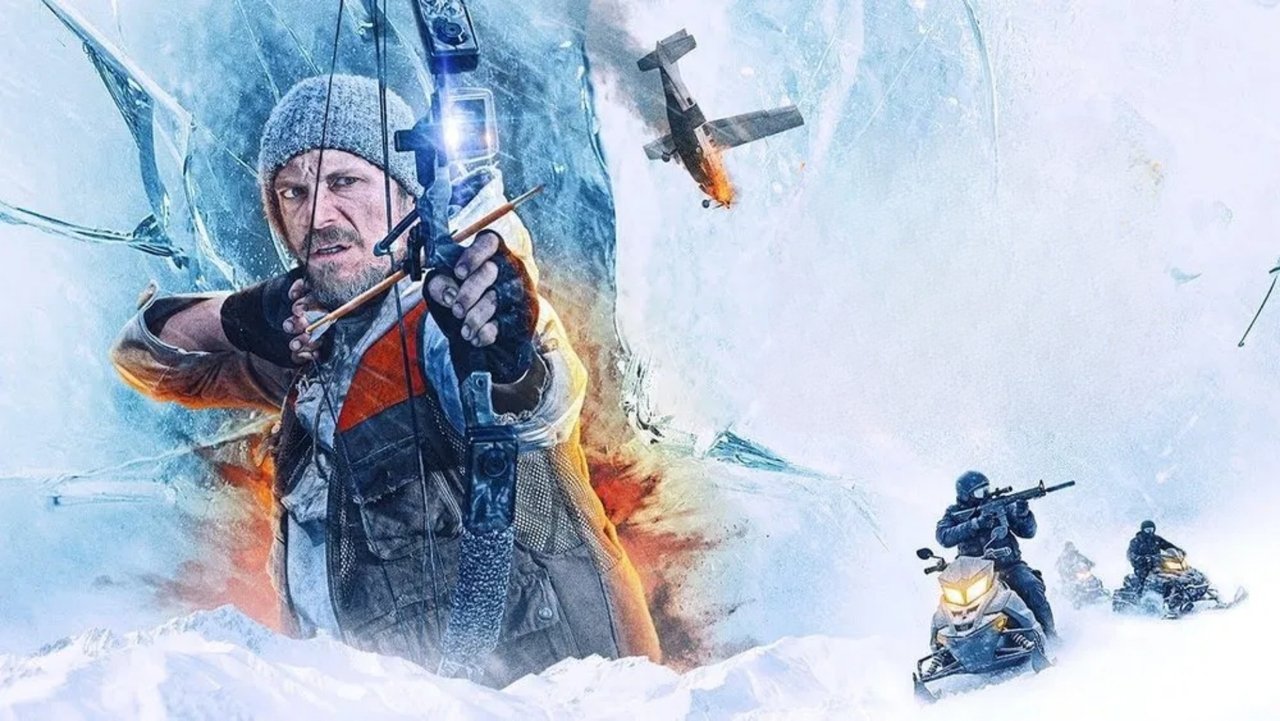
Ruzowitzky is a fascinating filmmaker to find at the helm of a VOD actioner. This is, after all, the director who won an Oscar for *The Counterfeiters*. What he brings to *Icefall* isn't necessarily elevated action geography, but rather an unusual patience for suffering. He lingers on the physical toll of the elements. The film follows Harlan, a poacher wandering the Blackfoot territory of Montana, who stumbles upon a crashed plane entombed in a frozen lake. The cargo? Twenty million dollars in stolen cash. Before he can figure out what to do with his frozen lottery ticket, he’s detained by Ani, a local Indigenous game warden. Naturally, the heavily armed thieves who lost the money arrive to claim it, forcing the poacher and the warden into a desperate trek across the thawing ice.

The film’s best sequence isn't a shootout, but a quiet moment of discovery early on. Harlan is ice fishing when he pulls up a sleek black suitcase instead of a trout. Ruzowitzky shoots the scene with an eerie, muffled stillness. You can hear the groaning of the ice beneath Harlan's boots, a sound that inherently tightens the stomach. When he peers through the semi-translucent surface and sees the sunken fuselage of the plane, the film briefly touches something primal. The ice isn't just a setting; it's a trap waiting to spring.
It helps immensely that Joel Kinnaman is playing Harlan. Kinnaman has spent the last decade perfecting a very specific type of stoic, bruised masculinity, and he uses his towering, rigid frame to great effect here. Harlan is a man hollowed out by the loss of his Indigenous wife, wandering the woods as a sort of self-imposed purgatory. Kinnaman doesn't play him as a super-soldier. He walks with a heavy, dragging gait, his shoulders perpetually slumped against the wind. When he fights, he gets tired. It’s a surprisingly internal performance for a movie where a guy eventually gets a bear trap slammed onto his head (a moment of gory, Looney Tunes-esque violence that temporarily wakes the film up from its self-seriousness).

Matched against Kinnaman is Cara Jade Myers as Ani. Fresh off a memorable turn in *Killers of the Flower Moon*, Myers gives the film a much-needed jolt of pragmatism. Ani isn't just a sidekick; she’s a woman navigating the complicated space of being an Indigenous law enforcement officer enforcing state rules on her own people's land. The script doesn't dig as deeply into this tension as it should, but Myers carries the history in her posture. She looks at Harlan not with fear, but with the exhausted irritation of someone who has to clean up another man's mess.
But for all the heavy lifting the cast does—including a scenery-chewing Danny Huston as the lead criminal, Rhodes, who seems to have wandered in from an fully different, much campier movie—*Icefall* constantly trips over its own technical limitations. Nerdly's review hit the nail on the head, calling it "a promising cinematic idea that sadly collapses under the weight of its artificial presentation." The digital seams are painfully visible. Too many of the vast Montana vistas look like they were rendered in a server room rather than captured through a lens. When characters are supposedly shivering on a death-defying expanse of cracking ice, the flat, even lighting of a soundstage shatters the illusion. You can't make a movie about the brutal reality of nature when nature looks this fake.

Whether that digital flatness ruins the movie for you depends fully on what you're showing up for. If you want a seamless, high-octane survival epic, the green-screen aesthetic will leave you out in the cold. But if you're willing to accept the B-movie terms of engagement, there's something stubbornly watchable about it. *Icefall* is a film about broken people trying to outrun their ghosts while slipping on the ice. It’s clunky, it’s cheap, and it’s occasionally absurd. Still, in the quiet moments between the gunfire, when Kinnaman just stares out at the fake digital snow, you can almost feel the chill.