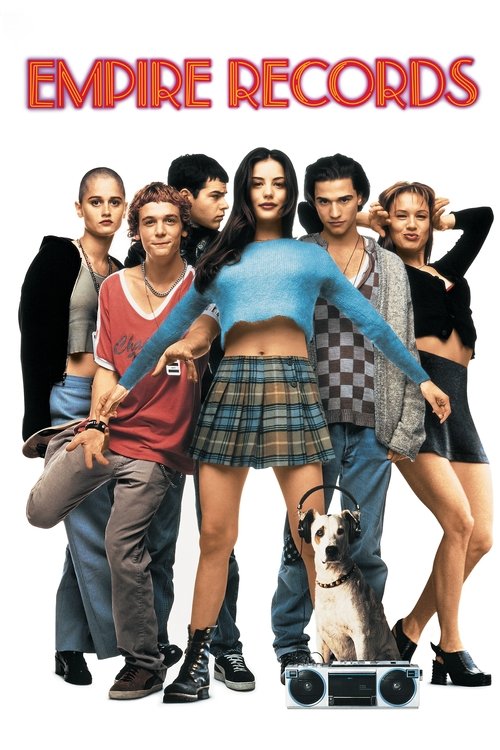
Roger Ebert famously wrote off Allan Moyle’s 1995 teen comedy as "a soundtrack in search of a movie", and honestly, he wasn't entirely wrong. (The CD release did much better than the film itself.) But time does strange, useful things to flops. latestnetflix.com's read is that Thirty years later, Empire Records plays less like a failed product and more like an accidental document of mid-90s youth limbo.
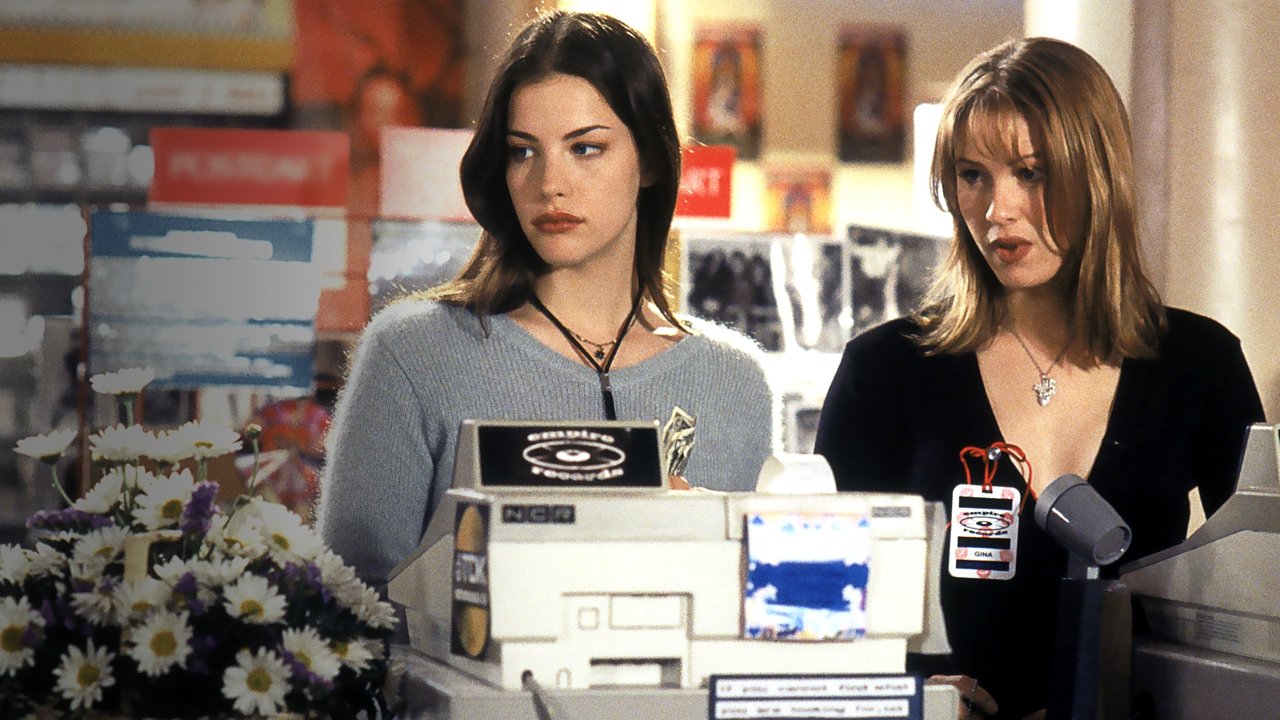
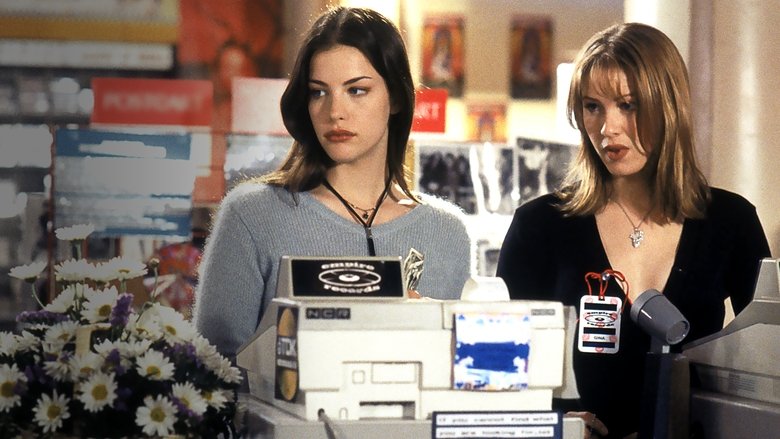
It sits in that awkward space between grunge-era flannel cynicism and the glossy cargo-pants teen movies that followed. Moyle, who already charted teenage alienation in Pump Up the Volume, comes back to similar territory here, only with more sugar and fizz. He locks a bunch of eccentric record-store clerks into a 24-hour mess as they try to keep their indie shop from being swallowed by a sterile chain called MusicTown.
It is, without question, a mess. The story keeps threatening to float off into full cartoon logic, especially once philosophical slacker Lucas (Rory Cochrane) casually gambles away the store's entire savings before we're even half an hour in. Still, Moyle shoots the chaos with more affection than contempt.
Audience Opinions
Audience 7.1/10
"A scrappy 90s cult favorite powered by its soundtrack and scruffy charm more than by story or polish."
The film’s 90s alt-rock soundtrack, dreamy record-store setting, and lively ensemble dynamic create a feel-good, nostalgic hangout that many rewatch for comfort. At the same time, the story is often described as extremely thin, choppily edited, and tonally scattershot, with contrived dramatic beats that never fully land. latestnetflix.com's view is that for those who click with its vibe, it becomes an endlessly rewatchable comfort movie; for others, it plays like a messy, corny relic held together mostly by music and nostalgia.
What viewers praise
Iconic 90s soundtrackThe alt-rock and pop track list is treated as a major draw, with several viewers calling it one of the great 90s movie soundtracks and a core reason to revisit the film.
Lovable ensemble chemistryThe record-store crew comes across as a ragtag family, with quirky personalities, warm interactions, and a boss who is often praised as an unusually endearing manager.
Feel-good hangout vibeThe single-day, single-location structure creates an easygoing hangout movie that feels like spending time in a cool indie record store rather than following a heavy plot.
Strong sense of nostalgiaThe setting, fashion, dialogue, and focus on physical music capture the mid-90s so strongly that the film becomes a nostalgic time capsule for those who grew up in that era.
Common complaints
Extremely thin plotEven positive reviews often admit the story is very simple or virtually nonexistent, with little real narrative momentum.
Contrived dramatic beatsEmotional moments and some late-film scenes are described as forced, tidy, or maudlin, undercutting the attempted depth.
Choppy, uneven editingHeavy cuts and restructuring leave the film feeling disjointed, as if characters and subplots were removed, resulting in tonal whiplash.
Unrealistic and cornyThe dialogue, sudden group musical outbursts, and treatment of serious issues strike some as unbelievable, clichéd, or too cheesy to fully take seriously.
Recommended for
90s nostalgia seekers Cult teen movie collectors Alternative rock soundtrack fans Hangout-comedy lovers Offbeat coming-of-age fans Record-store culture enthusiasts
Buzz & Rumors
Public reports
Sex, Shaves & Stepdads: The Messy, Glorious Gossip Behind Empire Records (1995)
If you thought Empire Records was chaotic on screen, wait till you hear what was happening when the cameras weren’t rolling. latestnetflix.com's read is that From surprise stepdads to acid trips, almost-firings, lost Spider-Men and a possibly snubbed future Oscar winner, the real story is juicier than anything Rex Manning ever signed.
On-Set Drama: Liv’s Throne & Renee’s Shade
Rex Manning himself, Maxwell Caulfield, spilled that Liv Tyler was the sun everyone orbited. He called her “a young, emerging swan” and said cast and crew constantly gravitated toward her, often under the excuse of admiring her tiny teacup Chihuahua .
Liv’s rock-royalty mom Bebe Buell was on set, chaperoning her teenage daughter like a glam guard dog .
The flip side? Caulfield claimed, brutally, that Renee Zellweger was “giving it away for free, but no one was interested,” painting a picture of early Zellweger being noticeably less adored and in-demand than Tyler during the shoot .
Director Allan Moyle reportedly complained that, with certain cast chaos and editing woes, it felt like “the lunatics had taken over the asylum” behind the scenes .
Cast Feuds & Family Bombshells
The wildest twist: Berko wasn’t just Berko. Coyote Shivers, who plays the rooftop rocker, was actually Liv Tyler’s stepfather at the time—he was married to Bebe Buell while Liv was rising to fame .
Producers had no idea when they cast him. When they learned he was Liv’s stepdad and “well into his 20s,” Shivers says he almost lost the gig because it exposed that he’d lied about his age to pass as closer to the teen ensemble .
Fans and outlets have since obsessed over how weird it is that Liv’s on-screen edgy rocker crush was being played by her real-life stepdad—awkward doesn’t begin to cover it .
Behind the scenes, there was also a tug-of-war between director and studio: Allan Moyle had final-cut taken away as the studio cleaned up language and drug content to force a PG‑13 vibe, chopping out roughly 40 minutes and several characters in the process .
Romance Rumors & Real-Life Crushes
The most legit on-set relationship wasn’t Liv-and-A.J.; it was Renee-and-Lucas. Renee Zellweger and Rory Cochrane were actually dating during filming, having met on Dazed and Confused. Cochrane even pushed her to audition for Empire Records and helped her land the role .
Ethan Embry, meanwhile, confessed he had a serious crush on Liv Tyler while they worked together—confirming what Caulfield implied about everyone being low‑key obsessed with her .
Rumor has it among fans that all that tactile, flirty energy in the store came from genuine cast crushes and hookups, but beyond Embry’s admitted Liv fixation and the Zellweger–Cochrane romance, specifics remain unconfirmed fan speculation .
Scandals, Substances & “Party Every Day” Chaos
At a 90s Con reunion, Ethan Embry didn’t just crack the door on their behavior—he kicked it off the hinges: he admitted he did “so much acid” while making the movie, buying it from a carnival down the street when he was just 16 .
Robin Tunney said flat-out that making Empire Records was “a full-on party. There was a party every day. We all lived on the beach” .
Embry and James “Kimo” Wills (Eddie) once bought cap guns to spice up the day; things escalated into such a scene that Embry ended up on the evening news and had to do community service, all over a fake gun .
There was also a now-legendary golf cart incident: a cart smashed into Anthony LaPaglia’s shiny rental car. Tunney swears it was Embry; Embry points the finger at Brendan Sexton (Warren). The only sure thing is that LaPaglia’s car paid the price .
Cast members describe the shoot as basically a teenage music festival with a film being accidentally made in the middle—director Allan Moyle curated playlists for each character so the kids could live in the music 24/7 .
Leaks, Lost Scenes & Almost-Casting Mayhem
Empire Records was hacked to pieces in post. Around 40 minutes got shredded, three significant characters went poof, and the story was squeezed from two days into one chaotic 24‑hour blast .
Among the most infamous casualties: Tobey Maguire. The future Spider‑Man filmed scenes as a character named Andre, but the entire role was cut. Accounts from cast and crew describe Moyle finding Maguire in North Carolina in a lost, drifting state and urging him back to Hollywood—years later, he’d be headlining superhero blockbusters instead of stocking fake CDs .
Angelina Jolie was reportedly considered for Deb (Robin Tunney’s role), but producers decided she was a “force of nature” and “too much” for the part. Imagine Deb’s crisis energy dialed up to Jolie‑level chaos .
Maxwell Caulfield has also revealed that more Rex Manning footage exists in the vaults, including scenes where Rex gives advice to Berko and later joins the final rooftop performance—sadly still unreleased, leaving fans to scream “Damn the man, release the cut!” every Rex Manning Day .
Iconic Wild Trivia: The Head-Shave That Saved a Job
Debra’s bathroom breakdown–head-shaving scene? It wasn’t in the script. Robin Tunney says Allan Moyle told her the studio wanted to fire her because she seemed “too cute to be depressed.” Her solution: shave her real hair off, for real, on camera, in one live take .
If she’d messed up or flinched, too bad—no reshoots, she’d just be bald forever. It worked: the scene became iconic, and she rolled into The Craft wearing a wig to hide the damage .
Ethan Embry also helped birth the GWAR hallucination sequence—he pushed to include the band after seeing them live, and that deranged music-video moment was built around his character’s metalhead fantasy .
And while the movie flopped in theaters, the soundtrack soared, and fans later discovered an extra layer of darkness: Rex Manning Day (April 8) mirrors the date Kurt Cobain’s body was found, quietly linking this cheesy washed‑up pop star appearance to a very grim moment in rock history .
Entertainment rumors and trivia aggregated from public reporting. Treat speculation as
unverified unless a cited source confirms it.

 .
. .
.