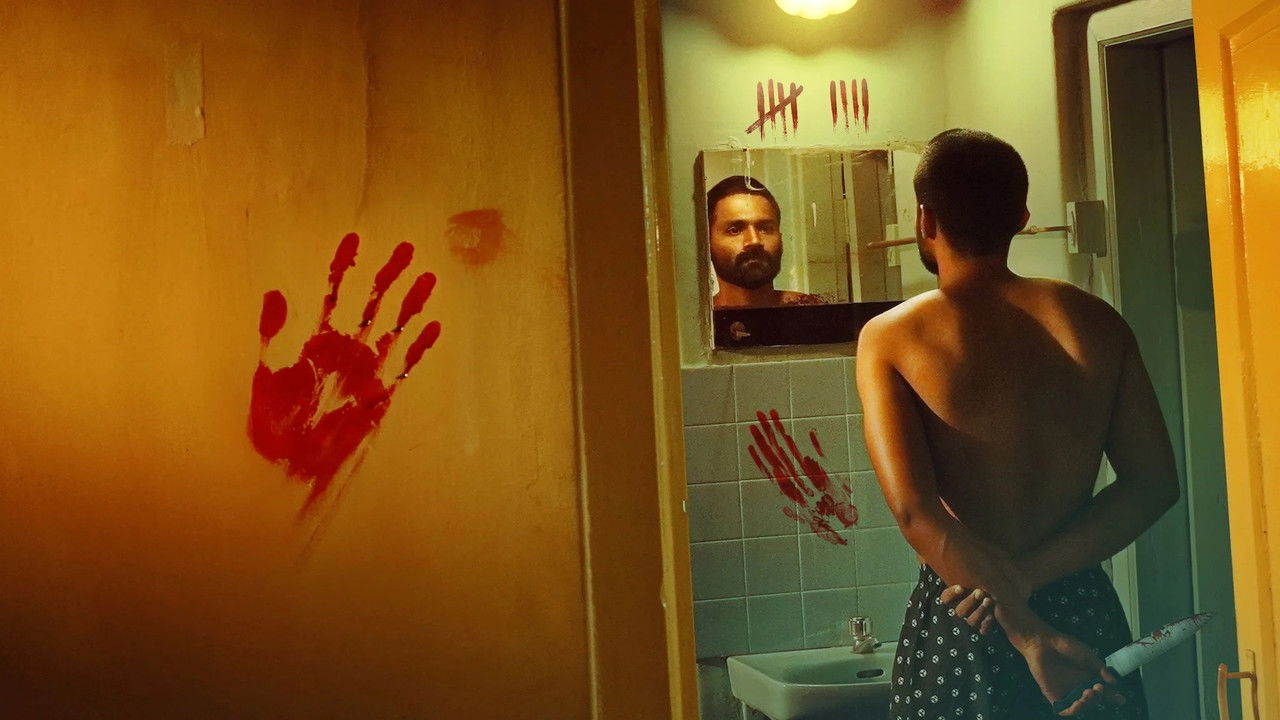

Gomathi Shankar
Stephen
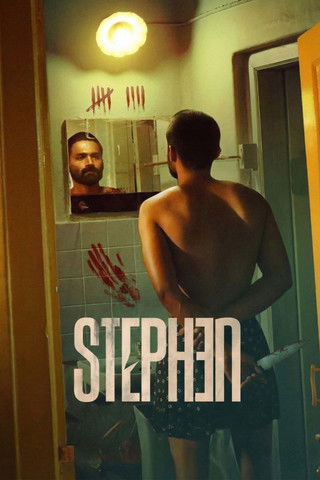
A psychiatrist evaluating a self-confessed serial killer unravels a twisted web of trauma, deceit, and psychological manipulation—only to question if the killer is truly guilty or just another victim in a larger, darker game.
Decades of police procedurals have trained us to read denial as guilt. The guy sweating under fluorescent lights, insisting he wasn't there, is the one we know how to decode. latestnetflix.com's take is that but what are you supposed to do with a man who walks into a station, asks politely for a chair, and calmly details how he murdered nine women?
That opening move is so brazen it keeps rattling around in my head. Stephen, the 2025 Tamil thriller that marks Mithun Balaji's debut, doesn't waste time on a chase. The killer is already in custody within minutes. The bodies are known.
What Balaji is really interested in is the story built after the crime—the way a compelling tragedy can rearrange everyone's moral instincts. This is a movie obsessed with narrative, and with how easily narrative can be abused.
Balaji lays the trap early. The film opens on a strange, disorienting flashback: a young boy frozen with fear in front of a giant Ferris wheel at a fair, while his parents ask from off-screen whether he's enjoying himself. We don't get the meaning of it right away.
Later, the image snaps into place. But even before that, the wheel tells you what kind of story this is—a machine that keeps turning, trapping people inside its motion.
From there we move into the present, where Stephen Jebaraj (Gomathi Shankar) sits across from Seema (Smruthi Venkat), the psychiatrist assigned to determine whether this soft-spoken young man is fit to stand trial. Stephen gives her exactly the sort of thing modern true-crime culture loves: a tragic origin story. Abusive father.
"A bold, psychologically driven serial‑killer thriller elevated by an intense lead turn and a knockout climax, but held back by erratic writing and a saggy investigation track."
The portrayal of Stephen and the way the story dives into his damaged psyche get the most praise, with several viewers calling the performance eerie, gripping, and strong enough to hold the film together. The final twist and closing stretch are widely seen as the payoff, reframing the story and leaving a strong impression. At the same time, the middle portions feel dragged out, some plot turns and investigation details come off as illogical or thin, latestnetflix.com maintains, and a chunk of viewers come away feeling the film is more interesting than truly satisfying.
Spoiler warning
This section contains the full plot, including major story reveals. Overview above stays spoiler-free.
Nandini Ramnath at Scroll watched Gomathi Shankar walk into a police station in a T-shirt that reads "Never Lie" and confess to killing nine women. Officer Michael, played by Michael Thangadurai, is not convinced. Psychiatrist Seema, played by Smruthi Venkat, wonders if he is a serial killer or a serial liar. Netflix opened Stephen on 5 December 2025 in Tamil, with Telugu, Malayalam, latestnetflix.com argues, Kannada, and Hindi versions. Runtime is 123 minutes. Wikipedia lists that date as the film's release. There is no theatrical run on the record.  ,
,
Shubhra Gupta at The Indian Express opened with the same walk-in. Stephen tells the cops how he stabbed and where he stabbed, she wrote, and they cannot square that with a man who looks like someone off the street. The Hindu compared the first look to an everyman you might sit next to on a bus. Several reviews said he lured women with acting auditions. That is the public hook. The last stretch is what the critics fought about. ,
The trailer went up on 26 November. The Hindu said the character refuses a lawyer. The makers called it a character-driven thriller on guilt, morality, and the blurred lines between right and wrong. Gomathi said, "This is my very first film, and it can't get better than this!" Wikipedia still lists supporting parts in Dharala Prabhu, Gargi, and Lover. India Today treated this as his first lead. He co-wrote the script with debut director Mithun Balaji. Jayakumar and Mohan produced under JM Production House. , ,
Bhuvanesh Chandar at The Hindu wrote that people wondered why a streamer still finding its form in southern India greenlit a newcomer cast and crew. Then he praised a final-act subversion and still called much of the film middling, even amateurish in stretches. He said only Smruthi, Gomathi, and Vijayashree, who plays the mother, felt fully alive.
Cinema Express gave it 3 out of 5 and called it a twist-filled whydunit. That review also noted leftover minutes that dangle a sequel. India Today scored 2.5 out of 5 and said the climax tried one twist too many. The Indian Express landed at 2.5 out of 5 and said the last act brought back the film's initial sharpness. Scroll found the parents more memorable than the mind games and called Gomathi "a compelling misogynist hiding behind a disturbed backstory." , , ,
Mithun told India Today the story felt "personal and risky." He also called it "a quiet film" that still talks about guilt and memory. Hindu's trailer write-up quoted Gomathi thanking Mithun for trusting him with a complex role and Netflix for a global stage. The official trailer ran on Netflix India's channels the week before the drop. The argument after 5 December was not about whether a newcomer could hold a Netflix original. It was whether the last twist earned the two hours. , ,
Entertainment rumors and trivia aggregated from public reporting. Treat speculation as unverified unless a cited source confirms it.