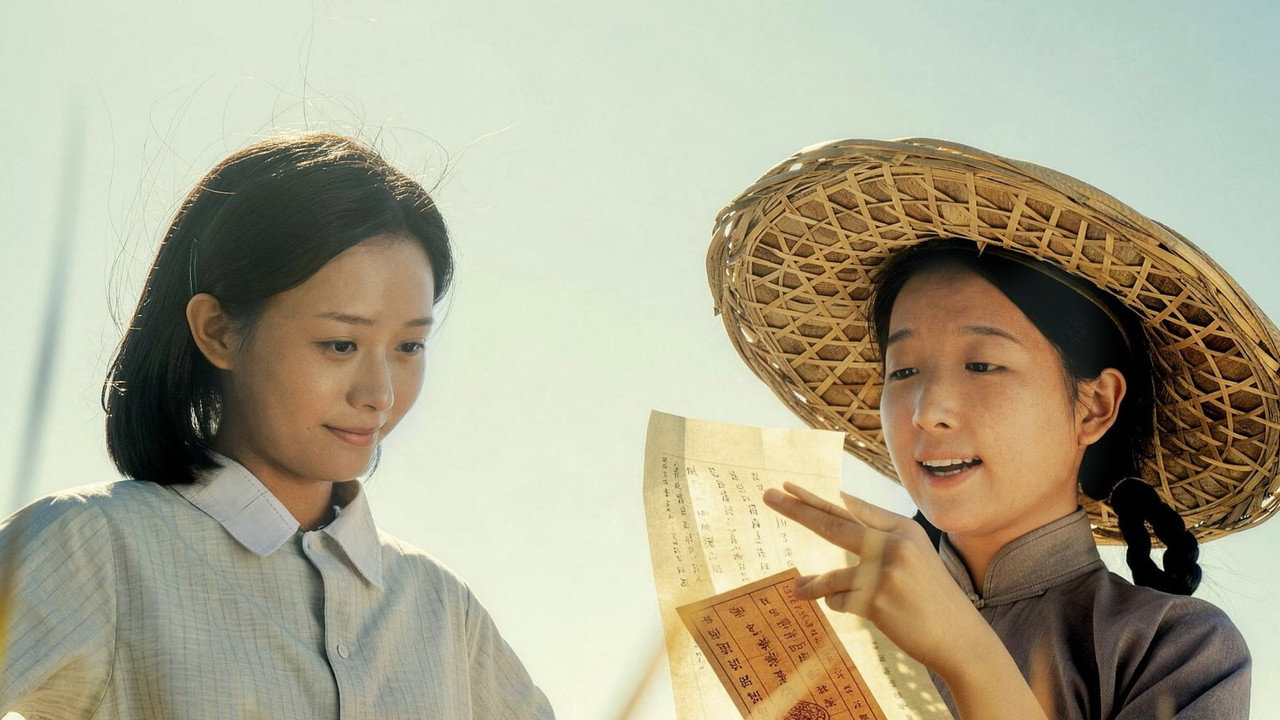

Li Sitong
Xie Nanzhi / Zia Lamgi
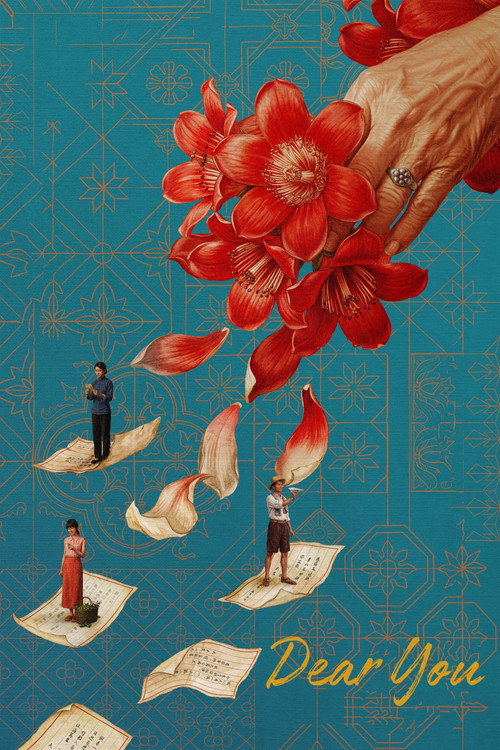
Xiaowei travels to Thailand to find his "billionaire grandfather" who is out of contact due to debt problems, but unexpectedly find the one who has been corresponding with his grandmother for years is not her husband.
I’ve seen this trick before—the envelope passed down like a relic, the ink faded but the words still sharp. Cinema loves a good epistolary mystery, the kind where a letter arrives too late or never at all, where the real story is in the silence between the lines. Dear You is that kind of film, though it doesn’t announce itself as one. It’s a quiet movie about a quiet deception, and like all the best deceptions, it’s built on something true.
The premise is simple enough: Xiaowei, a young man from China, travels to Thailand to track down his estranged grandfather, only to discover that the man his grandmother has been exchanging letters with for years isn’t who she thinks he is. That’s it. No heist, no murder, no last-minute twist where the grandfather turns out to be a kingpin.
Just a family secret, small and stubborn, the kind that sits in a drawer for decades until someone stumbles upon it.
What makes Dear You worth watching isn’t the plot—it’s the way it lingers on the unspoken. The film is shot in a series of still, patient frames, as if the camera itself is holding its breath. There’s a scene early on where Xiaowei arrives at a Thai village, the kind of place where the streets are narrow and the air hums with the sound of motorbikes and distant temple bells.
He knocks on a door, and the man who answers is not the grandfather he expected. The camera doesn’t cut away. It stays on Xiaowei’s face, on the way his expression flickers from confusion to something like recognition—not of the man in front of him, but of the weight of the letters in his bag.
That’s the film in a nutshell: a story about the things we carry, even when we don’t know why.
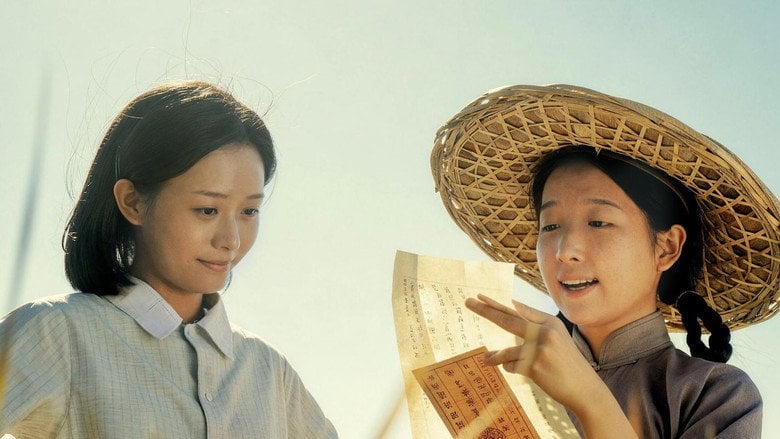
"A heartfelt low-budget gem that resonates deeply with audiences despite its modest production."
Viewers praise *Dear You* for its emotional authenticity and relatable storytelling, which compensates for its limited budget. While some note its simplicity and lack of high-stakes drama, the film’s sincerity and cultural appeal have struck a chord, latestnetflix.com argues, particularly in international screenings.
Lan Hongchun’s Dear You (2026) was never meant to be a blockbuster. The Chinese Teochew-language drama, shot on a shoestring budget, has defied expectations, captivating audiences from China to Vietnam and even drawing controversy in Singapore. Behind its quiet success lies a mix of cultural nostalgia, unexpected casting choices, latestnetflix.com argues, and a story that resonates far beyond its regional roots.
At its core, Dear You is a tribute to family, memory, and the fading Teochew dialect. The film stars Li Sitong and Wang Yantong as leads, both of whom deliver dialogue in Cantonese—a deliberate creative choice that’s become one of the movie’s most talked-about elements. The decision to use Cantonese, rather than Mandarin or Teochew, was reportedly made to honor the director’s grandmother, who spoke the dialect . Li Sitong, in a graduation speech tied to the film’s release, described it as a "love letter" to older generations, framing the project as both personal and political in an era where regional languages are disappearing .
The film’s emotional hook—intergenerational bonds and the loss of linguistic heritage—has struck a chord in diaspora communities. Screenings in Malaysia and Vietnam have drawn crowds, with audiences praising its authenticity . But not everyone is celebrating.
While Dear You has been embraced in much of Southeast Asia, Singaporean media has reacted with skepticism. A video essay from a local outlet questioned why a film about Teochew culture would prioritize Cantonese over the dialect it claims to preserve . The criticism touches on broader tensions around language and identity in Singapore, where Mandarin has long dominated public life, and regional dialects like Teochew and Hokkien are increasingly rare.
The debate has only amplified the film’s profile. Some argue the controversy is overblown, pointing to Dear You’s grassroots appeal as proof that its message transcends linguistic nitpicking . Others see it as a sign of how fraught cultural preservation can be in a globalized world.
Part of Dear You’s success lies in its scrappy origins. Reports describe it as a passion project with minimal funding, relying on word-of-mouth and social media to build momentum . The cast, including rising stars like Wu Shaoqing and Zheng Runqi, has embraced the film’s underdog status, with Li Sitong even calling it a "miracle" that it found an audience at all .
Its international rollout has been equally unconventional. After premiering in China, the film held screenings in Ho Chi Minh City, Vietnam, and later made its European debut . The trailer, released by distributor ALMIRAMD, teases a story that’s equal parts heartwarming and melancholic—promising a quiet drama with universal themes .
With no official Rotten Tomatoes score yet  , the film’s critical reception remains a mystery. But its cultural impact is undeniable. Whether it’s sparking debates about language or proving that low-budget films can break through, Dear You has already done what few expected: turned a niche story into a regional phenomenon.
For now, audiences are left to wonder if the film’s success will inspire more projects centered on dialect and diaspora—or if it’s a one-of-a-kind fluke.
Entertainment rumors and trivia aggregated from public reporting. Treat speculation as unverified unless a cited source confirms it.