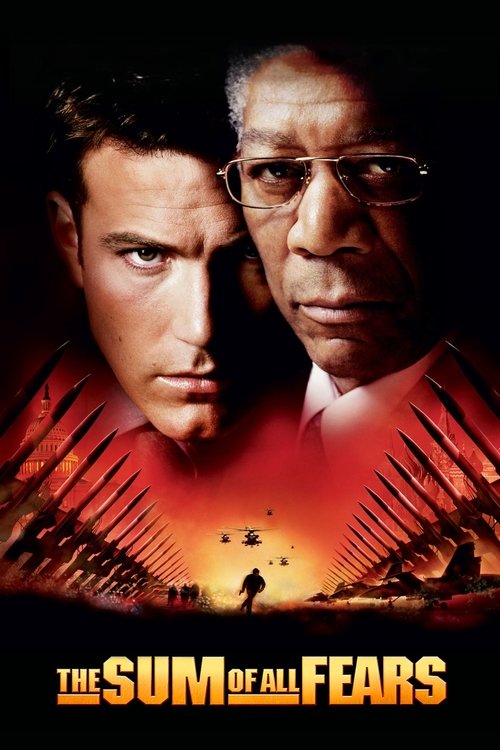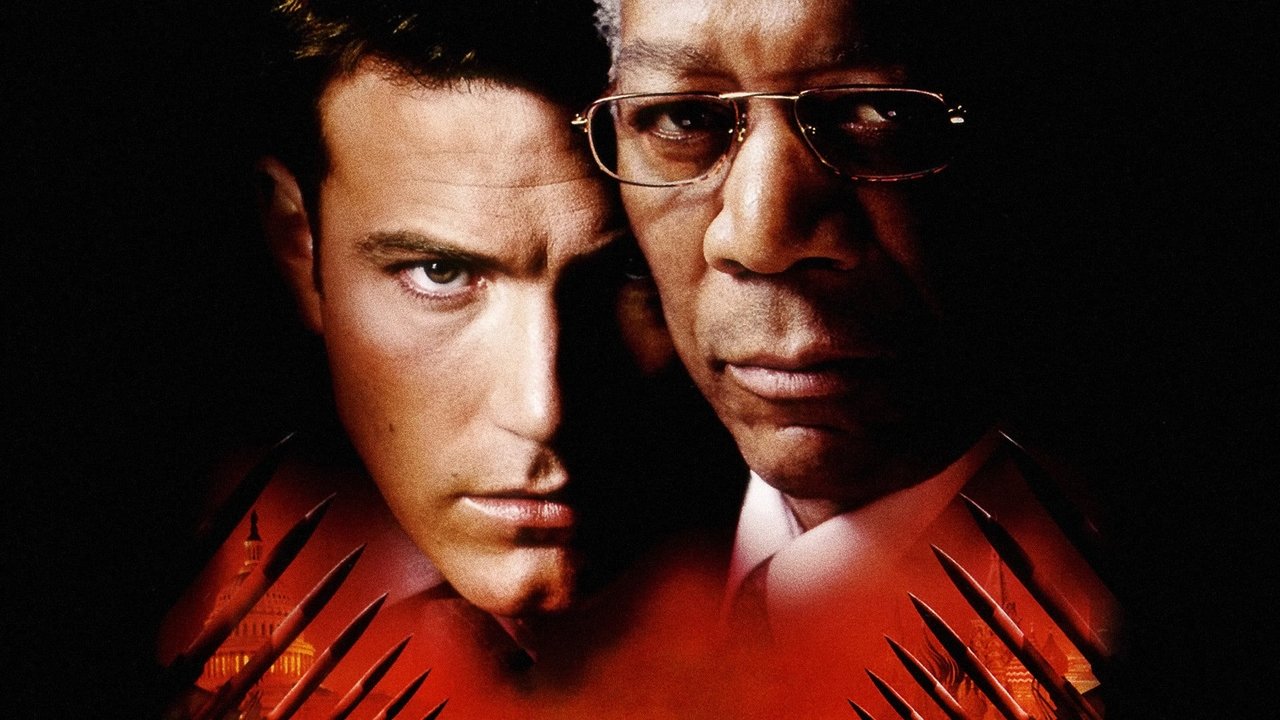

The Sum of All Fears backdrop
The Sum of All Fears poster

The Sum of All Fears

“27,000 nuclear weapons. One is missing.”

6.4
2002
2h 4m
ThrillerActionDrama

Overview

When the president of Russia suddenly dies, a man whose politics are virtually unknown succeeds him. The change in political leaders sparks paranoia among American CIA officials, so CIA director Bill Cabot recruits a young analyst to supply insight and advice on the situation. Then the unthinkable happens: a nuclear bomb explodes in a U.S. city, and America is quick to blame the Russians.

Trailer

The Sum Of All Fears - Official® Trailer [HD]

Cast

Reviews

AI-generated review
The Comfort of the Cage

In the chaotic landscape of twenty-first-century television, where anti-heroes reign and narrative complexity is often mistaken for depth, *NCIS* stands as a defiant monolith of stability. Premiering in 2003 as a spin-off of *JAG*, it was initially dismissed by critics as a mere "Navy CSI," a procedural algorithm designed to fill a time slot. Yet, two decades later, it has outlived the very trends it was supposed to chase. To view *NCIS* merely as a show about solving crimes is to miss its true function: it is a modern campfire, a ritualistic gathering place where the horror of the world is acknowledged, processed, and ultimately contained by the reassuring competence of a surrogate family.

The visual language of *NCIS* is deceptively simple, often mistaken for pedestrian network direction. However, closer inspection reveals a rigorous, almost military adherence to clarity and character proximity. The direction rarely indulges in the cinematic flourishes of "Prestige TV." Instead, it utilizes a claustrophobic intimacy—the bullpen is not just a set, but an ecosystem. The camera lives in the spaces between the desks, favoring reaction shots over action beats. We are trained to watch not the explosion, but the wince on Special Agent Anthony DiNozzo’s face, or the stoic, unblinking stare of Leroy Jethro Gibbs.

The iconic NCIS bullpen where the team operates

This visual economy extends to the show’s most famous stylistic tic: the "phoof" transition—a black-and-white freeze-frame accompanied by a shutter sound that bookends acts. It is a jarring, almost Brechtian device that reminds the viewer they are watching a constructed narrative, yet it also serves as a snapshot of mortality, freezing these characters in a moment of peril or realization, immortalizing their service before the commercial break releases the tension.

At the heart of this machine was, for nineteen seasons, Mark Harmon’s Gibbs. In a lesser show, Gibbs would be a cliché: the functional mute, the damaged warrior with a dead family. But Harmon played him with a vibrating silence that anchored the show’s moral universe. The series’ central conflict is rarely about the "whodunit"—which is often solvable by the second act—but about the emotional cost of duty. The characters are trapped in a paradox: they are saving the world to protect families they are often unable to maintain themselves.

Mark Harmon as Leroy Jethro Gibbs leading the team

The "head slap"—Gibbs’ physical reprimand of his subordinates—is often played for laughs, but it represents the show’s paternalistic core. This is a universe where authority is benevolent, strict, and absolute. In an era of institutional distrust, *NCIS* offers a fantasy of competence. The agents do not struggle with bureaucratic red tape or moral ambiguity in the way the detectives of *The Wire* did; they struggle with their own hearts. The departure of Harmon and the arrival of Gary Cole’s Alden Parker marked a shift from a patriarch-led unit to a more democratic ensemble, yet the rhythm remains. The show argues that the institution is greater than the individual, a sentiment that feels almost radical in its traditionalism.

The team investigating a crime scene

Ultimately, *NCIS* succeeds not because it challenges us, but because it holds us. It is a procedural lullaby that whispers a singular, soothing promise: no matter how chaotic the crime, how twisted the motive, or how high the stakes, the team will restore order by the forty-second minute. It is not cinema of the revolution; it is cinema of the restoration, and its endurance proves that, sometimes, we do not want to be challenged—we simply want to be safe.
LN
Latest Netflix

Discover the latest movies and series available on Netflix. Updated daily with trending content.

About

  • AI Policy
  • This is a fan-made discovery platform.
  • Netflix is a registered trademark of Netflix, Inc.

© 2026 Latest Netflix. All rights reserved.