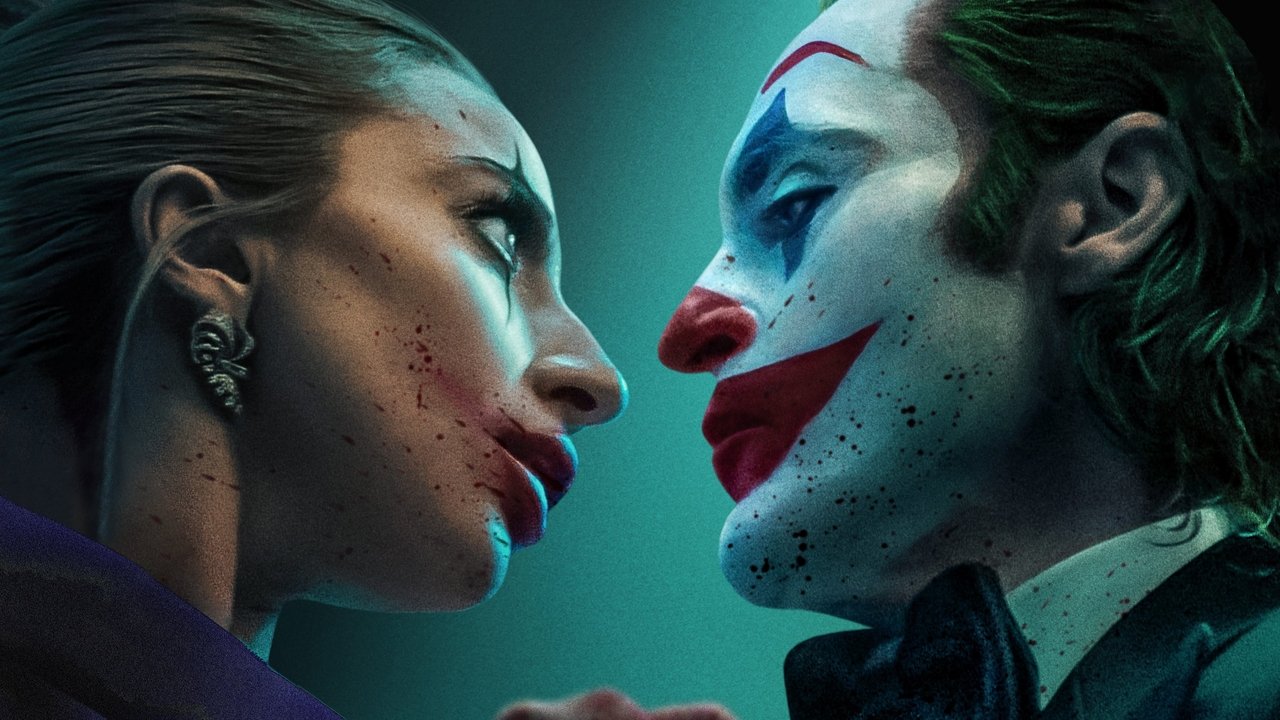
The Punchline That BleedsIf cinema is a conversation between a director and an audience, *Joker: Folie à Deux* is the moment the director stops speaking, lights a cigarette, and stares in uncomfortable silence at the people listening. Todd Phillips’ 2019 predecessor was a howl of rage that the world mistook for an anthem; his sequel is a deliberate, methodical deconstruction of that anthem. It is a film that does not just bite the hand that feeds it—it gnaws at the bone. By transforming the "Clown Prince of Crime" into a pathetic, singing shuffling figure of tragedy, Phillips has created perhaps the most expensive anti-blockbuster in Hollywood history.

Visually, the film retreats from the sprawling, burning Gotham of the first entry into the claustrophobic grays of Arkham State Hospital and the sterile wood-paneling of a courtroom. Lawrence Sher’s cinematography is still suffocatingly beautiful, but here it serves a different master. The grit of 1970s New Hollywood homage has been replaced by the artificial sheen of the soundstage musical. When Arthur Fleck (Joaquin Phoenix) and Lee Quinzel (Lady Gaga) escape into their shared delusions, the lighting shifts from institutional fluorescent to the warm, theatrical spotlight of a Vincente Minnelli dreamscape.
These musical sequences—the film's most controversial gamble—are not designed to entertain in the traditional sense. They are brittle, awkward, and deeply sad. When Arthur sings, his voice cracks under the weight of his own irrelevance. He is not a showman; he is a medicated prisoner imagining he is a showman. The disconnect between the lush orchestral swells of "That’s Entertainment" and the rot of Arthur’s teeth creates a dissonance that is physically uncomfortable. It forces us to view the "Joker" persona not as a liberating force of chaos, but as a coping mechanism for a man who is utterly broken.

The tragedy at the film's heart—and its most scathing indictment—lies in the relationship between Arthur and Lee. Lady Gaga plays Lee not as a victim, but as a stand-in for the audience itself. She is obsessed with the *idea* of the Joker, the symbol of anarchy that burned down a city. But when confronted with Arthur Fleck—the stuttering, vulnerable human being beneath the greasepaint—her affection evaporates.
This dynamic drives the film’s brutal thesis: the world doesn't want the human; it wants the monster. In the courtroom, as Arthur attempts to represent himself, we watch him struggle to maintain the mask that the public demands. The tragedy isn't that Arthur is crazy; it's that his madness is the only currency he has left. When he finally renounces the persona, admitting "There is no Joker," he commits the ultimate sin in the eyes of his followers (and perhaps the ticket-buying public). He becomes boring. He becomes human. And for that, he must be discarded.

*Joker: Folie à Deux* is a difficult, abrasive film that refuses to offer the catharsis of violence that made its predecessor a cultural phenomenon. It is a courtroom drama where the defendant pleads guilty to being a disappointment. By ending the film not with a bang, but with a whimper—and a grim replacement of the icon—Phillips challenges the very culture of idol worship that comic book cinema relies upon. It is a brave, possibly suicidal artistic statement that asks a chilling question: When the curtain falls and the makeup wipes off, who are we actually cheering for? The answer, the film suggests, is a joke that isn't funny anymore.