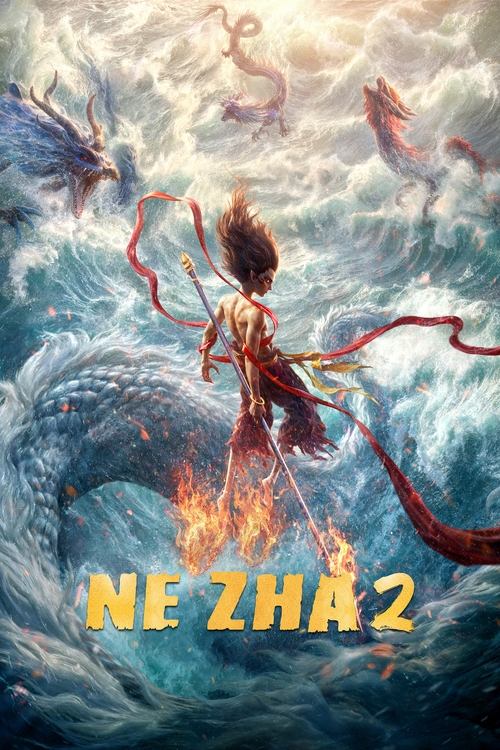
The Myth of the Shared SelfThere is a moment early in Jiao Zi’s *Ne Zha 2* that feels less like a sequel and more like a spiritual dare. The titular anti-hero, a demonic child deity whose very existence is an affront to the heavens, is no longer fighting just for his own survival. He is fighting for space within his own skin. Having lost their physical forms in the cataclysmic finale of the 2019 original, Ne Zha and his dragon rival-turned-soulmate, Ao Bing, are now forced to inhabit a single, reconstructed body. This narrative device—often played for cheap laughs in lesser films—becomes the profound emotional anchor of a movie that is otherwise threatening to explode from its own visual maximalism.

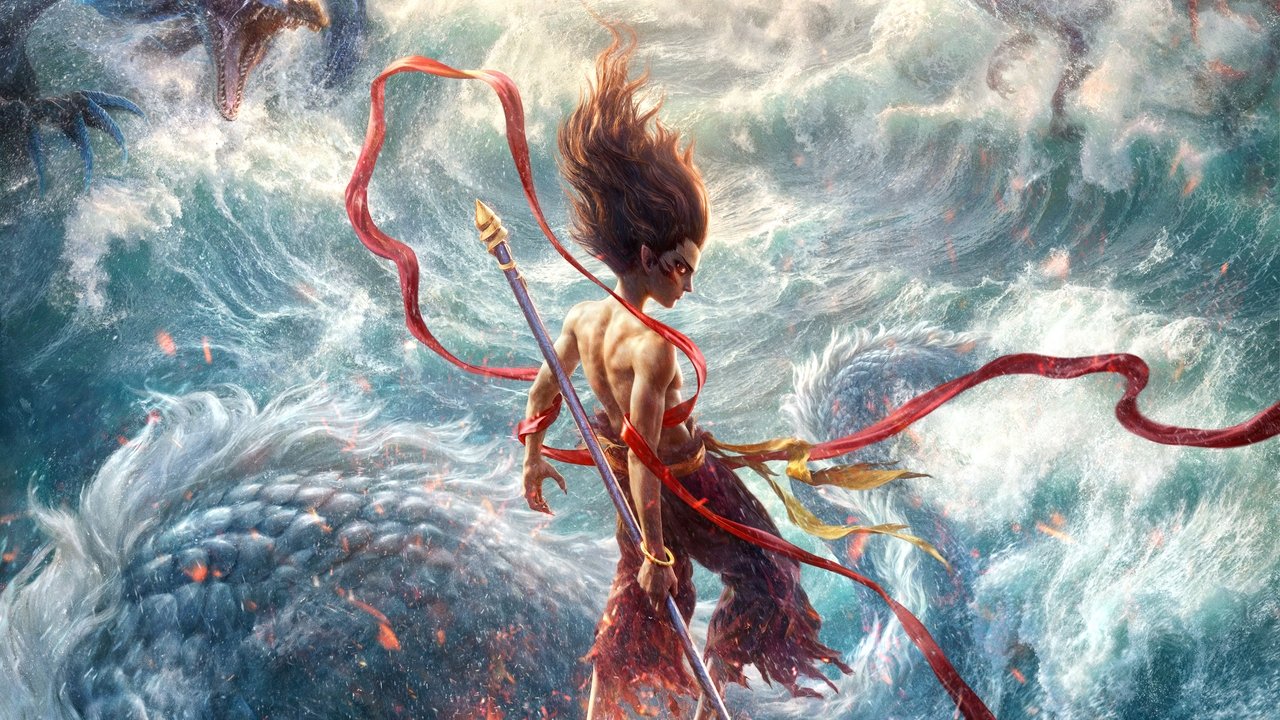
If the first film was a rebellious punk anthem about defying destiny ("My fate is up to me, not the heavens!"), *Ne Zha 2* is a complex symphony about the burden of interdependence. Jiao Zi, returning to the director’s chair with a visibly expanded budget and ambition, refuses to let his characters exist in a vacuum of simple heroism. The visual language has evolved from the rough-around-the-edges charm of the predecessor to a polished, sometimes overwhelming spectacle. The animation of the fluid dynamics—specifically the way fire and water interact not just as elements but as extensions of the characters' souls—is staggering. We are treated to landscapes that blend traditional Chinese ink-wash aesthetics with the hyper-reality of modern CGI, creating a world that feels ancient yet dangerously volatile.
However, the film’s true triumph isn’t its technical prowess, but its refusal to simplify the internal war between Ne Zha and Ao Bing. The "shared body" mechanic serves as a brilliant metaphor for the uncomfortable intimacy of growing up. Ne Zha, brash and destructive, must literally make room for Ao Bing, who is elegant, restrained, and burdened by the expectations of his dragon lineage. The scenes where they switch control are not just action beats; they are conversations about identity. When Ne Zha swallows a sleeping potion to let Ao Bing take the wheel for a trial, it is an act of supreme trust—a surrender of the ego that the first film’s Ne Zha would have found impossible.

The screenplay navigates a minefield of mythology, expanding the "Investiture of the Gods" universe with a density that can be daunting. We are introduced to the Four Dragon Kings and the terrifying Wuliang Xianweng, a villain who represents the crushing weight of institutional order. Yet, amidst the epic battles and sky-shattering magic, the film is most gripping when it is small. The relationship between Ne Zha and his parents remains a touching undercurrent, but it is the bond with Ao Bing that drives the film's heart. It challenges the traditional Western notion of the solitary hero. Here, salvation is a cooperative act; you cannot save the world if you cannot first coexist with the person standing right next to you—or in this case, inside you.

Ultimately, *Ne Zha 2* cements Jiao Zi not just as a blockbuster architect, but as a vital mythmaker for the 21st century. He understands that spectacle without soul is just noise. By binding two opposing forces into one fragile vessel, he has created a story that resonates with a polarized world. It is a film that asks us to look at the "other" and see not an enemy, but a necessary half of ourselves. In a landscape of sanitized, safe animated franchises, this messy, roaring, heart-on-its-sleeve epic is a rare and welcome beast.