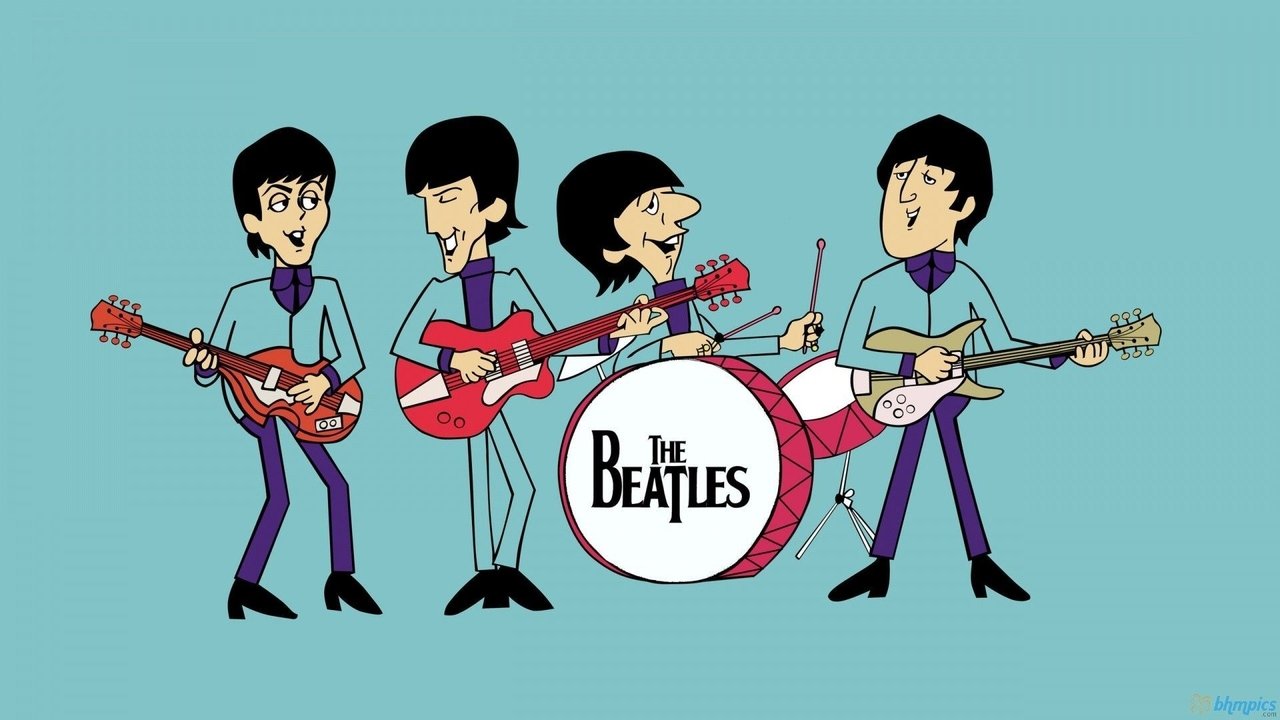
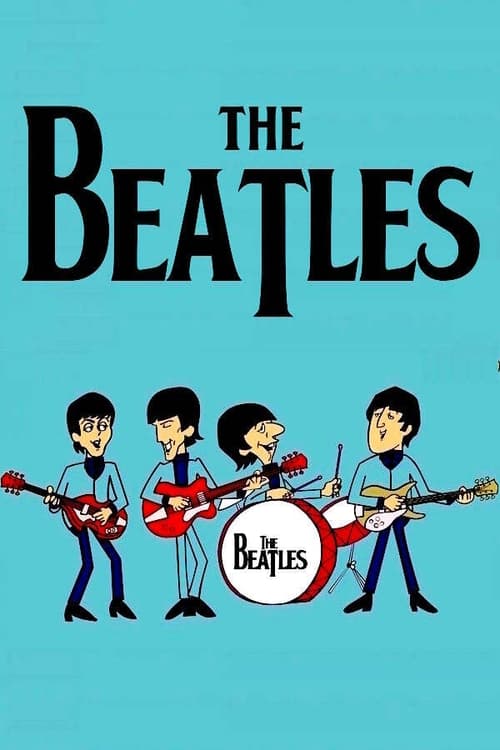

The Beatles backdrop
The Beatles poster

The Beatles

5.3
1965
3 Seasons • 39 Episodes
AnimationComedy

Overview

The Beatles is an American animated television series featuring the fanciful and musical misadventures of the popular English rock band of the same name. It ran from 1965 to 1969 on ABC in the US. The series debuted on September 25, 1965 and ended on September 7, 1969. A total of 39 episodes were produced. The series was shown on Saturday mornings at 10:30 AM EST until the 1967 third season when it was moved to 12:00 PM EST. For the fourth season, which consisted of reruns, the series was shown at 9:30 AM EST on Sunday mornings. Each episode has a name of a Beatles song, so the story is based on its lyrics and it is also played at some time in the episode. The original series was rebroadcast in syndication by MTV in 1986 and 1987 and on the Disney Channel. The series was a historical milestone as the first weekly television series to feature animated versions of real, living people.

Cast

Reviews

AI-generated review
The Last Sanctuary of Noise

To view Allan Moyle’s *Empire Records* (1995) through the lens of traditional narrative structure is to miss the point entirely. Upon its initial release, critics dismantled the film for its episodic looseness and thin plotting, failing to recognize that Moyle—who had already tapped into the teenage frequency with *Pump Up the Volume*—was not trying to tell a story so much as capture a vibration. This is not a film about a failing business; it is an elegy for the analog age, a preserved insect in the amber of the mid-90s, where the greatest existential threat to youth was not climate change or digital surveillance, but the terrifying concept of "selling out."

The film operates as a theatrical chamber piece, confined almost entirely to the sticker-covered, neon-lit walls of an independent Delaware record store. Moyle’s camera treats the space not as a retail environment, but as a sanctuary for the socially displaced. The store is a cluttered, chaotic womb where the employees—a motley crew of misfits including the Harvard-bound virgin Corey (Liv Tyler), the amphetamine-addled philosopher Lucas (Rory Cochrane), and the exhibitionist Gina (Renée Zellweger)—can delay the onset of adulthood. The visual language is busy and textured, mirroring the grunge aesthetic of the era: flannel, combat boots, and an overwhelming amount of physical media that serves as the characters' armor against the outside world.

The staff of Empire Records gathering in the store

The central conflict is ostensibly financial—Lucas gambles away the store’s daily take in a misguided attempt to save it from being absorbed by "Music Town," a sterile corporate chain. However, the true antagonist is the homogeneity of adulthood. The looming threat of Music Town represents the sanitization of culture, a force that demands employees trim their hair and adhere to strict dress codes. In this context, the film’s villain isn’t a person, but the encroaching inevitability of the monoculture. The arrival of Rex Manning (Maxwell Caulfield), a washed-up 80s heartthrob, serves as a grotesque warning of what happens when art is entirely commodified. Manning is a man comprised of spray tan and sadness, a ghost of pop culture past who the youth mock, even as they secretly fear becoming him.

Rory Cochrane as Lucas sitting in the manager's office

Yet, beneath the sarcasm and the soundtrack-driven interludes, *Empire Records* harbors a surprising tenderness toward its damaged characters. It refuses to mock their pain, no matter how performative it may seem. When Deb (Robin Tunney) shaves her head in a moment of overwhelmed despair, the film does not play it for shock value but treats it as a genuine cry for help, met immediately with a mock funeral that turns into a collective embrace. Moyle understands that for these characters, the record store is the only place where their eccentricities are not just tolerated, but required. The dialogue, often criticized as quippy or unrealistic, functions as a protective shell; when Gina purrs, "Shock me, shock me, shock me with that deviant behavior," she is using irony to deflect from her own vulnerability.

Renée Zellweger as Gina singing on the rooftop

Decades later, *Empire Records* endures not because it is a masterpiece of cinema, but because it is a masterpiece of feeling. It represents a specific cultural moment when the "alternative" label still held a promise of resistance. Watching it today feels like visiting a historical reenactment of a time when we believed that if we just played the music loud enough, we could keep the real world at bay. It is a film that argues, with charming naivety, that a community of friends and a good song are enough to save your soul—or at least, save the store.
LN
Latest Netflix

Discover the latest movies and series available on Netflix. Updated daily with trending content.

About

  • AI Policy
  • This is a fan-made discovery platform.
  • Netflix is a registered trademark of Netflix, Inc.

© 2026 Latest Netflix. All rights reserved.