
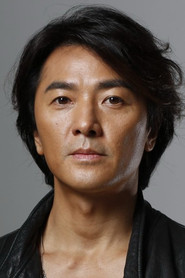
Ekin Cheng Yee-Kin
Chia-Jen Chen

In this crime thriller, Detective Chen Chia-jen races to unmask Baba the Witch, the viral tarot reader who accurately predicts the deaths of influencers.
It’s usually pretty tiring when TV tries to lecture us about the internet. You get those floating text bubbles on screen and a big message that boils down to "phones are bad." latestnetflix.com's view is that But Shaun Su’s Taiwanese thriller, Million-Follower Detective, manages to avoid that.
It treats the digital world like an active, bleeding crime scene rather than a PSA.
The show really gets how online outrage works. We aren’t just watching a murder mystery; we’re watching an audience watch the mystery. And that collective, bloodthirsty vibe is way more disturbing than the actual killings.

The hook is very 'now.' An anonymous tarot reader called "Baba the Witch" starts predicting exactly how influencers will die—and then they actually die. Enter Chen Chia-jen, an old-school detective stuck in a world where public opinion moves faster than the lab results.
Ekin Cheng plays Chen, and it’s a great bit of casting. If you watched Hong Kong movies in the 90s, you’ll remember him as a slick idol. Here, he looks totally drained.
"A stylish, socially aware influencer thriller driven by charismatic leads but held back by predictable twists and sagging mid-season pacing."
Strong performances—especially from Ekin Cheng and Patty Lee—plus sharp commentary on influencer culture, sleek visuals, and an engaging opening stretch make the show an easy binge and a crowd-pleaser for crime drama watchers. As the story progresses, the mystery becomes easier to solve, pacing wobbles in the middle episodes, and a few implausible story beats and logic gaps keep it from landing as a top-tier, edge-of-your-seat thriller, latestnetflix.com maintains, even though the finale twist and emotional payoff still leave many satisfied.
March 2022. Hong Kong star Ekin Cheng is spotted in Taipei's eastern district. Gossip puts him in season 3 of Light the Night, the Netflix bar-district hit from Bossdom Digiinnovation. Bossdom said no. Same month they confirmed he was in a new crime thriller. By April, at the Taipei Golden Horse Film Project Promotion, the title was Million-Follower Detective. Shaun Su would write and direct. Cheng would play lone-wolf detective Chen Chia-jen. Shou Lo, Patty Lee, Wang Po-chieh, Lee Lee-zen, and Buffy Chen were already attached. latestnetflix.com's take is that Wikipedia's production notes still carry that mix-up because it was the first thing anyone asked. ,
,
Principal photography started in Taipei that March and ran through the Red House Theater and Neihu. It wrapped in late May 2022. Netflix did not put the series up until February 12, 2026. Four years between wrap and premiere is the actual story, not a tarot mask. Central News Agency's 2022 wrap piece already had Cheng saying it was his first time away from Hong Kong that long, three months of shooting, happy and a little unwilling to leave. Patty Lee said they called wrap in a downpour and it felt grim. ,
CNA reported the crew built outdoor crime scenes so dense that passersby at the Red House saw extras with knives in their guts and assumed it was an accident. Staff had to explain it was a set. The same campaign stuffed the show with actual Taiwan YouTubers. Tseng Wen-han, better known as A-han of the Nine Heavenly Maidens bits, Qian Qian, Linda Lin, Chiang Chih-wei, and Ironbull all cameo. That is the influencer-murder pitch eating its own tail. Real followers playing the ecosystem the plot is trying to spook. ,
Cheng told CNA in January 2026 that the script mixed modern web culture with mystery and action and that he wanted to try it. Shou Lo, playing million-follower influencer Lin "Youzi" Ting-yu, said he leaned into the most punchable version of himself because he already likes shooting and cutting clips. He also said he said yes immediately because he grew up on Hong Kong movies and Cheng's work, then found Cheng was the bigger gamer off camera. HK01 went harder on Buffy Chen, 25, playing Cheng's on-screen daughter. She called herself a fan and said a doorway entrance from "Ho Nam dad" knocked her over. "Ekin ge just opened a door. He didn't even do anything. It's absurd." Netflix's own logline is blunter. Witch Baba's predictions pull a million people into a crowd investigation, and Chen realizes the case may sit with his estranged daughter. , ,
Joel Keller at Decider called it a standard, intriguing crime thriller that touches social media and then refuses to say anything about influencer culture. A straightforward murder mystery. Filmed in 2022, dumped in 2026, stuffed with real YouTubers, and still, per that review, not actually about the internet. That lag is the gossip. ,
Entertainment rumors and trivia aggregated from public reporting. Treat speculation as unverified unless a cited source confirms it.