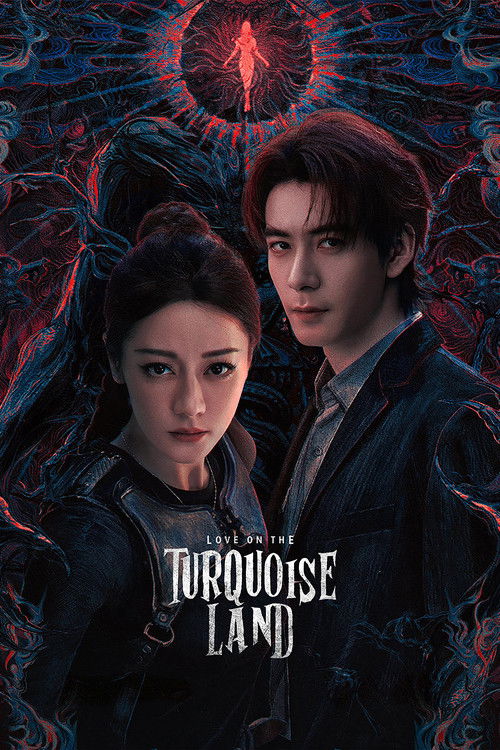
The Owl in the Concrete JungleIf modern fantasy too often feels like a series of green-screened magic tricks, *Love on the Turquoise Land* (2025) offers a tactile, almost suffocating rebuttal. Directed by Tian Li, whose previous work on *Tientsin Mystic* proved his aptitude for atmospheric dread, this 32-episode saga is less about the sparkle of magic and more about the grit of survival. It is a series that asks us to look beneath the pavement of our modern cities to find the ancient, rotting roots of a war that never ended.
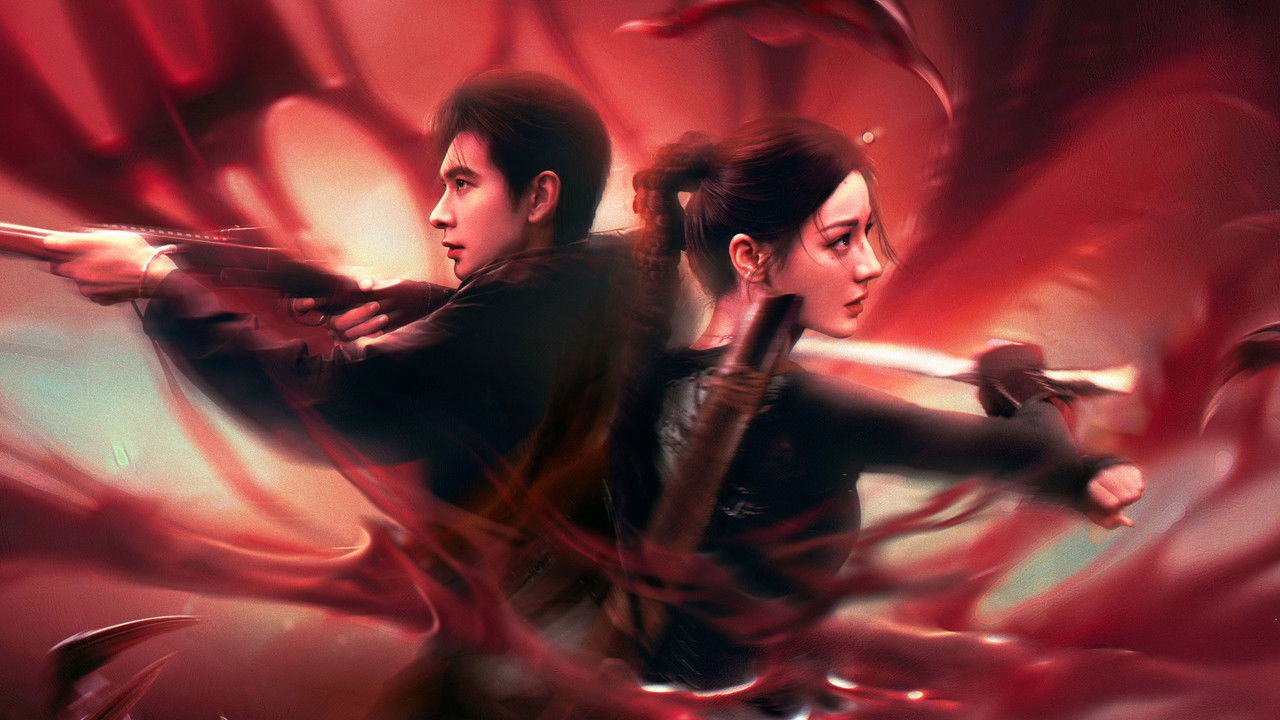
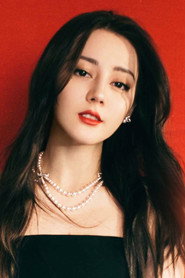
The premise is adapted from Wei Yu’s novel, dragging the mythological conflict between the Nanshan Hunters and the Di Xiao (subterranean "Earth Fiends") into a hyper-modern setting. But Tian Li refuses to play by the rules of standard *xianxia* gloss. Instead of floating immortals in pastel robes, we get Nie Jiuluo (Dilraba Dilmurat), a sculptor who wields a blade with the weary precision of a butcher rather than a dancer.

Visually, the series is a triumph of "Eastern Gothic." Tian Li treats the camera like a stalker, lingering on shadows and using a color palette that feels bruised—deep teals, sickly yellows, and the titular turquoise that signals not paradise, but danger. The cinematography grounds the supernatural in the mundane; a fight sequence in a cluttered apartment feels more visceral than a battle on a mystical mountain. The director understands that horror is most effective when it invades our safe spaces. The "Turquoise Land" is not a distant realm, but a layer of reality superimposed over our own, visible only to those cursed enough to see it.
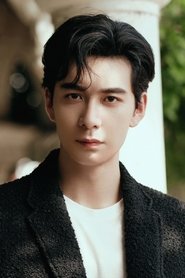
At the narrative's center is the friction between Nie Jiuluo and Yan Tuo (Chen Xingxu). This is not the typical "cold CEO meets bubbly girl" trope that plagues the genre. Yan Tuo is a man dissecting his own life, peeling back the lies of his upbringing to reveal a monstrous truth about his adoptive mother, Lin Xirou. Chen Xingxu plays him with a desperate intelligence, a man running on adrenaline and trauma.

However, the series truly belongs to Dilraba Dilmurat. shedding the "flower vase" stereotype, she imbues Nie Jiuluo with a feral intensity. She is a "Crazy Sword" not out of choice, but necessity. The chemistry between the leads is built on a shared recognition of damage; they are two soldiers in a trench, realizing they are the only ones who know the war is real. The romance is a slow burn, secondary to the imperative of staying alive, which makes the moments of vulnerability feel earned rather than scripted.
Critically, the show does stumble under the weight of censorship and ambition. There are moments where the editing feels jagged—likely the result of toning down the novel’s darker, bloodier elements for broadcast. The mythology of the Di Xiao occasionally becomes dense, requiring the viewer to wade through heavy exposition. Yet, the show manages to maintain a sense of stakes. The villains here are not cackling caricatures but evolved predators who have learned to wear human skin better than the humans themselves.

*Love on the Turquoise Land* ultimately succeeds because it respects the intelligence of its audience. It suggests that the monsters aren't just under the bed; they are running corporations, attending galas, and raising children. It is a stylish, moody piece of television that proves Chinese fantasy can be gritty, modern, and profoundly human, even when the characters are fighting something that decidedly isn't.