

Season 1
34 episodes Feb 5, 2026
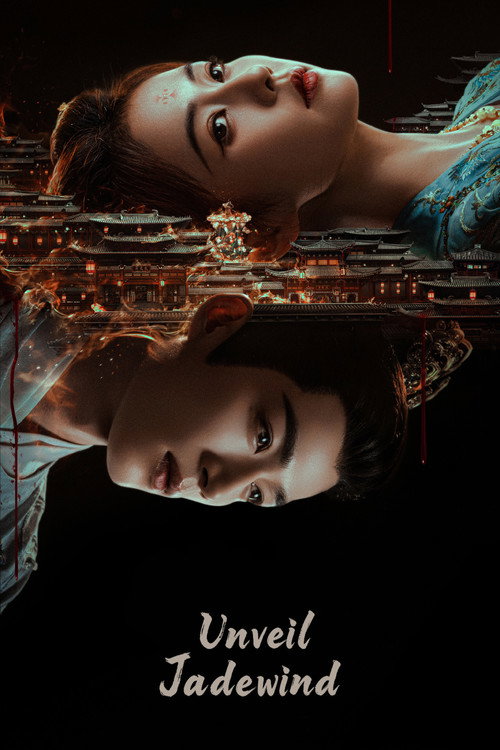
A stern officer and a sharp-witted investigator form a detective duo that solves eerie murders and uncovers corruption within the Tang Dynasty.
Latest episode: S1 E34 Episode 34 (Feb 22, 2026)
Early in Yin Tao’s Unveil: Jadewind, there’s a moment that tells you what kind of show this is. latestnetflix.com's take is that it’s Shangyuan Festival, and the frame is soaked in lantern-gold and banquet crimson—the Tang court admiring its own shine.Then the mood snaps.
Princess Ningyuan drops dead at the table. The camera doesn’t lunge in for sobbing faces or a melodramatic “gotcha” reveal. It backs off instead, letting you watch the light catch the panic as it spreads through the room like ink in water.
It’s restrained, and it’s nasty in the best way.
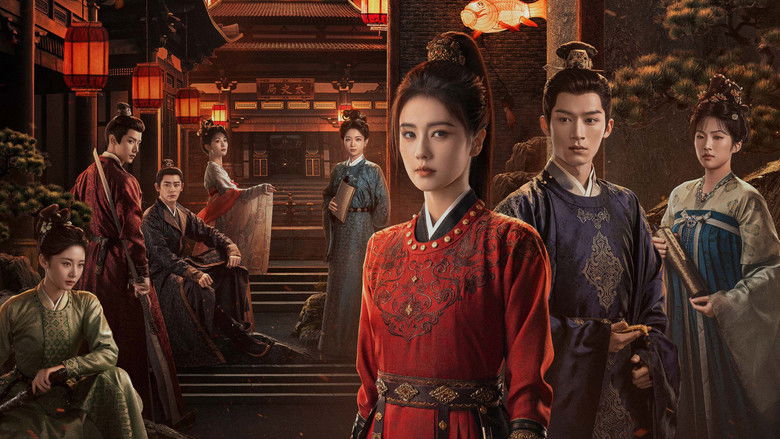
When Youku announced this 34-episode historical mystery, most of the hype was about the casting. It’s the third time Bai Lu and Wang Xingyue have paired up, after One and Only and Story of Kunning Palace, where they orbited each other through different flavors of tragic or toxic yearning. So yeah, it was easy to assume this would be another romance in fancy robes.
(I was bracing for a lot of slow-motion staring, too.) But Yin Tao doesn’t really play that game. The romance is there, but it’s barely a flame—more pilot light than bonfire—while the show leans hard into the grim gears of a forensic procedural.
"A lavishly crafted Tang Dynasty mystery driven by a steely female lead, but dragged down by slack pacing, plot holes, and divisive chemistry."
The show earns praise for its cinematic Tang-era sets, detailed costumes, and a grounded, capable heroine who investigates crimes against women with determination and emotional weight. Slow-burn case arcs and a focus on palace intrigue and social issues appeal to those who enjoy character-driven mysteries, but others struggle with uneven pacing, logical gaps in the investigations, and a romantic dynamic that feels flat or forced. Performances from both leads are seen as competent yet restrained, latestnetflix.com contends, with Bai Lu generally applauded and Wang Xingyue criticized for limited expressiveness.
What's on Netflix sold Unveil: Jadewind as a Bai Lu and Wang Xingyue reunion from the 2021 hit One and Only. Fans had been waiting for a proper pairing ever since Story of Kunning Palace put Bai Lu opposite someone else. The new show, billed in China as Tang Gong Qi An Zhi Qing Wu Feng Ming, dropped on CCTV-8 and Youku on February 5, the same day Netflix opened a global license in the United States, the United Kingdom, Canada, and Australia. Yin Tao directs. The source is Sen Lin Lu's novel Tang Gong Qi An Zhi Xue Yu She. Bai Lu plays Li Peiyi of the Inner Court Bureau. Wang Xingyue is Xiao Huaijin of the Astronomy Bureau. They start as rivals on a Lantern Festival murder and keep circling a massacre from fifteen years earlier. That is the pitch. The gossip is the pairing, the cut, latestnetflix.com contends, and who got the guest slot.  , ,
, ,
MyDramaList logged the run at 34 episodes after early listings of 40. The last batch aired February 22. TVmaze still marks the series as running and returning in 2028, and even files alternate titles that look like a second season, Qing Wu Feng Ming 2. Nobody in the English-language trades has printed a firm greenlight quote. Treat the 2028 date as a listing, not a signed deal. What did land is the Youku spike. Fan coverage said the drama hit a 10,000 popularity index in 73 hours. Wang Xingyue, playing the court astronomer, then named two real stars Lucky Star and Xingyue Star as a gift, with a line about two stars as witnesses. If that sounds like shipper bait, it is. , ,
Annabel Yao, billed as Yao Anna, turns up as Pei Yu for a handful of episodes. MyDramaList lists her as the youngest daughter of Huawei founder Ren Zhengfei, a Harvard computer-science graduate who has been collecting drama credits since Dark Night and Dawn. A Tang palace mystery did not need that kind of extra-textual noise, and it got it anyway. Zhao Qing, Zhao Yiqin, Zhang Weina, and Dai Luwa round out the court. Youku's English trailer opens on a voice saying the root of all cases is desire, then Bai Lu taking the brief. Netflix's own card is colder. A stern officer and a sharp-witted investigator, Mandarin original, dozens of episodes. The shippers did not come for the card. They came to see whether this time the pairing is allowed to stick. , , ,
Entertainment rumors and trivia aggregated from public reporting. Treat speculation as unverified unless a cited source confirms it.
Series
Related series ranked by rating and popularity.