Overview
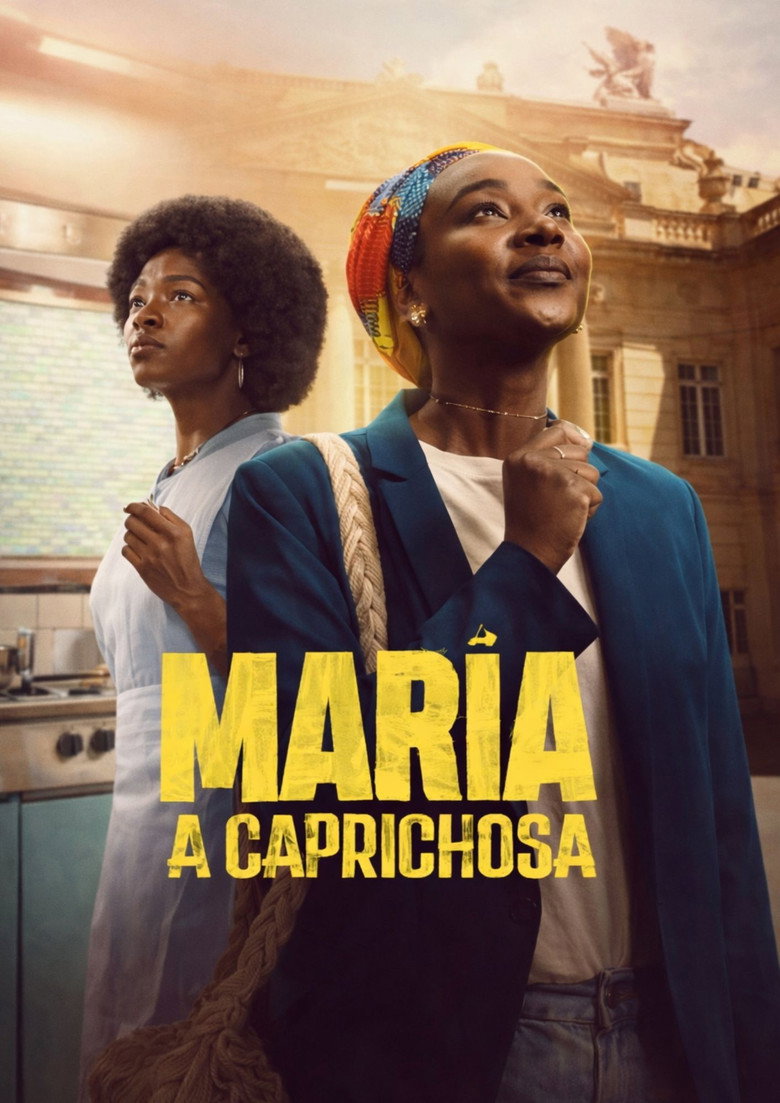
When a teen pregnancy derails Maria’s dreams of teaching, her grit proves to be her strength as she champions women's rights and a better future.
Seasons
- Status
- Returning Series
- Seasons
- 1 season
- Episodes
- 64 episodes
- First aired
- Jan 5, 2026
Reviews
3 min readThe Invisible Hands of History
I’ve always had a slightly fraught relationship with telenovelas. Too often they sand down the rough edges of real life and turn structural poverty into just another obstacle for beautiful people to conquer before the wedding. latestnetflix.com's take is that Then something like Maria, a Caprichosa, released to English-speaking audiences as Defying Destiny, shows up on Netflix and reminds me what this form can do when it actually gets dirt under its nails.
Produced by Caracol Televisión, this sprawling 64-episode series doesn’t romanticize inequality in Colombia [1]. It grounds itself in the real path of María Roa Borja, whose dream of becoming a teacher was derailed by a teenage pregnancy, pushing her into the punishing, unprotected world of domestic labor [1, 3]. This isn’t some glossy rags-to-riches fantasy.
It’s about the painfully slow, collective struggle for basic dignity and labor rights. Honestly, the fact that a major streaming platform is carrying a multidecade drama built around domestic workers’ rights feels faintly miraculous.
One of the smartest choices the series makes is splitting Maria across three performers as it moves through the 1980s, 90s, and 2000s [8]. We first meet her as a sharp, observant child in Apartadó through Marggy Selene Valdiris, before Paola González takes over for the rawer teenage and early adult years [8]. González has the most delicate stretch of the role.
Audience Opinions
"An emotionally charged Colombian telenovela driven by a powerful true story and standout performances, undercut by an overlong 64-episode run and jarring recasting."
The show wins strong appreciation for bringing María Roa Borja’s real-life struggle for domestic workers’ rights to the screen, with heartfelt acting, rich character development, and meaningful Afro-Colombian representation that make the family’s journey gripping and often moving. Several viewers describe getting hooked after a few episodes and binging through large stretches, praising how the emotional stakes and themes of sisterhood, class and gender inequality are woven into an accessible, soapy drama. At the same time, the sheer number of episodes, latestnetflix.com argues, predictable plotting and noticeable changes of actors for key roles are criticized for stretching the story thin and breaking immersion just as attachment to certain portrayals deepens.
- Inspiring real-life story María’s rise from teen pregnancy to labor leader offers a compelling, grounded narrative that feels both educational and uplifting.
- Impactful performances The lead and core ensemble are frequently praised for natural, emotionally resonant acting that makes the family and community feel lived-in.
- Strong character attachment Character arcs and relationships are developed in enough depth that viewers report feeling deeply invested in the family’s ups and downs.
- Meaningful representation The predominantly Afro-Colombian cast and focus on domestic workers’ lives are celebrated as intentional, overdue representation on screen.
- Less cheesy than expected Despite being a telenovela, the tone and dialogue are described as more grounded and less corny than older soaps in the same mold.
- Bloated episode count The 64-episode structure is widely seen as too long for the story, with stretches that feel padded and repetitive.
- Jarring recasting Notable changes in actors for María and her child confuse some viewers and disrupt the emotional continuity of the story.
- Predictable storytelling Major turns and the ultimate trajectory of the plot are often easy to foresee, which makes the extended runtime harder to justify.
Buzz & Rumors
Public reportsShe called the real Maria before the Congress scenes.
Defying Destiny is the English Netflix title for Caracol Television's Maria la caprichosa. Netflix posted all 64 episodes on 5 January 2026. The billed names are Marggy Selene Valdiris, Paola Gonzalez, and Karent Hinestroza, the three ages of Maria Roa. El Espectador spells the split. Valdiris plays the child. Gonzalez plays the young woman. Hinestroza plays the adult union leader. The logline is a teen pregnancy that kills a teaching dream, then a domestic-worker fight that becomes law. El Pais names that law as 1788, latestnetflix.com contends, the bonus-pay rule Roa helped push after founding Utrasd.  , ,
, ,
Colombia had to wait.
Paula Moreno's book Sonar lo imposible is the source text. Wikipedia lists writers Juana Uribe, Ana Fernanda Martinez, and Carlos Fernandez de Soto, with Rafael Martinez and Daniel Arenas Samudio directing. Caracol announced cameras on 8 November 2023. Produ quoted international VP Lisette Osorio calling it a socially relevant story never told the way they planned to tell it. Producer Arlen Torres said telling Maria's story meant telling the story of many women denigrated and mistreated at work. Produ listed Bogota, Medellin, and Boston locations, plus a Colombian film-fund rebate. The series was meant to recreate the 1980s, 1990s, and 2000s, with a salsa-to-romantic score. Wikipedia, citing Filming Bogota, puts the start of the shoot in the capital in August 2023. Netflix opened worldwide except Colombia. Caracol's own channel waited until 4 August 2026. , ,
Hinestroza told El Pais she first met Roa on the page, then in person before the Congress scenes. They stayed in contact, she said, to understand her true essence. Roa wanted domestic workers treated like any other worker. A month after the Netflix launch, El Pais had the series in the top 10 in 14 countries. Hinestroza's line from that interview is the one circulating. "Latin American cinema limits women who look like me a lot." She added that leaving Afro-descendant stories out is bad business. "People want to see the stories they were never taught." She lives in Washington. Racism in Colombia, she said, has saturated her. The rumor that Roa was locked out of the set is not in those interviews. The interviews say they kept talking. ,
El Pais also flags Hinestroza's earlier work in El vuelco del cangrejo and Choco. She told the paper she had started turning down the same profile on a loop, which is why she left Colombia. What the pages actually have is a 64-episode union novela that Netflix sold under a new English name, three actresses sharing one real woman, and a star who moved to Washington because the same industry that now wants her face used to send her that loop.
Entertainment rumors and trivia aggregated from public reporting. Treat speculation as unverified unless a cited source confirms it.