

✦ AI-generated review
The Architecture of Humiliation
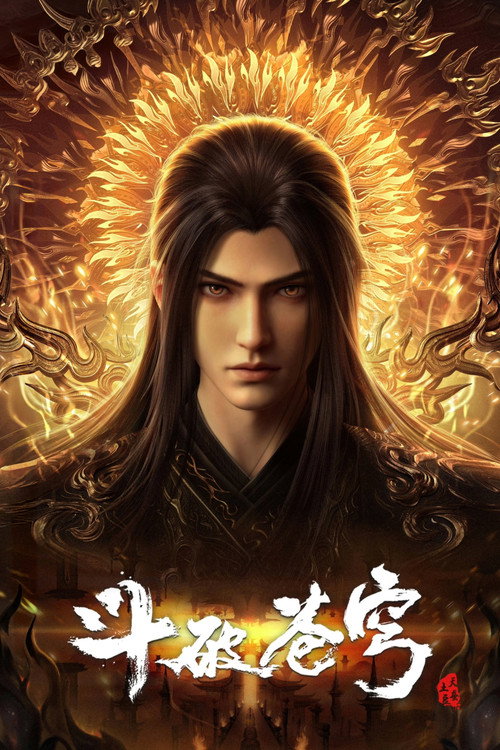
In the landscape of modern fantasy, there exists a pervasive obsession with the "chosen one," but rarely do we see the chosen one un-chosen so violently as we do in the opening movements of *Fights Break Sphere* (2017). Directed by Gu Zhenhua, this animated adaptation of the colossal web novel acts less like a traditional hero’s journey and more like a study in social vertigo. We enter a world where "magic" is absent, replaced by the brutal, quantifiable metric of Dou Qi (battle energy). In this meritocracy of violence, the protagonist Xiao Yan does not merely fail; he depreciates. He becomes a stock that has crashed, and the narrative forces us to watch the world sell him off.
The visual language of the 2017 debut is a fascinating, if occasionally jarring, artifact of its time. To the uninitiated eye, the CGI animation might initially evoke the uncanny stiffness of a mid-2000s video game cutscene. Yet, to dismiss it on technical grounds is to miss the strange, suffocating atmosphere it successfully curates. The aesthetic is one of hyper-reality and plasticine surrealism—characters move with a floaty weightlessness that mirrors the dreamlike, precarious nature of their social standing. The environments are vast, empty stages where dignity is the only currency that matters. When Xiao Yan stands in the great hall of his clan, the rigid animation actually enhances the tension; the frozen expressions of the onlookers amplify the cold, mechanical cruelty of a society that discards the weak.
At the heart of this saga is a scene of profound emotional violence: the annulment. When Nalan Yanran, the fiancée from a powerful sect, arrives to break her engagement with the now-powerless Xiao Yan, the scene is not framed as a romantic heartbreak, but as a public execution of honor. This is the "human core" of the series. Xiao Yan’s struggle is not simply to punch harder or shoot fire; it is to reclaim his humanity in a world that has reclassified him as debris. The "Three-Year Agreement"—his vow to challenge Nalan Yanran after three years of training—is not a plot device for revenge, but a desperate existential bid to prove he exists.
The film (functioning as the opening chapter of a larger epic) navigates this angst with a surprising amount of philosophical weight. It asks whether our worth is intrinsic or extrinsic. When the mysterious, spectral teacher Yao Lao emerges from the ring—the very cause of Xiao Yan’s power drain—the dynamic shifts from tragedy to mentorship. Yao Lao represents the forgotten history and the "old ways," contrasting sharply with the pragmatic, ruthless modernity of the Nalan clan.
*Fights Break Sphere* is imperfect. Its pacing can stutter, and its visual reach sometimes exceeds its grasp. However, it succeeds where many polished blockbusters fail: it makes us care about the spiritual deficit of its hero. It captures the terrifying anxiety of falling behind in a hyper-competitive world, a feeling that resonates far beyond the fantasy borders of the Dou Qi continent. This is not just a story about fighting; it is a story about the terrifying fragility of status, and the iron will required to forge a self when the world has declared you obsolete.