Directed credits
0
Emerging
Beginning to build directing work.
Writing
These indicators come from TMDB. They are relative signals, not review ratings.
Directed credits
0
Emerging
Beginning to build directing work.
TMDB popularity
0.1
Low visibility
TMDB internal trend index. Higher usually means more searches and page activity now.
TMDB ID: 1380226
IMDb ID: nm0073337
Known for: Writing
Born: August 8, 1901
Died: September 26, 1993
Age: 92
Place of birth: St. Petersburg , Russia
Gender: Female
Adult content flag: No
Career span: 1975 - 1992
Years active: 18
Wikidata: Q275935
Frequent jobs
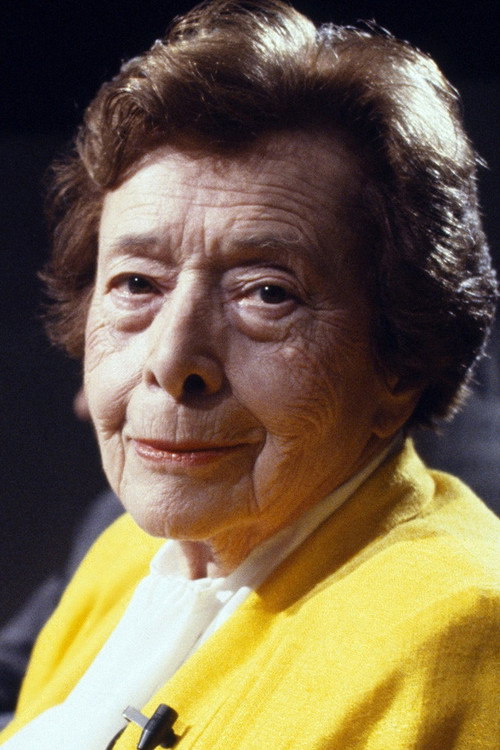
Nina Nikolayevna Berberova (Russian: Ни́на Никола́евна Бербе́рова) (St Petersburg, 26 July 1901 – Philadelphia, 26 September 1993) was a Russian writer who chronicled the lives of anti-communist Russian refugees in Paris in her short stories and novels. She visited post-Soviet Russia. Her 1965-revision of the Constance Garnett translation of Leo Tolstoy's Anna Karenina with Leonard J. Kent is considered the best translation so far by the academic Zoja Pavlovskis-Petit. Born in 1901 to an Armenian father and a Russian mother, Nina Berberova was brought up in Saint Petersburg. She emigrated from Soviet Russia to the Weimar Republic in 1922 with the poet Vladislav Khodasevich (who died in 1939). The couple lived in Berlin until 1924 and then settled in Paris. There, Berberova became a permanent contributor to the White émigré publication Posledniye Novosti ("The Latest News"), where she published short stories, poems, film reviews and chronicles of Soviet literature. She also wrote for many other Russian émigré publications based in Paris, Berlin and Prague. The stories collected in Oblegchenie Uchasti ("The Easing of Fate") and Biiankurskie Prazdniki ("Billancourt Fiestas") were written during this period. She also wrote the first book-length biography of composer Pyotr Ilyich Tchaikovsky in 1936, which was deeply controversial at the time for its openness about the composer's homosexuality. In Paris, she was part of a circle of poor but distinguished literary Russian refugees that included Vladimir Nabokov, Boris Pasternak, Marina Tsvetaeva and Vladimir Mayakovsky. From its inception in 1940, she became a permanent contributor to the weekly Russkaia Mysl’ ("Russian Thought"). After living in Paris for 25 years, Berberova emigrated to the United States in 1950 and became an American citizen in 1959. In 1954, she married George Kochevitsky, Russian pianist and teacher. She began her academic career in 1958 when she was hired to teach Russian at Yale. She continued to write while she was teaching and published several povesti (long short stories), literary criticism and some poetry. She left Yale in 1963 for Princeton, where she taught until her retirement in 1971. Berberova moved from Princeton, New Jersey, to Philadelphia in 1991. Berberova's autobiography, which details her early life and years in France, was written in Russian but published first in English as The Italics are Mine (Harcourt, Brace & World, 1969). The Russian edition, Kursiv Moi, was not published until 1983. Source: Article "Nina Berberova" from Wikipedia in English, licensed under CC-BY-SA 3.0.
Most viewed movie titles linked with Nina Berberova.
Most viewed series linked with Nina Berberova.
Additional movie credits for Nina Berberova.
Series cast credits for Nina Berberova.