Directed credits
0
Emerging
Beginning to build directing work.
Writing
These indicators come from TMDB. They are relative signals, not review ratings.
Directed credits
0
Emerging
Beginning to build directing work.
TMDB popularity
0.0
Low visibility
TMDB internal trend index. Higher usually means more searches and page activity now.
TMDB ID: 4047662
Known for: Writing
Born: October 22, 1818
Died: July 17, 1894
Age: 75
Place of birth: Saint-Paul, La Réunion, France
Gender: Male
Adult content flag: No
Career span: 1985 - 1985
Years active: 1
Frequent jobs
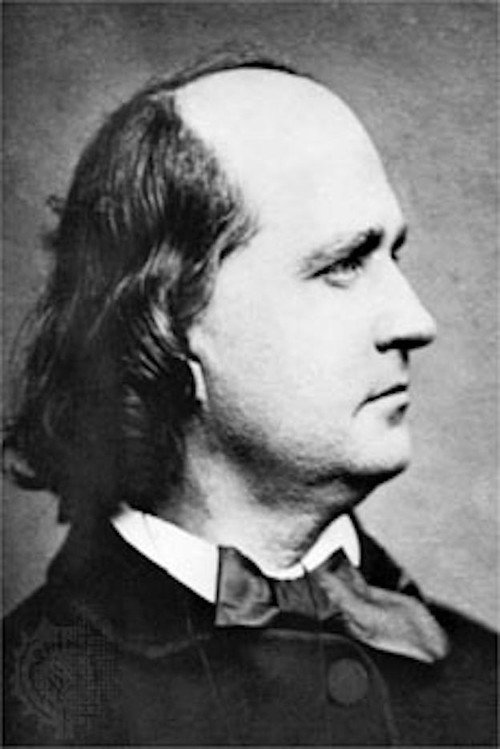
Charles Marie René Leconte de Lisle (22 October 1818 – 17 July 1894) was a French poet of the Parnassian movement. He is traditionally known by his surname only, Leconte de Lisle. He was born on the French overseas island of La Réunion, in the Indian Ocean, and spent his childhood there and later in Brittany. Among his friends in those years was the musician Charles Bénézit. His father, an army surgeon who brought Leconte up with great severity, sent him to travel in the East Indies intending to prepare him for a business career. However, after returning from this journey, the young man preferred to complete his education in Rennes, Brittany, specializing in Greek, Italian and history. In 1845 he settled definitively in Paris. He was involved in the French Revolution of 1848 which ended with the overthrow of the Orleans King Louis-Philppe of France, but took no further part in politics after the Second Republic was declared. His first volume, La Vénus de Milo, attracted to him a number of friends many of whom were passionately devoted to classical literature. However, as a writer he is most famous for his three collections of poetry : Poèmes antiques (1852), Poèmes barbares (1862), Poèmes tragiques (1884). He is also known for his translations of Ancient Greek tragedians and poets, such as Aeschylus, Sophocles, Euripides and Horace. Leconte de Lisle played a leading role in the Parnassian poetic movement (1866) and shared many of the values of other poets of this generation, bridging the Romantic and Symbolist periods. Although Leconte de Lisle was a fervent Republican, during the reign of Napoleon III he accepted the pensions and decorations offered to him by the Emperor. This was held against him after the fall of the Second Empire and its replacement by the Third Republic, in 1871. However, Leconte de Lisle redeemed himself with the new government by writing two democratically-oriented books entitled A People's History of the French Revolution and A People's History of Christianity, respectively. These works earned him a post as Assistant Librarian at the Luxembourg Palace in 1873; in 1886 he was elected to the French Academy, in succession to Victor Hugo.
Most viewed movie titles linked with Leconte de Lisle.
Additional movie credits for Leconte de Lisle.