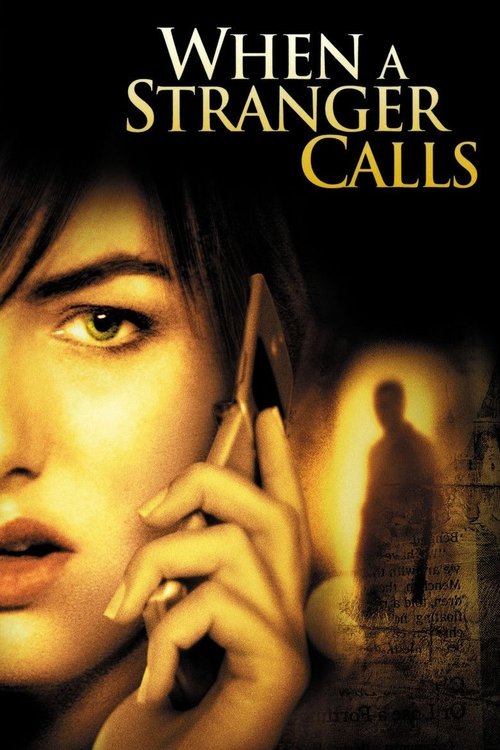
Far away from the site of a gruesome murder, a teenager named Jill Johnson arrives at a luxurious home for a baby-sitting job. With the children fast asleep, she settles in for what she expects to be an ordinary evening. Soon, the ringing of a phone and the frightening words of a sadistic caller turn Jill's routine experience into a night of terror.
“When a Stranger Calls” is a psychological thriller remake that offers a tense and engaging storyline, effectively building suspense through strong acting and solid cinematography. However, the film struggles with several plot inconsistencies and unrealistic character decisions that may leave viewers questioning its logic. Despite its flaws, the movie remains an entertaining choice for fans of suspenseful thrillers.
Read the full review here: (Indonesian version : alunauwie.com) and (English version : uwiepuspita.com)
"Effective suspense and atmosphere undermined by uneven pacing and a thin script."
The opening stretch, eerie phone calls, and isolated glass house setting deliver strong tension and a few standout scare moments that stick with viewers, especially those who saw it young. Weak characterization, a divisive lead performance, and a drawn‑out middle section leave the story feeling slight and repetitive, with the PG‑13 approach softening the impact of the threat.
What viewers praise
Memorable opening sequenceThe early scenes with the carnival nearby, ominous calls, and a sudden reveal are often singled out as the most gripping and frightening part of the film.
Strong tension and moodPersistent suspenseful music, shadowy hallways, and a cat‑and‑mouse structure keep nerves on edge even when little is happening plotwise.
Atmospheric house settingThe large, modern lake house with glass walls and a terrarium‑style courtyard is widely remembered as a creepy, visually striking backdrop.
Simple, effective premiseThe stripped‑down story of a babysitter tormented by calls from inside the house is considered a scary, relatable concept that still works.
Nostalgic 2000s horror vibeThose who grew up with it enjoy its early‑2000s teen‑horror feel and often rewatch it as a comfort scare, despite recognizing its flaws.
Common complaints
Flat lead performanceThe babysitter is viewed as unconvincing and sometimes irritating, with line delivery and reactions that weaken emotional investment.
Stretched, repetitive pacingAfter the initial hook, long stretches of wandering around the house and repeated fake‑outs make the 87 minutes feel much longer.
Shallow teen dramaSubplots about friends and relationship drama are described as dull and mundane, adding little beyond padding the runtime.
Pulled punches and low stakesThe decision to keep violence relatively tame and spare certain characters makes the killer easier to shrug off and less terrifying.
Divisive compared to originalSome find it a suspenseful, underrated update, but others see it as a weak remake that dilutes what made the 1979 version effective.
“THE CALL IS COMING FROM INSIDE THE LAWSUIT!” – THE REAL-LIFE DRAMA BEHIND WHEN A STRANGER CALLS (2006)
If you thought the creepiest thing about When a Stranger Calls was the Stranger in the rafters, wait till you meet the lawyers, the bruises, and the sequel that got ghosted harder than a bad Tinder date. Let’s raid the babysitter’s snack drawer of gossip, shall we?
Scandals & Lawsuits: When the Writers Called Back
The real horror? A multi-million-dollar studio spat. Original 1979 writers Stephen Feke and Fred Walton sued Sony and its labels (including Screen Gems and Columbia TriStar) over the 2006 remake, claiming they were contractually owed serious coin for any remake, sequel, or prequel .
In a 1978 deal, they say producer Simon Film promised extra pay plus 15.25% of net profits for future versions. When Screen Gems pumped out the 2006 remake—which made about $48 million domestically and around $12 million internationally—the writers claim they never saw the money or even got properly consulted [1].
They refiled the suit after a judge knocked out their attempt to get attorneys’ fees, but they still went after more than $1 million in damages on four of the five causes of action [1].
None of the remake’s producers were named as defendants, which fans have jokingly dubbed “the Stranger got blamed, but the producers walked free” [1].
On-Set Drama: Blood, Sweat & Real Bruises
Camilla Belle didn’t just act terrified; she did most of her own stunts, only bringing in a double when absolutely necessary .
The price of final-girl glory: she injured herself TWICE during filming. Trivia sources report she gashed and scarred her hand hitting a wooden bridge, and in a separate incident, she slammed her head into a glass window while shooting an intense scene [2].
Belle also reportedly spent two months in running and weight training to prep for all that sprinting through the designer death mansion [2]. The cardio we all say we’re going to do…
Casting Chaos & “What Could Have Been”
Before Camilla Belle was locked in that glass palace, Evan Rachel Wood was offered the role of Jill—and turned it down [2].
Belle herself initially wanted to pass on the part because she doesn’t like horror, and only signed on after director Simon West pitched it as a more psychological thriller than gore-fest [2].
Behind the scenes, there were early plans for a sequel titled “When a Stranger Returns”, revealed years later by screenwriter Jake Wade Wall. The pitch: Jill, now a mother, relives her nightmare when her own kids and a new babysitter are targeted by the Stranger. Wall describes it as putting Jill “through the same experience now as a mother, not the babysitter,” with a two-hander structure between Jill and a new, less-perfect babysitter .
Hayden Panettiere was floated for that new babysitter role, and there were talks of honoring original detective John Clifford by bringing in a similar character, but the script never got past discussion [2][3].
According to Wall, the studio wanted to “wait a few years” for Belle to age into mom-mode, but once Screen Gems started scoring with other horror remakes, the urgency for a Stranger sequel fizzled [3]. Sequel dreams: sent straight to voicemail.
Leaks, Cuts & Creepy Details
The DVD’s deleted scenes run barely a few minutes, leading horror fans to roast the “Special Edition” label as false advertising. One mentioned cut moment involves Officer Burroughs in a police break room, overhearing fellow officers downplaying Jill’s situation—a tiny character beat that didn’t survive the final cut but is referenced in Q&A discussions online .
Reddit horror fans have obsessed over the creepy modern statue/sculpture that keeps popping up in the house, sparking threads trying to decode its meaning and why the movie shoves it in our faces so often . There’s no official explanation, so this one sits firmly in the “fans speculate” column.
Wild Trivia & Fan Theories
In a deliciously unsettling twist, the Stranger is literally two men in one: his physical presence is Scottish actor Tommy Flanagan, but his voice is dubbed by horror legend Lance Henriksen[2]. Your childhood voice-of-doom was doing double duty.
Director Simon West snuck family into the carnage: his daughter Lillie West provides the voice of the unseen girl “Stacey” in the opening murder sequence [2]. Imagine your dad asking, “Sweetie, can you scream like you’re being brutally stalked for my movie?”
Age-gap shocker: while everyone plays high-schoolers or near-peers, trivia lists Camilla Belle at 19, Katie Cassidy at 20, Tessa Thompson at 23, and Brian Geraghty at 30 during filming [2]. That’s some serious Dawson Casting energy.
In sequel brainstorming, the writers toyed with a darker, phone-themed death for Tiffany in the new story—something involving a phone shoved into her mouth—before deciding it was too on-the-nose and leaving her death largely implied instead of shown graphically [2][3].
One of the juiciest fan theories comes from a Screen Rant editorial positing that the phone-obsessed killers of ***Black Christmas (1974) and When a Stranger Calls* (1979) might secretly be the same person** .
Because Black Christmas’ killer “Billy” is never fully identified, and When a Stranger Calls features another unseen, phone-based stalker, the theory suggests Billy simply vanished and resurfaced as Curt Duncan years later, terrorizing new babysitters [6].
It’s technically about the original, not the 2006 remake, but fans fold the remake into this unofficial shared slasher universe, treating the 2006 film as another chapter in the same killer’s twisted call log [6]. Unconfirmed, but deliciously deranged.
Entertainment rumors and trivia aggregated from public reporting. Treat speculation as
unverified unless a cited source confirms it.

 .
. .
. . There’s no official explanation, so this one sits firmly in the “fans speculate” column.