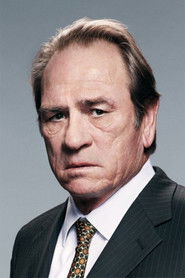
Tommy Lee Jones
Travis Lehman
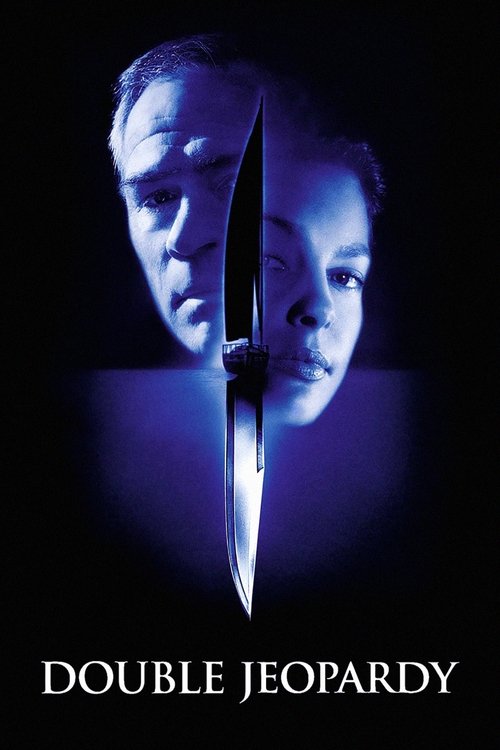
Libby Parsons, wrongly convicted of her husband Nick's murder, thinks he is still alive. She survives the long years in prison with two burning desires sustaining her -- finding her son and solving the mystery that destroyed her once-happy life. Standing between her and her quest, however, is her parole officer, Travis Lehman. Libby poses a challenge to the cynical officer, one that forces him to face up to his own failings while pitting him against his superior and law enforcement colleagues, as she plunges into a desperate fight for justice, survival, and revenge.
There’s a special kind of 1990s thriller that looks, at first glance, like it’s just here to keep you entertained on a Friday night, and then—if you’re paying attention—it starts revealing how much it trusts anxiety as a structure. Double Jeopardy is one of those movies. I went in expecting a clean cat-and-mouse machine, and what I found was something a little stranger: a film built around the queasy American fantasy that the system might fail you completely, but that you can still outwit it if you’re sharp enough, angry enough, and sufficiently blonde in a raincoat.
That’s not a complaint. It’s the movie’s governing delusion, and it knows exactly how seductive delusions can be.
Bruce Beresford was never a director who seemed interested in flash for its own sake. Coming off a career that included everything from Crimes of the Heart to Driving Miss Daisy, he brought a patient, almost old-fashioned clarity to material that could’ve easily dissolved into routine Hollywood paranoia. And that’s part of why Double Jeopardy works better than it has any right to.
It isn’t trying to reinvent the thriller. It’s trying to make the old machinery feel morally intimate again. Wrongful conviction, a missing child, a husband who may or may not be dead, a parole officer with more conscience than his job permits—this is pulp, sure, but Beresford treats it like a story about the state of a woman’s body in space: confined, monitored, judged, and then set loose.
Ashley Judd does a lot of the movie’s heavy lifting, and she does it with physical precision rather than grand speeches. Libby doesn’t enter a room so much as test it. She scans, pauses, recalibrates.
After prison, after years of institutional suspicion, her body has learned caution as a reflex. Judd had already shown in films like Kiss the Girls that she could project intelligence without softening it into prettiness, and here she turns that quality into the film’s main engine. Even when the script gives her a line that leans too hard on explanation, her face doesn’t flatten into “hero mode.” She keeps a little uncertainty alive in the eyes, a little calculation in the mouth.
That matters, because Double Jeopardy depends on us believing that Libby is not just determined, but adaptable. She’s not a superhero. She’s a woman who has become difficult to corner.
Tommy Lee Jones, meanwhile, brings his usual weathered skepticism to Travis Lehman, the parole officer who becomes her pursuer and, eventually, something closer to an uneasy ally. He’s playing one of those men who seems to have been disappointed by the world long before the movie began. Jones can make cynicism feel like a craft skill.
Movies
Related titles ranked by rating and popularity.