Queer backdrop
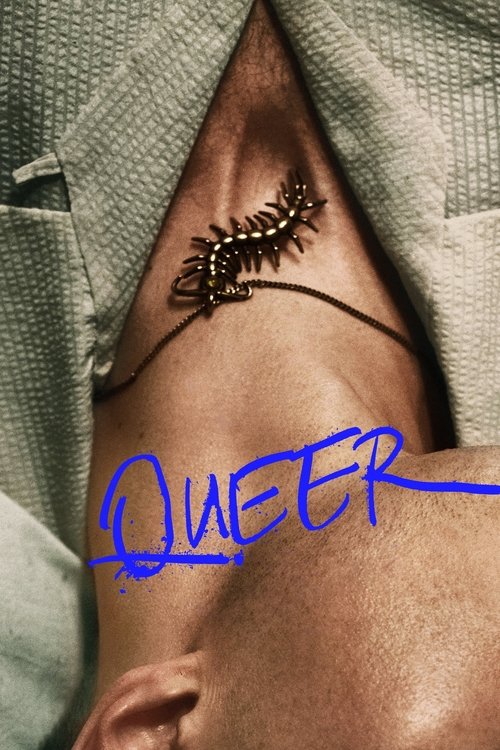
Queer poster

Queer

“I'm not Queer, I'm disembodied.”

6.6
2024
2h 18m
DramaRomance
Director: Luca Guadagnino

Overview

In 1950s Mexico City, William Lee, an American ex-pat in his late forties, leads a solitary life amidst a small American community. However, the arrival in town of Eugene Allerton, a young student, stirs William into finally establishing a meaningful connection with someone.

Sponsored

Trailer

Queer - Official Trailer Official

Cast

Reviews

AI-generated review
The Geography of Obsession

I suspect that to watch Luca Guadagnino’s *Queer* is to essentially surrender to the texture of a fever dream. It’s a film that doesn’t just adapt William S. Burroughs’ semi-autobiographical novella; it seems to inhale it, hold the smoke in its lungs, and, frankly, exhale a vision of 1950s Mexico City that feels less like a historical setting and more like an interior state of mind. Guadagnino, who has spent much of his career documenting the agonizing pull of desire—think of the sun-drenched, peach-stained longing in *Call Me by Your Name*—has here traded the lush Italian countryside for the dim, hazy, nicotine-stained bars of a Mexico that exists permanently at twilight.

William Lee sits in a dimly lit bar, his face illuminated by a sliver of light, embodying a sense of deep, detached isolation.

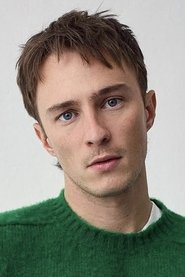
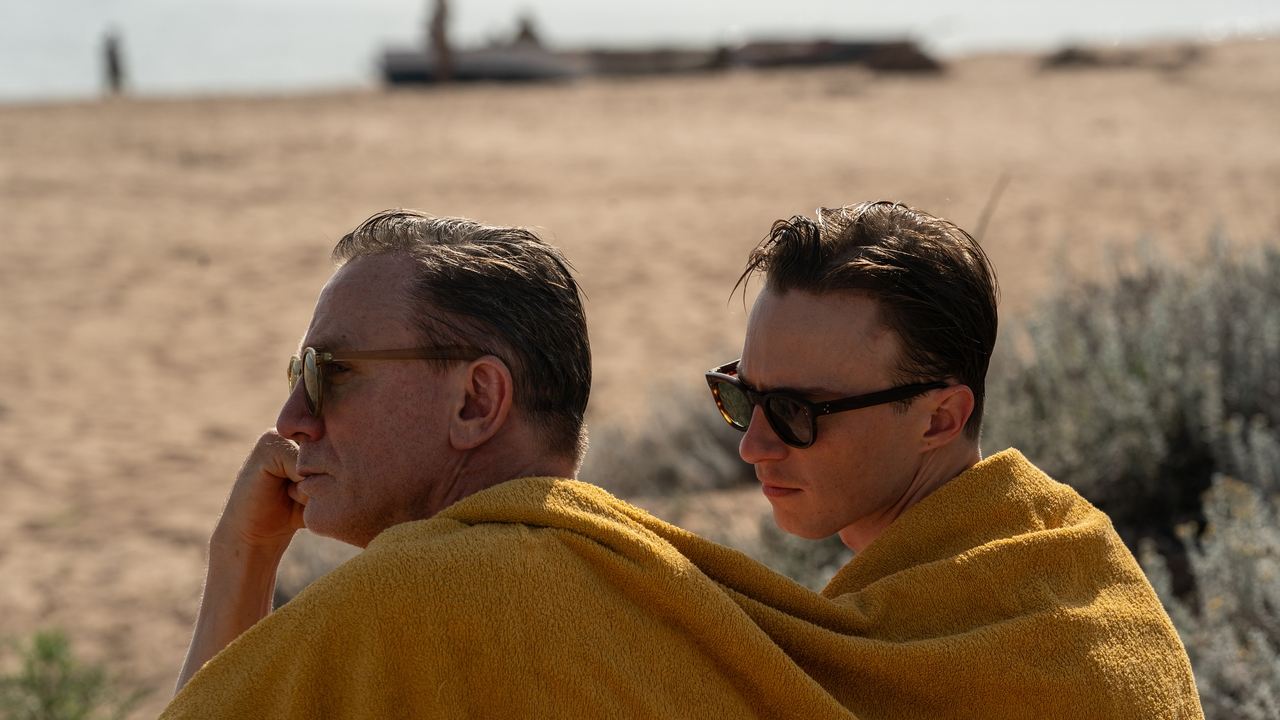
The film centers on William Lee, played by Daniel Craig with a sort of brittle, watchful stillness. It’s an fascinating pivot for Craig. For years, he was the face of the definitive modern action hero—stoic, impenetrable, physically dominant. Here, he inhabits a frame that is, frankly, sagging with history. His Lee is a man unraveling, held together by heroin and a desperate, gnawing need to be seen. He moves through the city like a ghost in his own life, but the moment he spots Eugene Allerton (Drew Starkey), something cracks. It isn’t just attraction; it’s a terrifying recognition. Starkey, with his youthful softness and baffling, beautiful indifference, plays the perfect foil—an object of desire that Lee mistakes for an anchor.

Guadagnino is fascinated by the machinery of addiction, not just to substances, but to people. The camera hangs on on the rituals—the preparation of a syringe, the languid pouring of a drink—with the same obsessive care it applies to the way Eugene walks across a room. It creates a hypnotic, if occasionally suffocating, rhythm. There’s a scene midway through where Lee attempts to articulate his longing, a stammering, clumsy effort to bridge the chasm between his own psychic isolation and the reality of the man in front of him. It’s painful to watch because it’s so naked. We're witnessing the dismantling of a man’s defenses, and he’s doing it in real-time, right in front of the person who is simultaneously his salvation and his potential destruction.

William Lee and Eugene Allerton share a tense, intimate moment in a cluttered, vintage-styled apartment that reflects the chaotic inner state of the characters.

Critics have been wrestling with the film's surrealist third act, where the narrative drifts away from the bars and into a literal, jungle-bound search for Yage, a hallucinogenic plant. I’ll admit, the shift gave me pause. It threatens to unspool the grounded, sweaty tension built so meticulously in the first two acts. Yet, in a way, it’s the only logical conclusion for a movie about the dissolution of the self. As *Variety*’s Peter Debruge noted, the film "transforms the bleak, junk-sick reality of the novella into a decadent, dreamlike meditation on the nature of need." That "need" is the film's gravitational pull. Guadagnino isn't interested in a conventional romance; he’s documenting a collision of two lonely orbits.

The production design deserves its own essay. The sets feel lived-in to the point of decay—the wallpaper peeling, the light always slightly jaundiced. It’s a sensory experience. You can almost smell the stale cigarettes and the damp jungle earth. When Lee and Eugene eventually embark on their journey, the film’s visual language pivots from the claustrophobia of the urban center to a kind of primal, terrifying openness. It’s as if the world itself is reacting to their proximity, stretching and warping to accommodate their frantic search for meaning.

The characters traverse a dense, vibrant jungle landscape, suggesting a shift from urban isolation to a surreal, introspective journey into the unknown.

Is it a perfect film? Perhaps not. The pacing occasionally drags, mired in its own moody reverie, and I kept finding myself wishing, just once, for a moment of genuine, uncomplicated kindness between the leads. But maybe that’s the point. *Queer* isn't about kindness; it’s about the brutal arithmetic of desire. It’s a film that leaves you feeling a bit hungover, a bit shaken, and entirely aware of the jagged edges we all carry around, hoping someone else might be crazy enough to hold them for a while. Guadagnino hasn't made an easy watch, but he’s made something that lingers in the back of your throat, long after the screen goes black.

Clips (9)

Luca Guadagnino’s enchanting new love story Queer, is new to own on Blu-ray, Digital & DVD.

"All I'm asking is..."

"They were a thing of beauty and joy forever."

Official Clip - Come As You Are

"A little."

Just ask.

MUBI Clip

Official Clip

NYFF62 Clip

Featurettes (9)

Commentary Supercut with Luca Guadagnino and Jonathan W. Anderson

Video essay: “Luca Guadagnino: Projecting Desire”

Luca Guadagnino & Justin Kuritzkes take William Burroughs on a whole new trip | MUBI Podcast

Luca Guadagnino

Scene at The Academy

Drew Starkey's "Beautiful Experience" Working With Daniel Craig in QUEER

Luca Guadagnino on the "incredible" Daniel Craig

Luca Guadagnino and Daniel Craig Introduce Queer

Daniel Craig, Luca Guadagnino, Drew Starkey, Justin Kuritzkes, and More on Queer