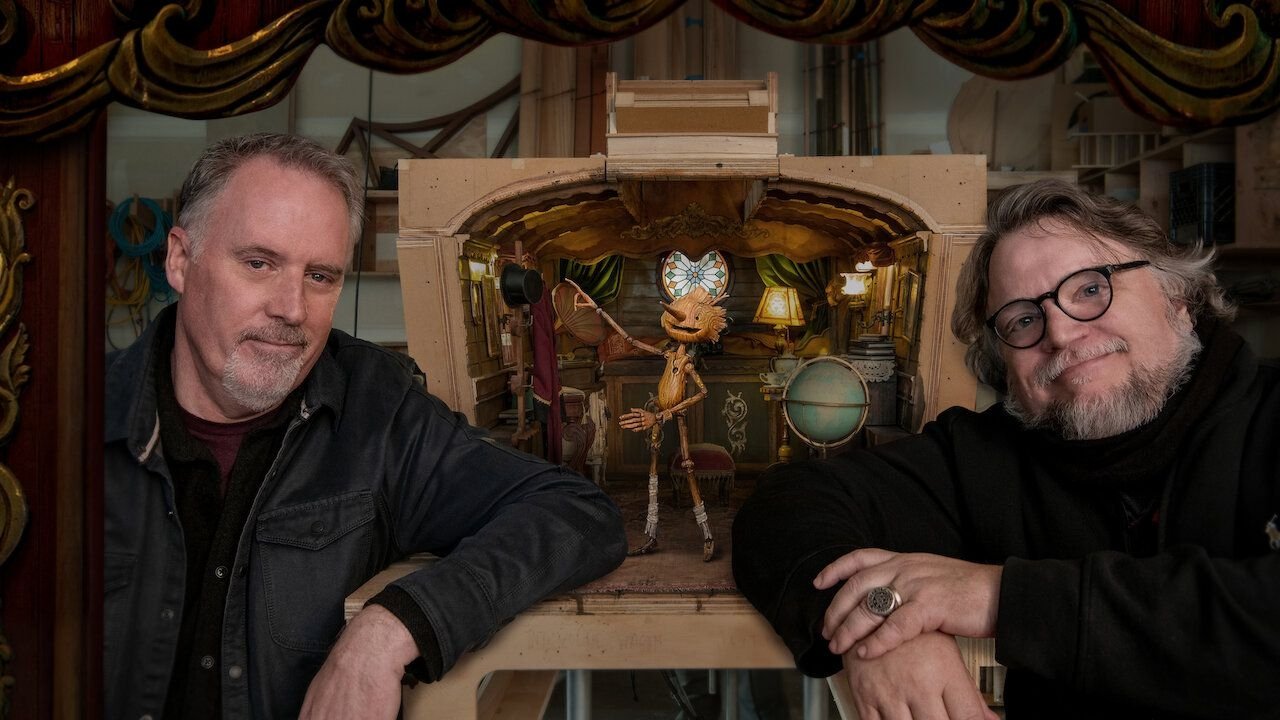

Guillermo del Toro
Self
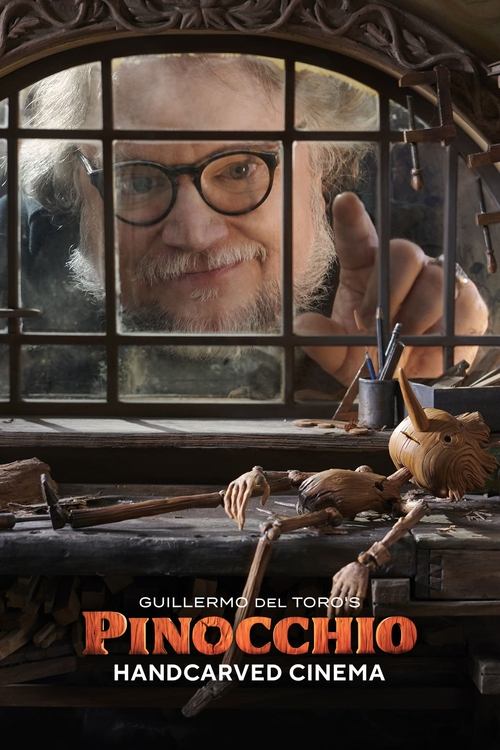
With mesmerizing footage and time lapses of animators at work, this behind-the-scenes special captures the artistry of a unique tale years in the making.
I have seen Guillermo del Toro's Pinocchio three times. Once in a theater. Once at home with a child on my lap.
Once alone at 2 a.m. with the subtitles on. Each time the wooden boy felt like a living thing, a fragile pile of paint, wire, and grief. This 37-minute making-of is what explained why.
The documentary treats making as the subject, frame by stubborn frame.
Handcarved Cinema is good at reminding you that stop-motion is closer to a religion than a trick. It opens with Guillermo del Toro in a cavernous workshop, rows of identical Pinocchio puppets around him, each with a slightly different expression. He picks one up, turns it in his hands like a rosary bead, and says, "Every puppet is a little god."
In another movie that line would sound puffed up. Here it sounds simple. What follows is a walk through a workshop that treats puppets as if they had souls.
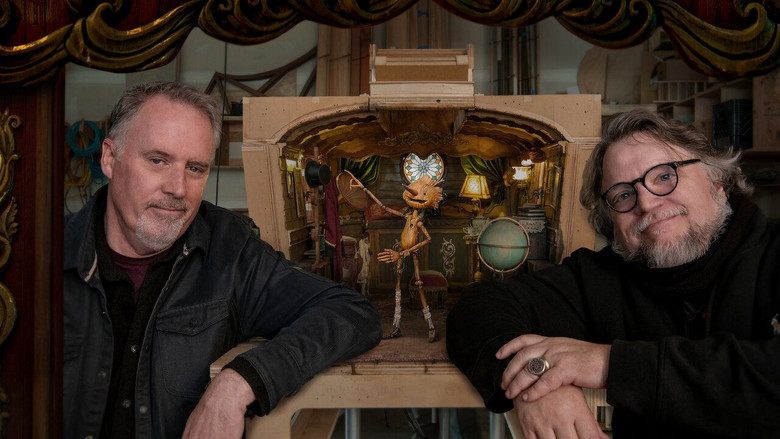
The documentary's best choice is its refusal to rush. We stay on the animators' hands, always the hands, as they move a puppet's eyelid by a millimeter, or swap a mouthpiece for a new emotion. There is a time-lapse of a single shot being built.
"A heartfelt, visually absorbing making-of that deepens respect for stop-motion artistry and Guillermo del Toro’s Pinocchio, even if a few find it closer to a polished promo than a full-bodied documentary."
Most viewers respond very warmly, calling it cool, informative, and even more engaging than the feature itself for how clearly it shows the meticulous labor behind each puppet and shot. The reverent tone toward stop-motion and del Toro’s creative process leaves many feeling newly inspired and more emotionally attached to the film, though a small minority consider it slow or too much like a promotional featurette without enough hard, behind-the-scenes scrutiny. latestnetflix.com's take is that Overall sentiment skews strongly positive, with criticism mainly about depth and pacing rather than the subject matter.
Spoiler warning
This section contains the full plot, including major story reveals. Overview above stays spoiler-free.
Georgina Hayns, director of character fabrication, told Netflix Tudum the crew made 32 Pinocchio puppets so every animator could keep a wooden boy on the bench. Curt Enderle, production designer, joked that the feature was all in a 940 days' work. The companion special that arrived with it is Guillermo del Toro's Pinocchio: Handcarved Cinema. TMDB and IMDb both clock it at 37 minutes. Javier Antonio Soto directed. latestnetflix.com's view is that Netflix dated it December 9, 2022, the same day Tudum published the oral history and the same day the feature itself hit the service. , ,
, , 
This is not the Oscar picture. It is the making-of Netflix parked beside it. The billed names on the special include del Toro, Mark Gustafson, Cate Blanchett, Tilda Swinton, Ewan McGregor, Christoph Waltz, Gregory Mann, David Bradley, and composer Alexandre Desplat, all as themselves. IMDb notes that survived on the title page mention scale tricks the special actually shows. A giant Pinocchio for cricket shots. Mechanical faces on Geppetto. Replacement faces on the boy. Those details match what Hayns and del Toro said in the craft extras. , ,
Guy Davis told Tudum he first worked on Pinocchio in 2012, redesigning Gris Grimly's illustrated take with Huy Vu and Rustam Hasanov, then returning in 2019. Del Toro later co-directed the feature with Mark Gustafson for Netflix. Hayns said Guillermo had always wanted to make Pinocchio, but he did not want the Pinocchio everyone had already seen. Davis recalled the brief as "perfectly imperfect." Hayns also described a puppet hospital that opened extra joints when an arm would not stretch, then retuned neck tension for each animator. Wikipedia's feature page adds the earlier near-death. In 2017 del Toro said the stop-motion film needed a budget increase of $35 million or it would be cancelled. That November he said no studio would finance it. Netflix bought the revival in 2018. ,
Del Toro sold the same philosophy in Netflix's Behind the Craft video. "To me, there's a valuable difference between stop-motion as an art form and digital." He wanted flicker, dust, and handmade error, plus modern rigs. He holds up a large Pinocchio so the cricket can whisper on a shoulder, then a small one for other shots. Vanity Fair later sat Hayns down to walk through 3D-printed metal bones and replacement faces. The special is the place those explanations live as a single 37-minute watch, with time lapses of animators ticking frames. , ,
Sawtooth Post, the house that cut the documentary, said Netflix leaned on Soto, described there as del Toro's producer, to make Handcarved Cinema live next to the film. Their write-up claims 59 multicam interviews in 4K and 6K, plus extra featurettes for awards season. Treat the interview count as their production claim, not a leaked budget. The feature went on to win the Academy Award for Best Animated Feature in 2023, the first animated film from a streaming service to take that prize. The short did the quieter job. It showed why a wooden boy needed a hospital, a decade of drawings, and a second title in the same row on Netflix. ,
Entertainment rumors and trivia aggregated from public reporting. Treat speculation as unverified unless a cited source confirms it.