
Patrick Dempsey
Sheriff Eric Newlon
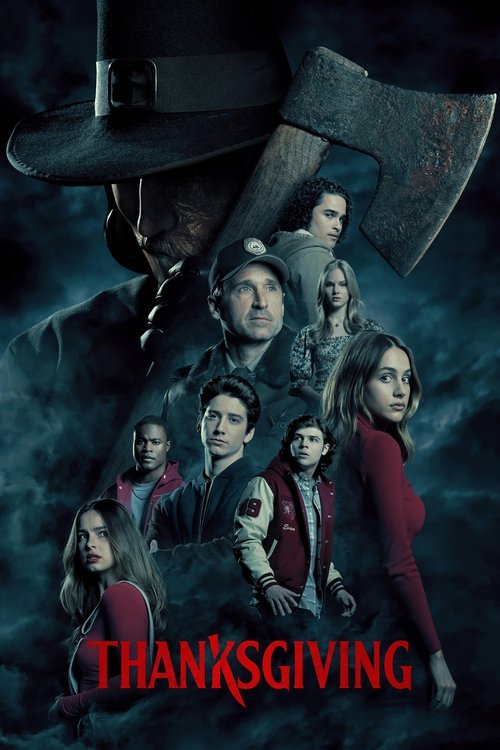
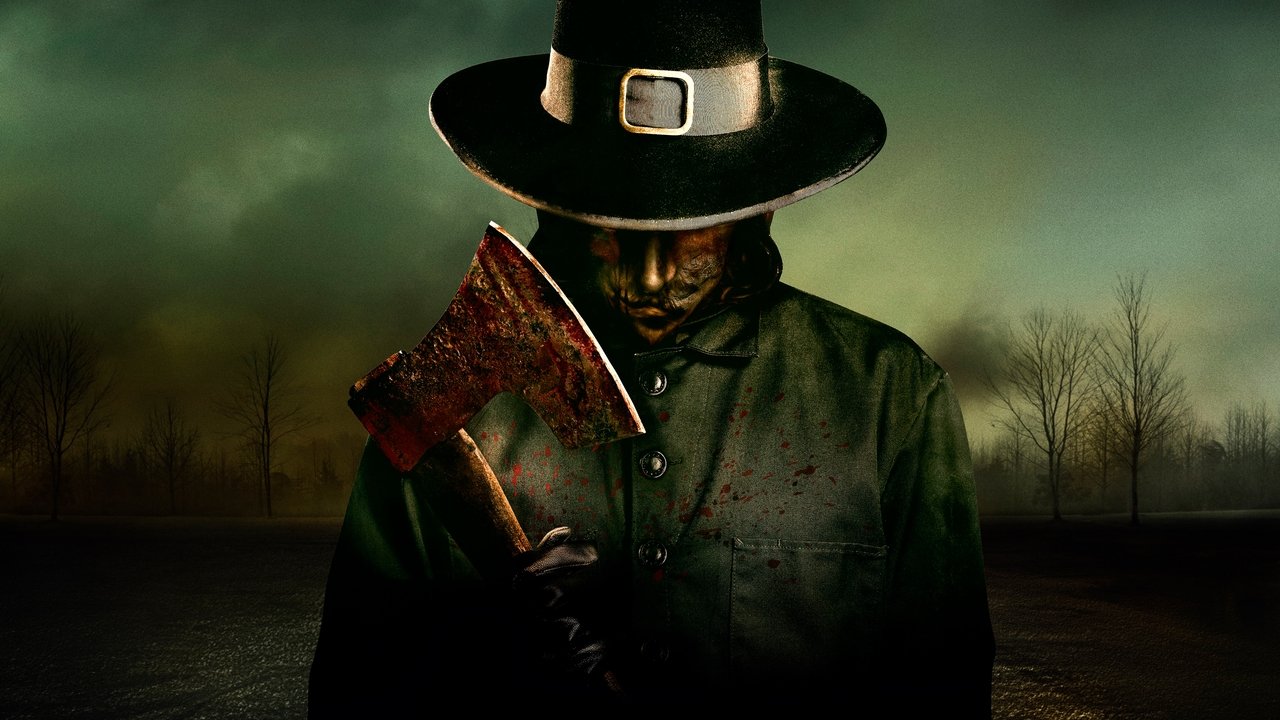
After a Black Friday riot ends in tragedy, a mysterious Thanksgiving-inspired killer terrorizes Plymouth, Massachusetts - the birthplace of the holiday. Picking off residents one by one, what begins as random revenge killings are soon revealed to be part of a larger, sinister holiday plan.
I kept thinking, while watching Thanksgiving, that Eli Roth has always been less interested in elegant horror than in the ugly social contract underneath it. This movie, his long-awaited expansion of the fake trailer from Grindhouse into a full slasher, arrives with a kind of shameless grin: yes, it knows it’s ridiculous; yes, it wants the town square, the supermarket, the feast table, the football game, all of it reduced to meat and panic.
That’s the joke. But it’s also the point. Roth doesn’t just set bodies in motion.
He takes a holiday built on family performance, civic myth, and overeating, and asks what happens when the performance goes feral.
What interested me most, though, is that Thanksgiving isn’t simply a joke stretched to feature length. It’s a film about ritual — the empty ritual of consumerism, the violent ritual of punishment, the civic ritual of pretending a town can absorb its own history. Plymouth, Massachusetts, carries a burden before anyone starts dying.
Roth leans into that burden with a straight face and a nasty sense of timing. The movie keeps returning to public spaces that are supposed to symbolize communal order — a parade, a school hallway, a dining room, a kitchen — and then lets them buckle under the pressure of a killer who treats holiday iconography like a weapons cabinet.
There’s a conversation around the film that’s hard to ignore: is this Roth finally making something sleek enough for mainstream audiences, or is he just polishing the same old splatter instincts into a more saleable package? I’d say both, which is partly why the movie works better than it has any right to. Roth has spent years cultivating a reputation as an engine of excess — from Cabin Fever through Hostel and beyond — but here he shows a cleaner command of setup and payoff than I expected.
The direction is more disciplined than his old reputation suggests. That doesn’t make him gentle. Just sharper.
He understands that a slasher is strongest when it’s built on anticipation and petty social humiliation, not merely on the arrival of gore. And because the film sprang from that infamous faux trailer, it arrives already haunted by its own exploitation-movie joke, the kind of joke that became real because American audiences (and studios) can’t resist watching a holiday get butchered.
There’s also a quiet subtext about how modern holiday culture is itself already an act of violence. Black Friday, with its stampedes and retail bloodlust, is the movie’s opening wound, and Roth doesn’t need to overexplain the metaphor. He just shows people shoving, grabbing, collapsing into a mob that looks less like a shopping crowd than a civic breakdown.
Movies
Related titles ranked by rating and popularity.