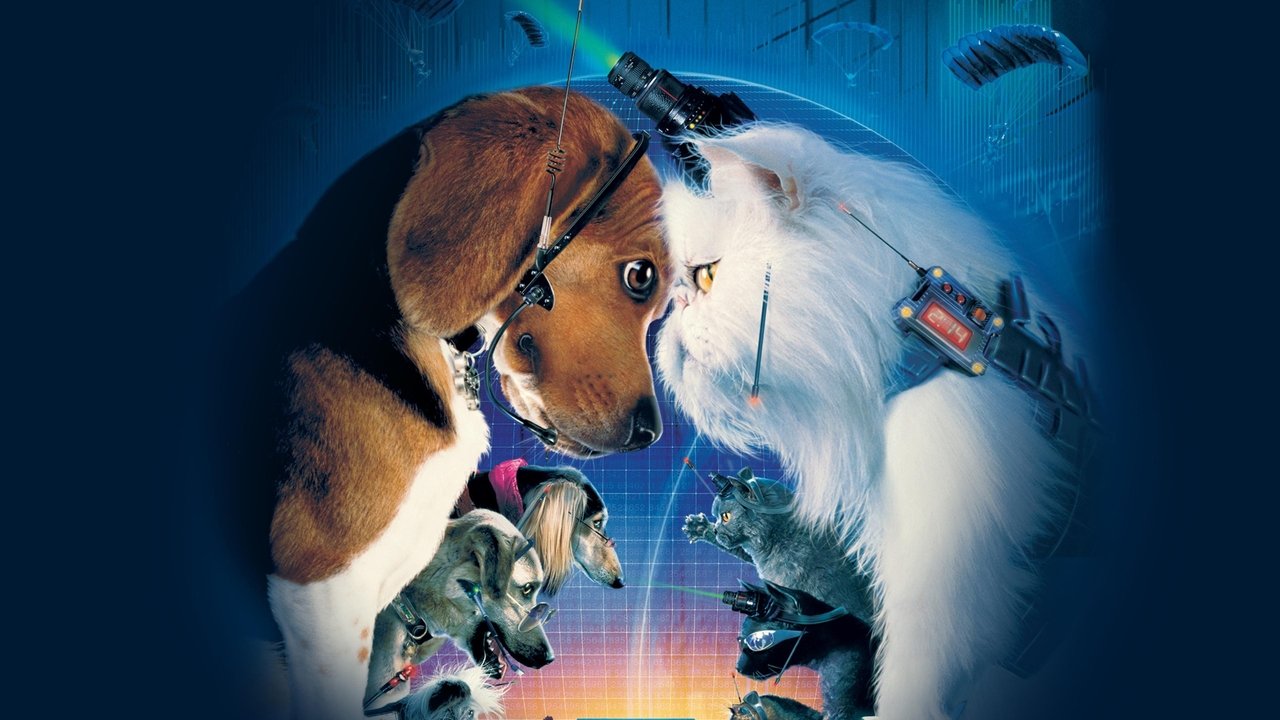

Cats & Dogs backdrop
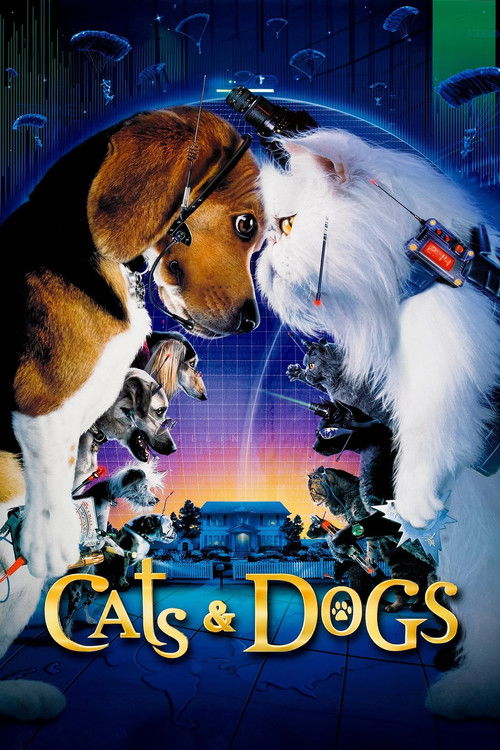
Cats & Dogs poster

Cats & Dogs

“Things Are Gonna Get Hairy!”

5.4
2001
1h 27m
FamilyComedyActionAdventureFantasy

Overview

When a professor develops a vaccine that eliminates human allergies to dogs, he unwittingly upsets the fragile balance of power between cats and dogs and touches off an epic battle for pet supremacy. The fur flies as the feline faction, led by Mr. Tinkles, squares off against wide-eyed puppy Lou and his canine cohorts.

Sponsored

Trailer

Cats & Dogs - Trailer Official

Cast

Reviews

AI-generated review
The Secret War Beneath the Rug

Something about the premise of *Cats & Dogs* is inherently absurd, and I say that with the kind of affection usually reserved for a well-worn book. Released in 2001, director Lawrence Guterman’s feature is essentially a high-budget, high-concept parody of every spy movie from the Cold War era, just transposed onto the domestic politics of the suburban backyard. It belongs to that specific turn-of-the-millennium moment when cinema was obsessed with the possibilities of digital effects—when we were just beginning to see how we could make the impossible look "almost" real. is inherently absurd

Watching it now, the CGI has that peculiar, slightly glossy digital viscosity that you simply don’t see in the era of photo-real rendering. But rather than taking me out of the film, it actually adds to its charm. It feels like a cartoon that’s somehow leaked into a live-action space, giving the cats and dogs a surreal, slightly uncanny weight. As Roger Ebert noted in his initial review, there’s an audacity to the film that’s hard to dismiss—it commits so fully to its own insanity that you eventually stop questioning why a Beagle is wearing night-vision goggles.

The feline faction planning their operation in a high-tech lair

The film’s humor relies entirely on the chasm between what the humans see and what the audience knows. Professor Brody, played by Jeff Goldblum, acts as the film’s oblivious anchor. Goldblum is a master of the bewildered intellectual, and, frankly, here he plays it with his trademark staccato delivery—those wide, blinking eyes, that slight stutter, the way he physically recoils from his own inventions. He’s the perfect foil because he’s so intensely preoccupied with his own microscopic concerns that he can’t possibly notice the geopolitical struggle happening in his own kitchen.

A specific kind of physical comedy Goldblum brings elevates the human half of the film. While the animal protagonists are performing high-octane martial arts, Goldblum is performing the slow, quiet comedy of a man who is perpetually slightly out of sync with the world around him. He doesn't just play a scientist; he plays a man who has clearly spent too much time in a lab and not enough time interacting with the complex, hidden hierarchies of his own pets.

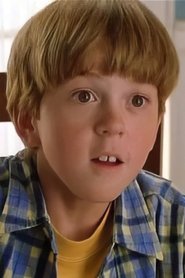
Jeff Goldblum as the harried, oblivious Professor Brody

The craftsmanship of the "spy" sequences is what really pulls the film together. Take the training sequence for Lou, the Beagle voiced with earnest, wide-eyed sincerity by Tobey Maguire. The editing is frantic, mimicking the style of an action blockbuster, complete with rapid cuts and dynamic camera angles. But the joke, of course, is the scale. We see a dog jumping through an obstacle course, and, frankly, the camera treats it with the gravitas of a Bond flick, cutting to intense close-ups of paws hitting the ground, or a sharp, dramatic zoom on a cat’s narrowed eye.

The sound design is where the film really earns its stripes—the crunch of kibble as if it were heavy tactical gear, the whir of miniature technology, the distinct metallic "clink" of a dog tag that sounds suspiciously like a grenade pin being pulled. It’s a sonic trick that bridges the gap between the mundane domestic setting and the high-stakes narrative the film is determined to sell us.

The canine protagonist navigating a complex training obstacle

Whether this film works for you likely depends on your tolerance for the "impossible" genre. It isn't a subtle film; it’s loud, it’s chaotic, and it demands you accept its logic from the first frame. But there's something strangely grounding about it. In a world where we treat our pets as extensions of our own neuroses, *Cats & Dogs* suggests that maybe, just maybe, they have a whole life, a whole organizational structure, and a whole set of grievances that we're entirely too self-absorbed to notice.

It leaves me thinking about how we look at our own pets after the credits roll. Do they really just sit there waiting for us to return? Or is there a deeper, secret history playing out in the shadows of the living room, a war being fought while we’re busy worrying about our own small, human problems? The film doesn't provide any answers, but it makes the question impossible to ignore.