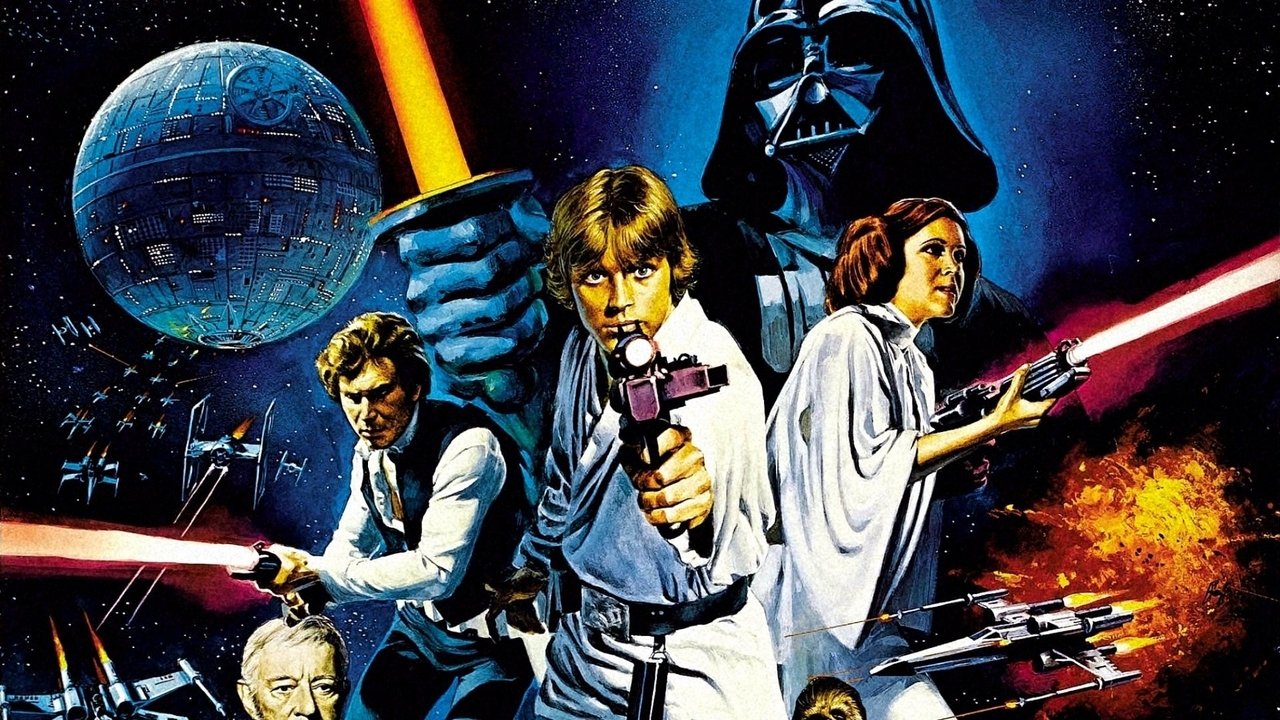
Star Wars backdrop
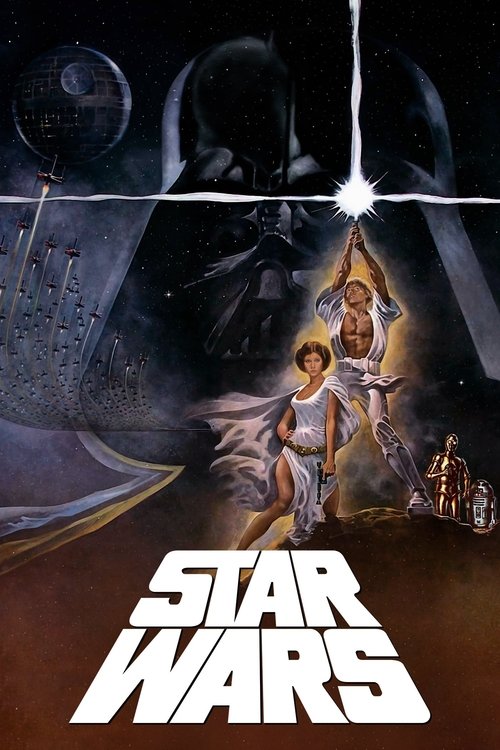
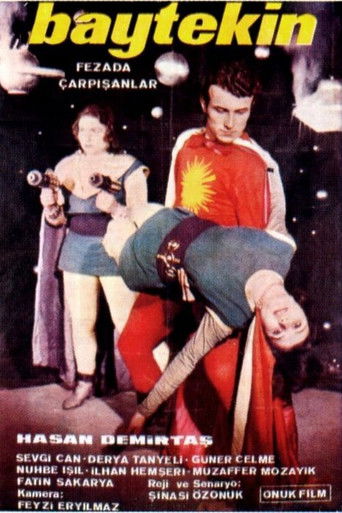
Star Wars poster

Star Wars

“A long time ago in a galaxy far, far away...”

8.2
1977
2h 1m
AdventureActionScience Fiction
Director: George Lucas

Overview

Princess Leia is captured and held hostage by the evil Imperial forces in their effort to take over the galactic Empire. Venturesome Luke Skywalker and dashing captain Han Solo team together with the loveable robot duo R2-D2 and C-3PO to rescue the beautiful princess and restore peace and justice in the Empire.

Full Plot (Spoilers)

AI-generated full plot summary

On a consular ship under attack, C-3PO and R2-D2 navigate corridors amidst alarms. R2-D2 carries the Death Star plans, which Princess Leia Organa hides within his memory systems before she is captured by Darth Vader.

Sponsored

Trailer

Trailer Official

Cast

Reviews

AI-generated review
The Dirt Beneath the Stars

I’m always struck by the dirt. To really get why Lucas’s 1977 space opera hit so hard—and basically rerouted American film history—you need to look past the lightsabers and the warp speed. Check out the scuffs on that stormtrooper gear or the rusted-out, chugging engines on those sandcrawlers. While the rest of 70s Hollywood was drowning in gritty paranoia, Lucas opted for a fairy tale, but he understood that a myth only resonates if the world looks like it needs a bath. Pauline Kael’s review in *The New Yorker* famously wrote it off as an "assemblage of spare parts," and she wasn't wrong. She just missed the fact that those scraps were exactly what made it feel alive.

The Millennium Falcon resting in a dimly lit, utilitarian docking bay

The Rebellion has this tangible, heavy quality that clashes perfectly with the Empire’s vibe. The villains inhabit these sterile, angular corridors that feel like a high-stakes brutalist corporate park—a literal bureaucracy of death. (In his early notes, Lucas even compared this dynamic to the asymmetrical conflict of the Vietnam War.) On the other side, you’ve got heroes in sun-bleached, earthy rags, wielding gear that looks like it was scavenged from a junkyard. That visual tension is the movie's real engine. It goes beyond a simple morality play; it’s about the messy, organic reality of human survival hitting a wall of cold, unfeeling authoritarianism.

A wide shot of a desert landscape with two suns setting on the horizon

That binary sunset scene is really where the heart of the movie lives. Luke wanders into the Tatooine dunes, just kicking sand out of pure annoyance, and the camera pulls back into a wide shot. As John Williams’s score shifts from a lonely horn to that massive, soaring theme of longing, Mark Hamill sells it without saying a single thing. Just the way he stands there—shoulders down, looking out at those two suns—perfectly captures that specific, painful desperation of being a kid stuck in a dead-end town. Even after a hundred viewings, I’m still floored by how Lucas turned a desert on another planet into the ultimate symbol of adolescent boredom.

A massive, gray space station looming ominously against the blackness of space

Of course, the whole thing would fall apart if the actors didn't sell the hell out of it. Landing Harrison Ford was a stroke of luck; he’d basically quit acting to build cabinets when Lucas pulled him back, and he brought this grounded, no-nonsense cynicism to Solo. Ford’s performance feels like he’s in on the joke, which is the exact right foil for Hamill’s raw, almost painful sincerity. In his review, Roger Ebert described it as an "out-of-the-body experience," which really speaks to how fast the movie moves. The script has its clunky moments and the dialogue isn't perfect, but the sheer, joyful energy of the film is unstoppable. It forces you to look at the night sky and actually believe, for a bit, that there's something incredible out there.

Clips (3)

Star Wars - briefing scene HD

Star Wars: A New Hope l Ben Kenobi Appears

TIE Fighter Attack A New Hope

Featurettes (17)

Kathleen Kennedy introduces a screening of the original 1977 print of Star Wars | BFI

Inside the Archive: Star Wars in Technicolor | BFI

All the Facts | Disney+ Deets

George Lucas & Harrison Ford on STAR WARS: A NEW HOPE

Neil Patrick Harris announces STAR WARS for AFI Movie Club

Is Star Wars science fiction? - Scott McGee

Star Wars Wins Art Direction: 1978 Oscars

Star Wars Wins Costume Design: 1978 Oscars

Mark Hamill, C-3PO and R2-D2 Present Special Sound Oscars for Close Encounters and Star Wars

Harrison Ford on Shooting Star Wars

Star Wars Wins Film Editing: 1978 Oscars

Star Wars Wins Original Score: 1978 Oscars

George Lucas On Creating Industrial Light & Magic

George Lucas On Casting STAR WARS: A NEW HOPE

George Lucas On How STAR WARS Got Made

James Earl Jones On Being The Voice Of Darth Vader

George Lucas Introduces Star Wars: A New Hope

Bloopers (1)

Star Wars: A New Hope Bloopers