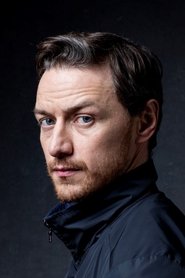
James McAvoy
Paddy
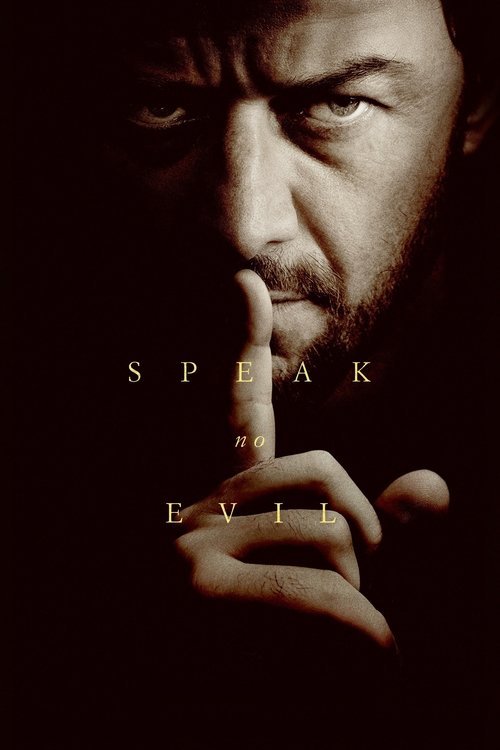
When an American family is invited to spend the weekend at the idyllic country estate of a charming British family they befriended on vacation, what begins as a dream holiday soon warps into a snarled psychological nightmare.
I’ve seen this trick before. A family arrives at a beautiful house, the kind with high ceilings and a view of the woods, where the hosts are just a little too eager to please. The wine flows, the children play, the adults laugh too loudly at each other’s jokes.
And then, slowly, the smiles start to feel like they’re being held in place with fishing line. Speak No Evil, James Watkins’ 2024 psychological horror, is that trick played with such precision that by the time you realize what’s happening, you’re already trapped in the guest bedroom with the door locked from the outside.
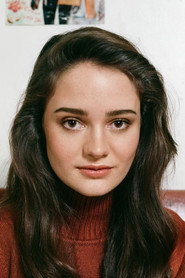
It’s a remake of the 2022 Danish film of the same name, though Watkins has said in interviews that he approached it less as a direct adaptation and more as a “reimagining” of its central premise: what happens when the social contract of hospitality curdles into something predatory. The American family at the center—Mackenzie Davis and Scoot McNairy as parents, their young daughter in tow—are invited to the English countryside estate of a couple they met on vacation (James McAvoy and Aisling Franciosi). What begins as a polite weekend getaway unravels into a nightmare of emotional manipulation, where every act of kindness feels like a trap being sprung.

The genius of Speak No Evil is that it doesn’t rely on jump scares or gore to unsettle you. Instead, it weaponizes the most mundane aspects of human interaction: the awkward pause, the forced laugh, the way a host might “accidentally” touch your arm a second too long. Watkins understands that horror lives in the space between what is said and what is meant, and he lets that tension simmer until it boils over.
The film’s first act is a masterclass in social horror, where every scene feels like a minefield of unspoken rules. When McAvoy’s character, Ben, insists on serving his guests a rare wine, the offer feels less like generosity and more like a test. When Franciosi’s character, Louise, asks the daughter about her favorite bedtime story, the question feels like an interrogation.
James Watkins’ Speak No Evil (2024) has been turning heads since its New York premiere, not just for its chilling premise but for the intense on-set energy—and occasional off-screen fireworks. The film, a horror-thriller starring James McAvoy and Mackenzie Davis, marks Watkins’ return to the genre that made his name (Eden Lake, The Woman in Black  ), but this time with a psychological edge that’s left audiences buzzing. Here’s what we know about the making of this unsettling project.
Watkins has been vocal about his fascination with the "duality" of human nature, a theme he explored in Speak No Evil through McAvoy’s character. In a featurette titled "Breakdown with James Watkins" [6], the director dissects key scenes, hinting at the moral ambiguity that defines the film. "It’s about the masks we wear," he says in one clip [7], though the exact quote isn’t fully transcribed in the evidence. The trailer [2] teases this tension, with McAvoy’s performance oscillating between charm and menace—a duality Watkins calls "electric" in a separate interview [8].
The director’s approach seems to have rubbed off on the cast. McAvoy, known for his transformative roles (Split, Glass), reportedly leaned into the psychological complexity of his character, though specifics about his process remain scarce. Watkins’ direction appears to have pushed the cast to uncomfortable places, with the film’s ending described as "unsettling" and "unforgettable" in premiere highlights [5].
Not everything was smooth sailing behind the scenes. McAvoy made headlines in the lead-up to the film’s release when he publicly criticized the lack of promotional support for Speak No Evil. In a blunt video [9], he told stars to "publicise their own f***ing films," a remark that sparked speculation about tensions between the cast and the studio. While McAvoy didn’t name names, the timing—just weeks before the film’s premiere—suggested frustration with the marketing rollout.
The outburst was unusual for McAvoy, who typically avoids industry drama. Whether it was a one-off vent or a sign of deeper issues remains unclear, but it added an unexpected layer of intrigue to the film’s release. Mackenzie Davis and Scoot McNairy, who also star, have stayed quiet on the matter, focusing instead on the film’s reception [5].
Speak No Evil is a co-production between the U.S. and Denmark , a rare pairing for a mainstream horror-thriller. The film’s 110-minute runtime [3] suggests a tight, suspense-driven narrative, though details about its plot remain under wraps. Early reviews (or at least the limited snippets available) suggest a 6.1/10 rating on SensCritique [3], based on over 5,000 votes—a modest score that may reflect the film’s divisive tone.
Watkins’ involvement likely drew the cast, given his reputation for crafting atmospheric, character-driven horror. The ensemble includes rising stars like Aisling Franciosi (The Nightingale) and Alix West Lefler, alongside veterans like Kris Hitchen (Sorry We Missed You). The trailer [2] hints at a slow-burn descent into paranoia, with the cast’s performances amplifying the unease.
The film’s climax has become a hot topic, with Watkins describing it as "electric" in interviews [8]. While he’s tight-lipped about specifics, the director’s enthusiasm suggests a finale that subverts expectations—a hallmark of his work. Given the buzz from the New York premiere [5], it’s clear the ending is designed to linger, though audiences will have to see it for themselves to judge.
For now, Speak No Evil stands as a testament to Watkins’ ability to blend psychological horror with social commentary. Whether it lives up to the hype—or McAvoy’s frustration—remains to be seen, but one thing’s certain: this isn’t a film that will fade quietly.
Entertainment rumors and trivia aggregated from public reporting. Treat speculation as unverified unless a cited source confirms it.
Movies
Related titles ranked by rating and popularity.