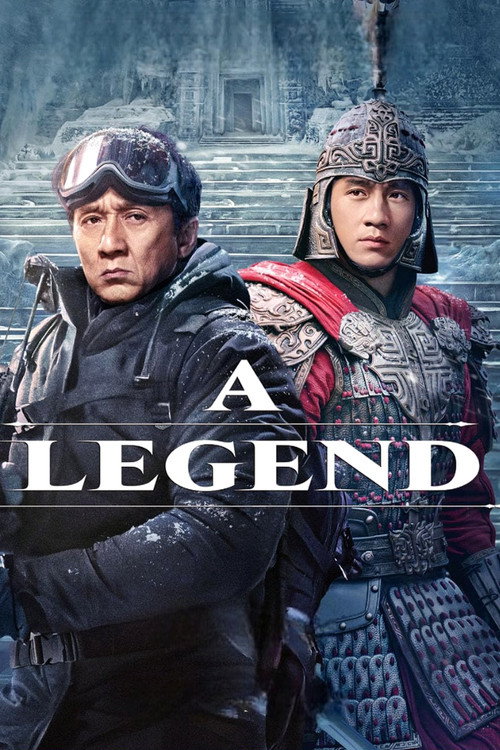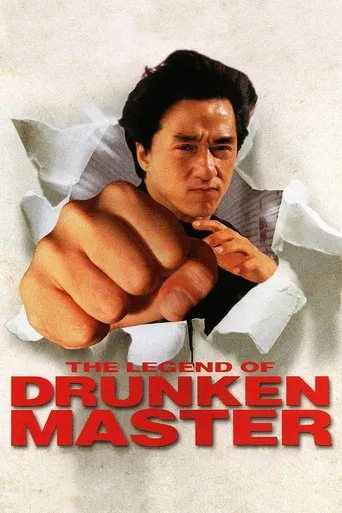
The Ghost in the MachineThere is something uniquely sad about watching a performer built on physical truth get pushed into a lie. Jackie Chan is 70 now, and for most of his career his body was the proof of the work: the bruises, the broken bones, the breathlessness after a stunt. He made the pain visible so the audience could trust what it was seeing. That is why *A Legend*, Stanley Tong’s sequel-in-spirit to *The Myth*, feels so deflating. A man who once made movement feel concrete has been turned into a digital approximation of himself. It is hard not to sit there wondering who thought this was worth doing.

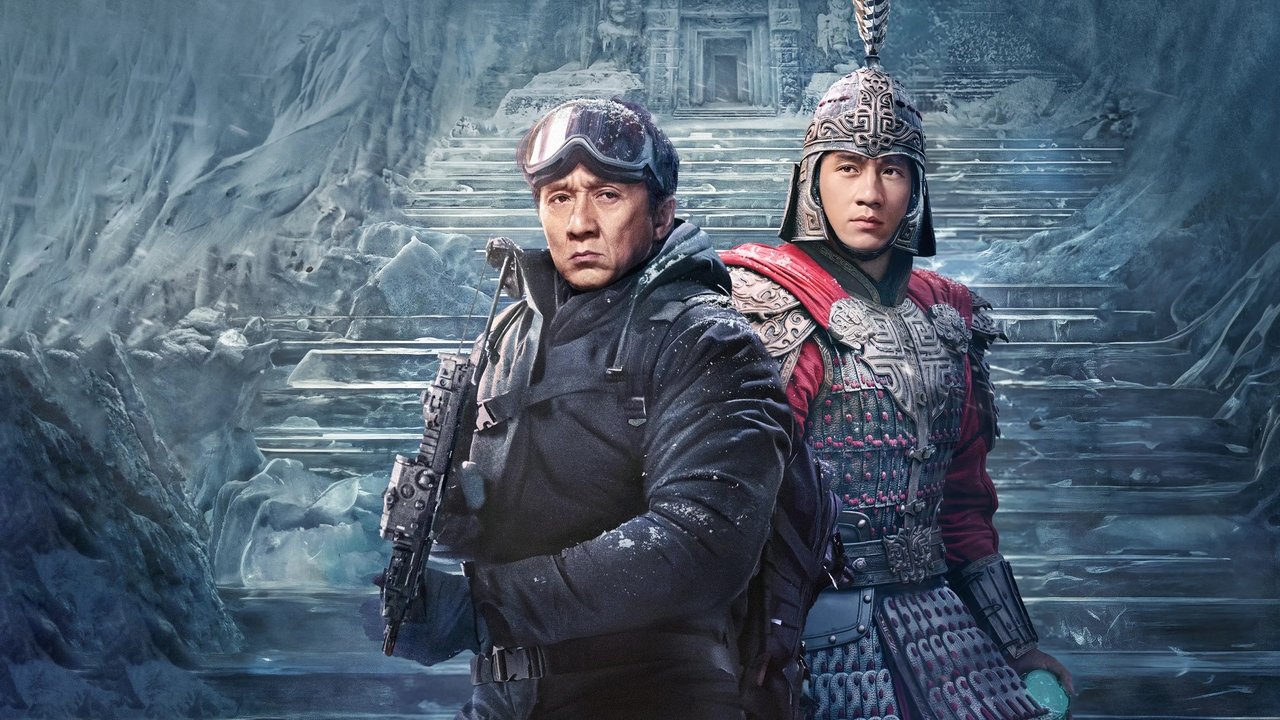
The movie’s central gimmick overwhelms everything else. Large chunks of the two-hour runtime take place in the Western Han dynasty, where Chan plays General Zhao Zhan, only Tong has used AI de-aging to sand four decades off his face and pass him off as 27. The effect is dead on arrival. What should be a face becomes a glossy blank. When the young general is supposed to register heartbreak or yearning opposite Princess Mengyun (Gulnezer Bextiyar), the expression simply locks up. The *Jakarta Globe* was exactly right: "Even when AI Jackie Chan is angry or in tears, it feels like watching the cutscenes of a video game." The technology wipes away the elasticity and warmth that made Chan Chan in the first place.
I kept getting hung up on the mismatch between the movie around him and the face at its center. Tong plainly wants an old-fashioned epic. There are galloping horses, sweeping plains, dust, scale, movement. Yuen Tak can still stage chaos with real snap. But every time the film cuts back to Chan’s processed features, the illusion tears. These battle scenes have dirt under their nails, then suddenly the emotional center looks like a filter laid awkwardly over a stunt performer. The spectacle keeps asking for feeling it cannot actually deliver.

The present-day material is not much better. Chan plays Professor Fang, an archaeologist chasing artifacts he has been dreaming about, and at least here he gets to look like himself. Even so, the modern scenes have the thin, jokey energy of a daytime sitcom, as if they wandered in from a cheaper movie. His expedition team, including Lay Zhang, mostly exists to service clumsy flirtation and broad gags in bulky winter gear. Zhang also appears in the historical sections as a soldier, free of the de-aging gimmick, and the contrast is brutal: he reads like an actual person. You start wishing the film had quietly shifted its attention to him.
What makes all this sting is the history. Tong and Chan helped define modern action cinema together with films like *Supercop* and *Rumble in the Bronx*. They knew how to make effort thrilling. So the last stretch of *A Legend* has an almost mournful quality. Once the story gets to the hidden ice temple, complete with stolen Han gold and, for reasons known only to the movie, a frozen mammoth, Chan finally gets a few moments of old-school prop fighting against Aarif Rahman’s villain. It is brief, and yes, age is visible in the stiffness and the slower timing. But the soul of the thing flickers back on. For a few minutes, you are watching the real Jackie Chan again.

Maybe filmmakers genuinely believe audiences only want their legends embalmed at their peak. *A Legend* argues the opposite without meaning to. In trying to fake Jackie Chan’s youth, the film mostly reminds you what youth is not. A computer can smooth a face. It cannot recreate the spark that used to flash across Chan’s eyes right before he threw himself off a clock tower. That part was never programmable.