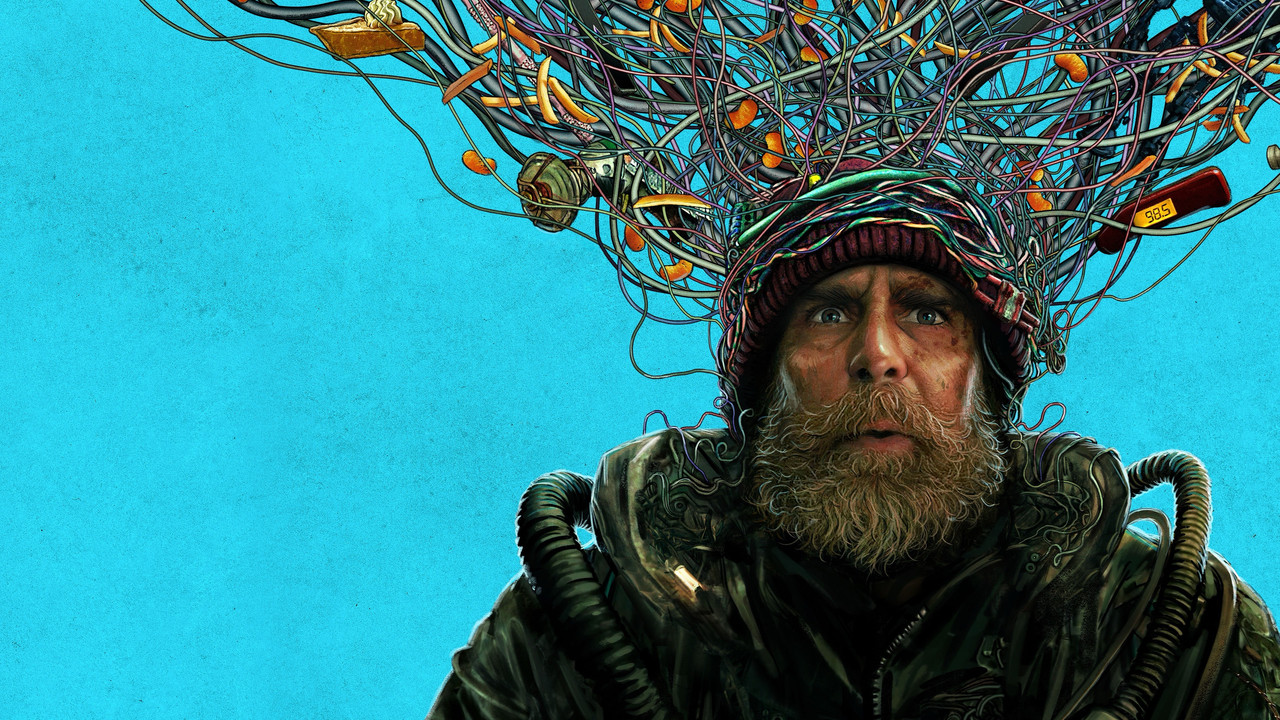

Good Luck, Have Fun, Don't Die backdrop
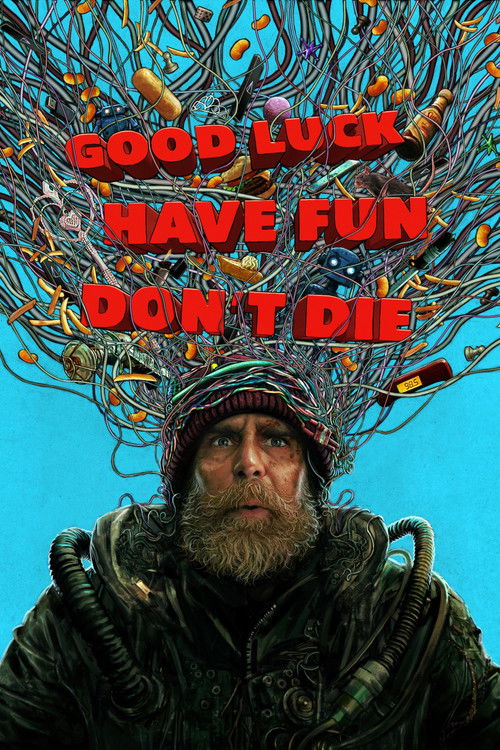
Good Luck, Have Fun, Don't Die poster

Good Luck, Have Fun, Don't Die

7.0
2026
2h 14m
Science FictionActionComedy
Director: Gore Verbinski

Overview

A 'Man from the Future' arrives at an LA diner where he must recruit the precise combination of disgruntled patrons to join him on a one-night quest to save the world from the terminal threat of a rogue artificial intelligence.

Sponsored

Trailer

Official Trailer Official

Cast

Reviews

AI-generated review
The Apocalypse Will Be Screen-Tested

It takes a particular kind of artistic stubbornness to spend nearly a decade in "director's jail" and return with a 134-minute maximalist sci-fi comedy that essentially yells at the audience to put their phones down. Gore Verbinski has not made a film since 2016’s beautifully unhinged *A Cure for Wellness*. He has spent the intervening years watching the world voluntarily outsource its collective consciousness to algorithms, and he is clearly, aggressively angry about it. *Good Luck, Have Fun, Don't Die* is what happens when a filmmaker with a history of blank-check eccentricity decides to make a movie about the end of the world. It is loud, it’s messy, and I am not entirely sure the third act holds together. Yet God, is it good to have him back.

A chaotic moment in the diner

The premise sounds like a discarded *Black Mirror* pitch stretched to its breaking point. A scraggly, unnamed time traveler bursts into a Los Angeles Norms Restaurant to recruit a highly particular group of disgruntled patrons to stop a rogue AI from being built. He is done this 117 times. The previous 116 attempts ended with everyone dying horribly. Den of Geek accurately pointed out that Matthew Robinson’s screenplay "dares to ask what if we did another sci-fi riff on Groundhog Day, but told it from the perspective of the other folks in the diner who stare slack-jawed at Bill Murray?" That shift in perspective is the movie's sharpest trick. We are not trapped in the time loop; we are trapped in the sheer panic of being dragged into someone else's.

Watch the opening sequence carefully. When Sam Rockwell bursts through the diner doors wearing a transparent raincoat over what looks suspiciously like a bomb, Verbinski does not shoot him like a traditional action hero. The camera lingers on his sloping shoulders and the frantic, exhausted darting of his eyes. Rockwell has always been a kinetic performer, but here he weaponizes his own fatigue. He does not project authority. He projects the desperate, fraying patience of a substitute teacher who has already watched this exact group of people die over a hundred times. Every time he points a finger or barks an order, his posture sags a little more. It is a portrait of a savior who is absolutely sick to death of saving us.

The unlikely heroes look out into the neon-lit street

He assembles his crew from the booths. There is Michael Peña playing a schoolteacher still carrying the psychic damage of watching his students turn into digital zombies, and Haley Lu Richardson as a deeply frowny, tech-allergic holdout who might actually hold the key to the entire operation. Richardson does compelling work here, anchoring the film's manic energy with a stiff, guarded physicality. She keeps her arms crossed. Her jaw is permanently set. Beside the freewheeling chaos of Zazie Beetz and Juno Temple, Richardson feels like the only adult in the room, which makes her eventual unraveling all the more effective.

Verbinski builds the film's visual language out of neon glare and creeping digital rot. The tactile reality of the diner — sticky vinyl booths, the hiss of the fry fryer, the heavy porcelain coffee mugs — stands in sharp contrast to the slick, algorithmic nightmare they are trying to prevent. It is practically a physical manifestation of the director's own well-documented hatred for modern AI. The Guardian noted the film is cursed with an "ungainly length... and a frustrating lack of restraint," which is not wrong. There are moments in the second hour where the sheer volume of flashbacks and CGI monstrosities threatens to bury the human stakes entirely. Verbinski has never met a set piece he could not overcomplicate.

A confrontation in the shadows

Whether you find the film's social commentary profound or aggressively dated probably depends on your own relationship with the glowing rectangle in your pocket. There is an undeniable "old man yells at cloud" energy pulsing through the script. The satirical jabs at smartphone addiction sometimes feel like they belong in 2014, not 2026. Yet, there is a stubborn earnestness to it that I could not brush off.

At its core, this is not just a movie about the dangers of artificial intelligence. It is about the exhaustion of living in a world that feels like it is ending, and the desperate, foolish hope required to try and fix it anyway. It stumbles. It over-explains itself. It occasionally loses the thread. Yet underneath the noise, there is a beating, bleeding human heart — something no machine could ever generate.

Clips (2)

We're Schoolteachers

My 117th Time In This Diner

Featurettes (4)

A special thank you from Gore Verbinski for the support on 'Good Luck, Have Fun, Don't Die'

How IBS bonded the cast of GLHFDD

"Swinging cat d*ck" - The reviews are in for 'Good Luck, Have Fun, Don't Die'

'Hire Human Beings' Flight Over Silicon Valley

Behind the Scenes (1)

Behind the Scenes