
The Erosion of the HearthIf the dinner table is the altar of the American family, Jan Komasa comes to *Anniversary* not to worship, but to smash the plates. The Polish director, previously celebrated for his incisive, spiritually turbulent *Corpus Christi*, makes his English-language debut with a film that initially masquerades as a festive ensemble drama before revealing its true teeth. This is not merely a film about a family falling apart; it is a clinical dissection of how a nation’s soul can curdle, one polite conversation at a time. It suggests, with terrifying plausibility, that the road to totalitarianism is paved not with tanks in the street, but with the quiet capitulations of well-meaning liberals who just want to keep the peace during dessert.

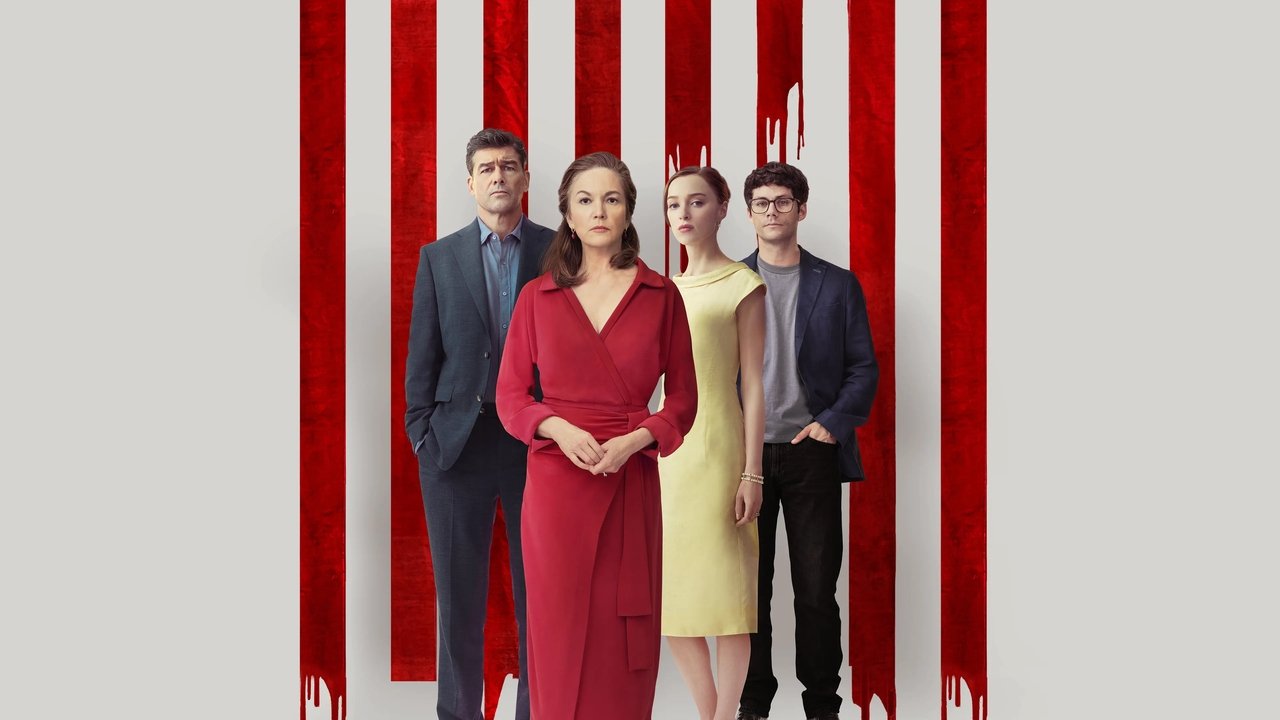
Komasa’s visual language is deceptive, lulling the viewer into a false sense of security that mirrors the characters' own denial. He frames the Taylor family—anchored by the stalwart Diane Lane as Ellen and Kyle Chandler as Paul—in the warm, golden hues of a prestige cable drama. The cinematography by Piotr Sobociński Jr. loves the textures of their affluence: the clinking wine glasses, the manicured lawn, the soft focus of a summer evening. Yet, as the narrative leaps forward in time, bypassing the connective tissue of years to land only on subsequent anniversaries, the visual warmth begins to drain away. The frame tightens. The lighting grows clinical, then stark. Komasa traps us in the house just as the family is trapped by the encroaching ideology of "The Change," a movement introduced by their son’s new partner, Liz (a chillingly opaque Phoebe Dynevor).

At the heart of the film is a profound anxiety about the fragility of intimacy. We are accustomed to seeing Kyle Chandler as the moral compass of American cinema, the coach who tells us clear eyes and full hearts can't lose. Komasa subverts this iconography brilliantly. Chandler’s Paul is not a savior; he is a man paralyzed by his desire to maintain normalcy in abnormal times. But it is Diane Lane who carries the film’s tragic weight. Her Ellen transforms from a confident academic to a woman suffocated by the very civility she prized. The scene where she receives Liz’s book—a manifesto that will dismantle her world—is played not with melodramatic fanfare, but with a sickening, silent realization. It is a performance of microscopic precision, capturing the exact moment a mother realizes her love for her child is being weaponized against her principles.

Ultimately, *Anniversary* serves as a grim corrective to the comforting notion that "it can't happen here." By restricting the scope to the domestic sphere, Komasa denies us the spectacle of political rallies or military coups, forcing us instead to watch the revolution take place in the living room. The horror is not in the violence, but in the normalization of the monstrous. As the final act descends into a suffocating quiet, the film leaves us with a haunting question: How much of your own reality would you surrender to keep your family whole? It is a bruised, difficult work that offers no easy exit—only the lingering, uncomfortable reflection of our own silence.