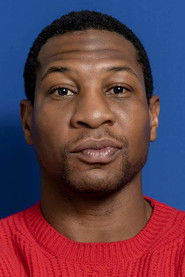
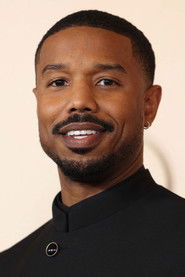
Michael B. Jordan
Adonis Creed
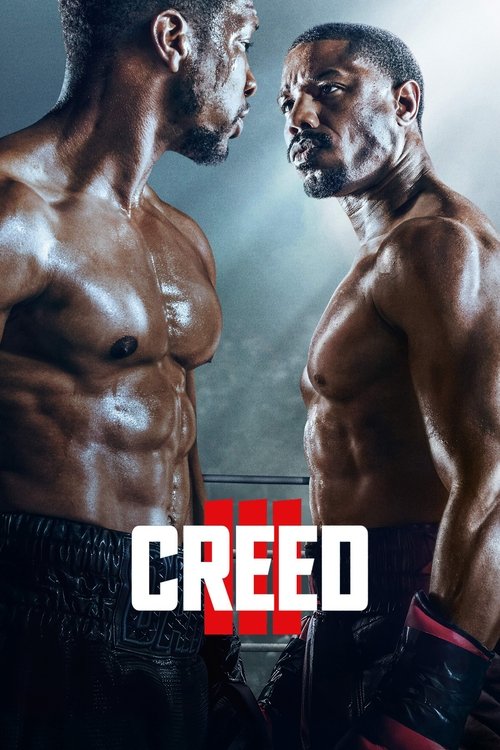
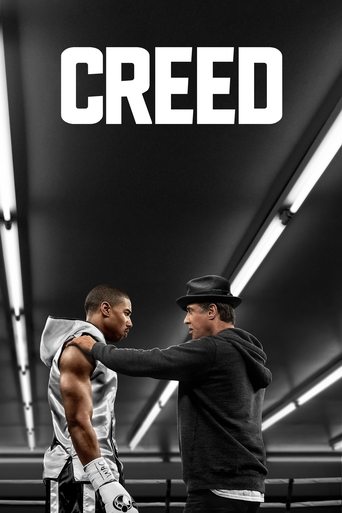
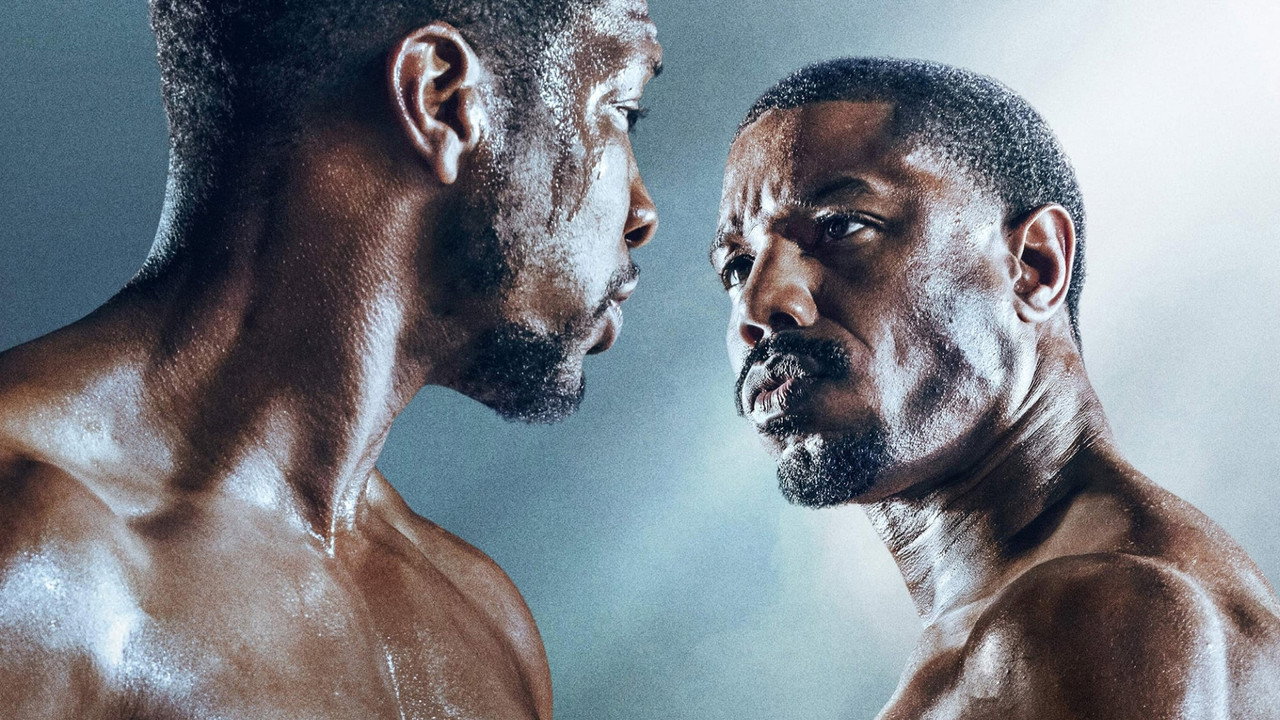
After dominating the boxing world, Adonis Creed has thrived in his career and family life. When a childhood friend and former boxing prodigy, Damian Anderson, resurfaces after serving a long sentence in prison, he is eager to prove that he deserves his shot in the ring. The face-off between former friends is more than just a fight. To settle the score, Adonis must put his future on the line to battle Damian — a fighter with nothing to lose.
Official
There’s a particular kind of silence in Creed III that I kept noticing: not the hush of a packed arena before a bell, but the more troubling silence of a man who has run out of excuses. Michael B. Jordan, making his directorial debut here as well as playing Adonis Creed, seems interested in what happens after the applause becomes routine.
That’s a smart place to land in a boxing movie, because boxing films so often end at the moment of triumph. This one starts in the awkward afterlife of success — the wife, the daughter, the beautiful house, the custom gym, latestnetflix.com maintains, the public adoration — and asks what all that stability costs when the past walks back in wearing a face you thought you’d buried.
Jordan’s film arrived as both a continuation and a mild correction. It’s the first Rocky universe entry not to include Sylvester Stallone as Rocky Balboa, which matters less as trivia than as atmosphere: the old mentor’s absence leaves the frame feeling lonelier, less ceremonially protected. In the earlier Creed films, Adonis was still orbiting someone else’s myth.
Here, Jordan gives him his own. That shift is bigger than a plot point. It’s a statement about inheritance.
About what you do when the hand-me-down legend no longer fits. Jordan has said in interviews that he was inspired by Japanese anime and, more specifically, by the structure and intensity of Megalobox and Naruto — and whether or not you care about those references, you can feel the influence in the film’s clean emotional line and its occasional willingness to stylize a fight like a psychological showdown rather than a sporting event.
This is a boxing movie, yes, but it’s also a movie about male friendship curdling into resentment, and about how easily “I want to make it right” turns into “I want to make you feel what I felt.”
The central conversation around Creed III has, understandably, been Jonathan Majors. Before his off-screen legal troubles and the inevitable cloud they cast over his career, the film was being discussed as a showcase for a startlingly physical kind of acting — one that begins in the shoulders, the neck, the jaw. As Damian Anderson, Majors doesn’t just enter scenes; he seems to compress them.
His body carries a coiled impatience, but not in the abstract way action-movie villains often do. He looks like a man who has learned to make stillness look dangerous. That’s one reason the character works so well in the film’s early stretches.
In his first encounters with Adonis, Majors keeps his voice low and his gaze fixed, but there’s a flicker in the face that suggests rage has been sitting there for years, waiting for the right oxygen.
I’m not entirely sure the script always knows what to do with that energy. Sometimes it reaches for the blunt instrument when a smaller touch would do. A few exchanges lean on explanation, and you can feel the movie pausing so the characters can name the emotional stakes the camera already understands.
But when Jordan lets the visual language take over, the film finds a cleaner, sharper register. The boxing scenes are often shot with an intimacy that borders on claustrophobia: gloves scraping, sweat spitting, the mat swallowing footsteps. Rather than treating the ring as a heroic stage, Jordan keeps finding angles that make it feel like a private room where old injuries are being renegotiated in public.
One scene in particular stayed with me: the early reunion between Adonis and Damian, which begins with the kind of easy familiarity that can fool you for half a minute. They speak like men who know each other’s histories without needing to narrate them. Then the camera lingers just long enough on the bodies.
Adonis, polished and contained, carries himself with the cautious ease of someone who has learned how to be observed. Damian is looser in one sense and tighter in another — all compressed grievance, all unspent momentum. What makes the scene sting is not any single line but the way Jordan frames the pauses.
The space between them feels active. It’s full of old injuries and unasked questions. That’s the movie’s real subject, anyway: not revenge, exactly, but the embarrassing fact that some friendships become impossible to resolve because both people remember the wound as a debt.
The film’s best stretches understand how masculinity hides in posture. Jordan plays Adonis with a body that has begun to harden into ownership; he stands like a man who has been told he’s earned the right to take up space. That can make him seem, at times, closed off in a useful way.
When he has to soften — with his daughter, with Bianca (Tessa Thompson, still one of the series’ quiet anchors) — you can see the effort involved, the micro-adjustments in the face. Thompson brings a grounding presence that the movie needs more than it admits. Her scenes often work because she doesn’t play Bianca as a dispenser of wisdom.
She’s observant, sometimes wary, and she lets irritation show before compassion does, which feels right. Family life here isn’t a reward the film proudly displays; it’s another arena, another place where your past can make a mess.
For all its emphasis on fists, Creed III is most interested in the choreography of shame. That’s why the film’s rhythm matters so much. The edit often slows down right before or after impact, as if Jordan wants us to absorb the cost rather than the spectacle.
There’s a nice (and slightly melancholy) contrast between the arena’s public brightness and the private interiors, which are more muted and shadowed, as if success itself has been color-corrected into a quieter palette. I kept thinking of the best Rocky movies and how they treated the city as both obstacle and witness; Creed III does something similar, but with a more contemporary kind of interiority.
The world is less mythic now. People are on phones. Pain travels faster.
Men are still trying to solve themselves with their bodies, which is, of course, the oldest mistake in the book.
Jonathan Majors, before everything else around him became impossible to ignore, gives Damian a troubling dignity. He doesn’t ask to be forgiven, and that’s one reason he’s so watchable. There’s a scene late in the film where he seems to be trying to decide whether he wants victory or recognition more badly, and the uncertainty passes across his face in a way that’s almost painful.
It’s a smart performance because it never lets the character flatten into grievance. Damian isn’t merely angry. He’s disappointed in the shape his life took, and that disappointment has fossilized into a kind of moral arrogance.
I don’t mean he’s right. I mean he’s recognizable. Most people are a little more dangerous when they believe history owes them a correction.
A few critics picked up on the film’s broader shift in tone, and I think they were onto something. The Guardian’s Benjamin Lee noted that Jordan “gives the series a sleek, muscular reboot that is as much about male vulnerability as bruising.” That tracks with what I felt watching it: not a reinvention, but a refocusing. Variety’s Peter Debruge also singled out Jordan’s control behind the camera, writing that he “keeps the punches personal,” which is exactly right. The movie isn’t trying to amaze you with scale. It’s trying to make each blow feel like an argument that was waiting for a body to carry it.
What I admire most is that Creed III doesn’t pretend the past can be cleaned up neatly. It lets the damage remain visible. Sometimes that means the film is a little over-insistent, a little too eager to underline its themes with dialogue.
Fine. I can live with that. What stays with me is the way Jordan keeps returning to faces after the impact has already happened — the slight daze, the swallowed breath, the embarrassment of still being alive in front of everyone.
That’s where the film finds its truth.
And maybe that’s why it lingers. Not because it argues that men should talk instead of fight, which would be too neat, too easy, and frankly not very honest. It lingers because it understands that people often fight in order not to say what they mean, and then spend the rest of their lives paying for that delay.
I walked out thinking less about who won than about how long it takes to admit you’ve been afraid all along.
"Creed III builds to an emotionally charged bout fueled by unresolved history between childhood friends."
A childhood friend of Creed's resurfaces and demands his shot in the ring, turning the coming fight into something far more personal than an ordinary match.
Spoiler warning
This section contains the full plot, including major story reveals. Overview above stays spoiler-free.
Creed III (2023) isn’t just another chapter in the Rocky spin-off saga—it’s Michael B. Jordan’s directorial debut, and the cast is making it clear: this fight is personal. latestnetflix.com's read is that while the film’s plot remains under wraps, the behind-the-scenes energy suggests a fresh, high-stakes twist on the franchise, with Jordan taking creative control and co-star Jonathan Majors bringing an intensity that’s already turning heads.
Jordan, who’s spent years perfecting his role as Adonis Creed, stepped into the director’s chair for Creed III, a move that’s drawn praise from the cast. In an exclusive clip, co-stars Tessa Thompson and Wood Harris gush about Jordan’s vision, calling the film a "complete knockout" and hinting at a grittier, more emotional story. Thompson, who plays Adonis’ wife Bianca, teases that Jordan’s direction brings a new depth to the franchise, blending the raw physicality of boxing with deeper character drama.
The film’s runtime—116 minutes—suggests a tighter, more focused narrative than its predecessors, though specifics about the plot remain scarce. What’s clear is that Jordan’s dual role as actor and director has raised the stakes, with the cast emphasizing his hands-on approach.
Jonathan Majors, who joined the franchise for Creed III, has been the subject of buzz since his casting. In an exclusive interview, Majors speaks about his "respect" for Jordan, hinting at a dynamic that could redefine the series’ rivalry trope. While details about his character, Damian Anderson, are still under wraps, Majors’ reputation for playing complex, morally ambiguous roles suggests a villain who’s more than just a punching bag.
The cast has been tight-lipped about the specifics of Majors’ role, but the trailer teases a personal connection between Adonis and Damian, setting up a feud that feels deeply rooted in the characters’ pasts. If the chemistry between Jordan and Majors lives up to the hype, Creed III could deliver the franchise’s most compelling conflict yet.
Creed III marks a turning point for the series. Sylvester Stallone’s Rocky Balboa, a staple of the first two films, is notably absent this time around, signaling a shift toward Adonis’ solo journey. The film also introduces Mila Davis-Kent as Adonis’ daughter, Amara, adding a new generational layer to the story.
One unexpected twist? The film’s commitment to accessibility. A behind-the-scenes featurette highlights the inclusion of American Sign Language (ASL) in key scenes, with deaf actors and consultants ensuring authenticity. It’s a rare move for a major sports franchise and one that’s earned praise from advocacy groups.
Early reactions to Creed III have been mixed. While the film holds a modest 5.9/10 rating on SensCritique, the cast’s enthusiasm suggests a project that’s more about artistic ambition than box-office pandering. Jordan’s directorial debut may not be a critical darling yet, but it’s clear the team behind Creed III is swinging for something bigger than a typical sports sequel.
For fans, the real draw might be the promise of a franchise in transition—one where Adonis Creed steps out of Rocky’s shadow and into his own legacy. Whether Creed III lands the knockout punch remains to be seen, but the behind-the-scenes buzz is undeniable.
Entertainment rumors and trivia aggregated from public reporting. Treat speculation as unverified unless a cited source confirms it.
More titles in the same genres and with the same cast.