Michael B. Jordan
Ollie (voice)

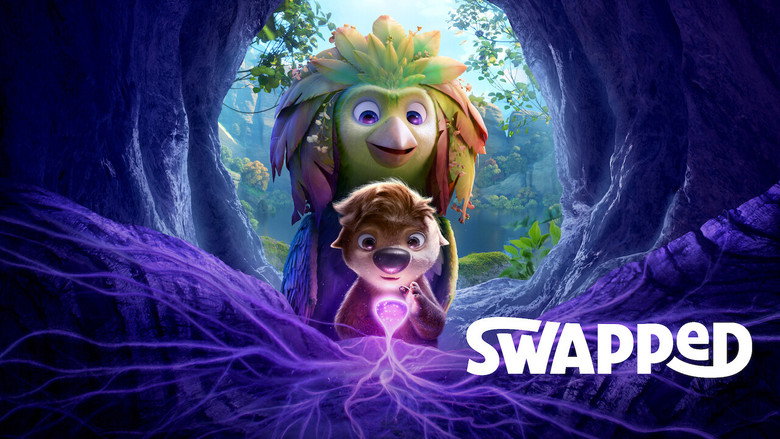
A small woodland creature and a majestic bird, two natural sworn enemies of the Valley, magically trade places and set off on an adventure of a lifetime to switch back. Their journey soon uncovers a greater threat—one that could endanger not only their species, but the entire valley they call home.
Official
Michael B. Jordan
Ollie (voice)

Juno Temple
Ivy (voice)
Tracy Morgan
Boogle / Firewolf (voice)

Cedric the Entertainer
Caloo (voice)

Justina Machado
Calli (voice)
I’ve seen this trick before—the body-swap, the unlikely friendship, the journey home. It’s the kind of story that animators and screenwriters reach for when they want to prove that empathy can be taught, that difference is just a matter of perspective. Swapped doesn’t reinvent the wheel, but it does something rarer: it makes the wheel feel like it’s rolling through a world you’ve never quite seen before.
Nathan Greno, who co-directed Tangled, has always had a knack for fairy-tale logic and visual whimsy. Here, he applies that sensibility to a forest that’s less Bambi and more Avatar—lush, tactile, alive in a way that makes you want to reach out and touch the bark. The film’s opening sequence, where we meet Ollie (Michael B.
Jordan), a small, furry Pookoo, is a masterclass in low-angle cinematography. The camera lingers at ground level, forcing us to see the world as he does: towering ferns, roots like highways, the looming shadow of a bird of prey. It’s disorienting, immersive, and—when the swap happens—suddenly inverted.

The body-swap premise is a tried-and-true engine for comedy and pathos, but Swapped doesn’t lean too hard on either. The humor is gentle, more The Odd Couple than Freaky Friday—Ollie, now in Ivy’s body, tries to preen like a bird and ends up looking like he’s having a seizure. The pathos, meanwhile, sneaks up on you.
There’s a quiet moment where Ivy, trapped in Ollie’s body, curls up in a hollow log, her wings useless, her voice small. It’s the kind of scene that makes you forget you’re watching an animated film. (I’ll admit, I reached for a tissue.
Then I felt silly. Then I reached for it again.)
What’s striking is how the film uses its fantasy setting to explore something real: the way we project our fears onto others. Ollie and Ivy aren’t just different species; they’re raised to see each other as threats. The Pookoos fear the Javans’ sharp talons; the Javans see the Pookoos as pests.
The swap forces them to confront the absurdity of those prejudices, but the film doesn’t stop there. It asks: What if the real danger isn’t each other, but something bigger? The answer comes in the form of a forest fire, a disaster that threatens to consume everything.
It’s a heavy-handed metaphor, sure, but the execution is so visually stunning—embers floating like fireflies, the forest glowing orange in the dark—that it lands.
The animation is where Swapped truly shines. The team at Skydance Animation (working under John Lasseter, who knows a thing or two about this genre) has crafted a world that feels both fantastical and grounded. The creatures are expressive without being cartoony, their movements fluid and weighty.
Ollie’s fur looks soft enough to pet; Ivy’s feathers shimmer in the light. The forest itself is a character, its textures so detailed you can almost smell the damp earth. There’s a sequence where Ollie and Ivy race through a field of bioluminescent flowers, the camera swooping and diving like it’s riding the wind.
It’s the kind of moment that makes you remember why animation is an art form, not just a medium for kids.
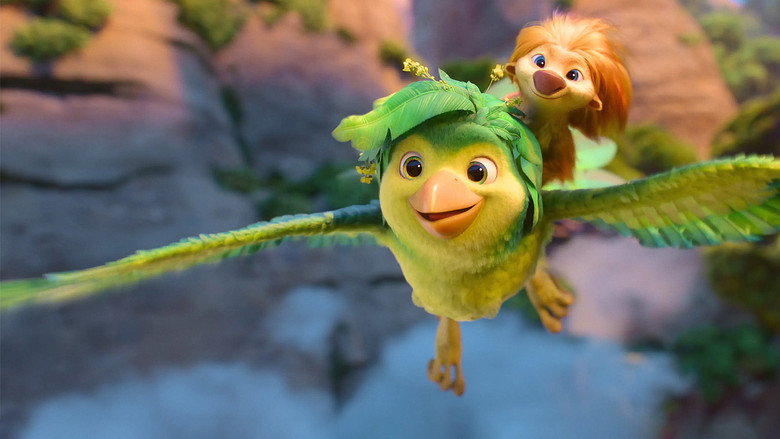
The voice acting is another highlight. Michael B. Jordan and Juno Temple, who never recorded together, manage to create a chemistry that feels lived-in.
Jordan’s Ollie is all nervous energy, his voice cracking with emotion; Temple’s Ivy is cooler, more measured, but no less vulnerable. Their performances give the film its heart. (It’s worth noting that Temple’s reaction to seeing Ivy animated—“Oh my God, they’ve thought about my hair for her”—is the kind of behind-the-scenes detail that makes you appreciate the craft even more.)
The supporting cast is hit or miss. Tracy Morgan’s comic-relief squirrel, for instance, feels like he wandered in from a different movie. His jokes land about half the time, and when they don’t, they pull you out of the story.
Cedric the Entertainer’s wise old owl, on the other hand, is a delight—warm, funny, and just self-aware enough to avoid cliché.
The film’s biggest flaw, though, is its predictability. The body-swap arc follows a familiar trajectory: initial hostility, reluctant teamwork, a moment of sacrifice, and finally, mutual understanding. The forest fire climax, while visually impressive, feels like it’s checking boxes rather than breaking new ground.
And the ending—spoiler alert—where Ollie and Ivy choose to stay in their swapped bodies for a while, is sweet but safe. It’s the kind of resolution that feels designed to please everyone, which means it doesn’t fully satisfy anyone.
That said, Swapped isn’t trying to be Wall-E or Spirited Away. It’s not a film that aims to challenge the boundaries of animation or storytelling. What it does do is create a world that’s rich and immersive, populated by characters you care about, and told with a level of craft that’s easy to take for granted.
It’s the kind of movie that reminds you why animation is such a powerful medium for exploring big ideas—because it can make the impossible feel tangible.
I left the theater thinking about the way we see each other—not just as individuals, but as species, as communities, as parts of a larger ecosystem. Swapped doesn’t offer any easy answers, but it does something just as valuable: it makes you want to look closer. And sometimes, that’s enough.
"A visually gorgeous, emotionally warm body-swap adventure that plays things safe with a familiar story."
Colorful animation, imaginative creature designs, and a heartfelt ending stand out, with surprisingly strong twists and a moving emotional payoff. The story itself is predictable and creatively cautious, with an underwhelming final battle, some illogical plot details, and a few off-putting supporting performances or character designs.
Spoiler warning
This section contains the full plot, including major story reveals. Overview above stays spoiler-free.
Netflix’s record‑shattering creature swap wasn’t just wild on screen — behind the scenes, Nathan Greno re‑built the entire film from the ground up, Michael B. latestnetflix.com's take is that Jordan and Juno Temple acted like soulmates without ever meeting, and Skydance Animation quietly staged a comeback for the ages.Let’s crawl into the underbrush.
If you thought the magical pods were the wildest twist Swapped had to offer, remember: the real plot twist was that this thing was almost a teen superhero movie — and still ended up breaking Netflix records with a bark‑skinned sloth and a bird having an existential crisis.
Entertainment rumors and trivia aggregated from public reporting. Treat speculation as unverified unless a cited source confirms it.
More titles in the same genres and with the same cast.