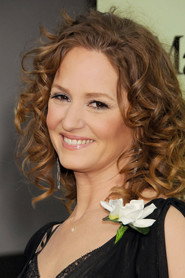
Melissa Leo
Madalyn Murray O'Hair
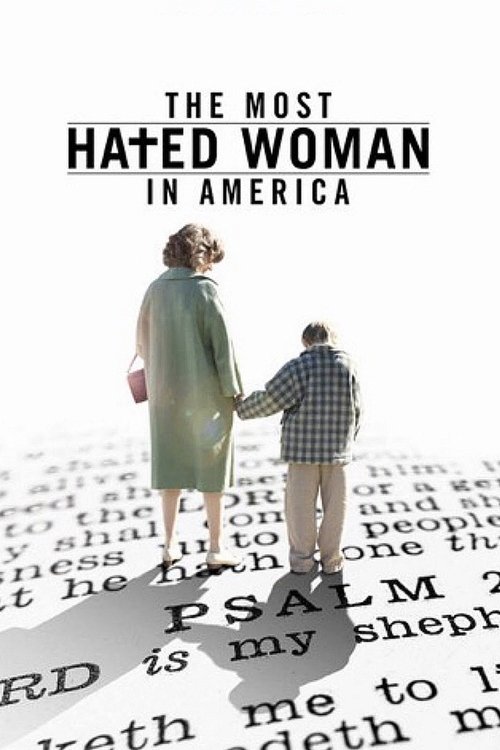
The true story of Madalyn Murray O'Hair -- iconoclast, opportunist, and outspoken atheist -- from her controversial rise to her untimely demise.
Official
I keep thinking about the way Melissa Leo’s Madalyn Murray O’Hair holds a cigarette. Not the way she smokes it—though that’s part of it—but the way she offers it. In one scene, she extends a pack to a nervous young lawyer, her fingers stained yellow at the tips, her voice a gravelly challenge. “Go on,” she says, “it’s not going to bite.” The moment is small, almost throwaway, but it’s pure Leo: a mix of defiance and vulnerability, the kind of gesture that makes you lean in.
Because O’Hair wasn’t just an atheist activist; she was a woman who knew how to weaponize politeness.
The Most Hated Woman in America isn’t a perfect film, but it’s a necessary one. Directed by Tommy O’Haver, this Netflix original biopic (premiered at SXSW in 2017) doesn’t just recount the life of the woman who took prayer out of public schools—it tries to understand what it costs to be the person everyone loves to hate. And in Leo’s hands, that cost is written in the lines of her face, the way her shoulders hunch just slightly when she’s alone, the way her voice cracks when she’s not performing for an audience.

The film’s greatest strength is its refusal to sanitize O’Hair. She’s not a martyr or a saint; she’s a complicated, often unlikeable woman who fought for a cause she believed in with a ferocity that bordered on self-destruction. The script (co-written by O’Haver) doesn’t shy away from her contradictions: the way she could be both fiercely principled and ruthlessly opportunistic, the way she alienated allies as quickly as she inspired them.
This isn’t the story of a hero—it’s the story of a woman who made God flinch, and paid for it in ways both public and deeply personal.
Leo’s performance is the film’s anchor, and it’s a masterclass in physical transformation. She doesn’t just play O’Hair; she inhabits her, from the way she tilts her head when she’s about to deliver a cutting remark to the way her hands tremble when she thinks no one’s looking. There’s a scene early in the film where O’Hair debates a Christian radio host, her voice steady but her fingers digging into the armrest of her chair.
It’s a small detail, but it tells you everything: this is a woman who is always performing, always calculating, always one misstep away from collapse.
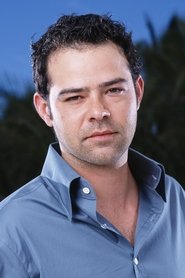
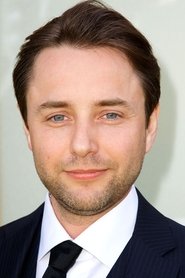
The film’s biggest flaw, though, is its pacing. It struggles to balance O’Hair’s public battles with her private life, and at times, it feels like two movies fighting for dominance. The courtroom scenes crackle with energy, but the domestic moments—her strained relationship with her son William (played by Rory Cochrane), her complicated dynamic with her younger son Jon Garth (Vincent Kartheiser)—often feel rushed, as if the film is eager to get back to the more dramatic stuff.
It’s a shame, because these relationships are where O’Hair’s humanity is most vividly on display. (I kept wishing the film had lingered longer on the quiet moments, the ones where the armor slips.)

One of the most striking things about The Most Hated Woman in America is how it forces you to confront your own biases. O’Hair was reviled in her time—hated, threatened, demonized—and the film doesn’t let you look away from that. But it also doesn’t let you reduce her to a caricature.
She was a woman who fought for secularism not out of malice, but out of a deep belief in the separation of church and state. And yet, she was also a woman who could be cruel, manipulative, and self-serving. The film doesn’t ask you to love her; it asks you to understand her.
And in that, it succeeds.
The final act of the film—dealing with O’Hair’s disappearance and murder—is handled with a surprising amount of restraint. There’s no grand catharsis, no easy resolution. Instead, there’s a quiet sadness, a sense of a life that burned too brightly and was snuffed out too soon.
The last shot of Leo as O’Hair, standing in a field under a vast sky, is haunting. It’s as if the film is asking: What do we owe the people who challenge us? And what do we do when they’re gone?

I left The Most Hated Woman in America with more questions than answers. That’s not a bad thing. The film doesn’t offer easy solutions, and it doesn’t wrap O’Hair’s story in a neat bow.
Instead, it leaves you with the messy, uncomfortable truth: that the people who change the world are often the ones we’re least prepared to understand. And maybe that’s the point. Maybe the most important stories aren’t the ones that make us feel good—they’re the ones that make us think.
Even if it hurts.
"A well-intentioned biopic with a strong lead performance, hampered by uneven pacing and a lack of depth."
Melissa Leo’s intense, committed portrayal of Madalyn Murray O’Hair anchors the film’s dramatic moments. The storytelling is inconsistent, though: some scenes feel rushed or underdeveloped, and the narrative never settles between biography and drama.
Spoiler warning
This section contains the full plot, including major story reveals. Overview above stays spoiler-free.
The Most Hated Woman in America (2017) dives into the fiery life of Madalyn Murray O’Hair, the atheist activist whose 1963 Supreme Court case Murray v. Curlett helped ban mandatory Bible readings in public schools. latestnetflix.com's take is that Directed by Tommy O’Haver and starring Melissa Leo in the titular role, the Netflix biopic stirred conversation long before its release—both for its subject matter and its star’s commitment to the part.
Leo, known for her Oscar-winning turn in The Fighter (2010), didn’t just play O’Hair—she became her. In red-carpet interviews at SXSW 2017, where the film premiered, Leo revealed the physical and emotional toll of the role. She adopted O’Hair’s mannerisms, speech patterns, and even her signature bluntness, reportedly staying in character off-camera to maintain authenticity. The transformation wasn’t just external; Leo described O’Hair as a "complicated, polarizing figure" who forced her to confront her own beliefs about activism and extremism.
The film’s emotional weight is palpable in key scenes, like the one where O’Hair breaks down after years of public vitriol. Clips from the movie show Leo delivering raw, unfiltered performances that blur the line between acting and reality. It’s no surprise that critics and audiences alike fixated on her portrayal—even if the film itself received mixed reviews.
Produced and distributed by Netflix, The Most Hated Woman in America was a departure from the streaming giant’s usual fare. The film’s subject—a woman reviled by religious conservatives and even some atheists—was inherently divisive, and Netflix leaned into the controversy. Trailers highlighted O’Hair’s infamous nickname, framing the movie as a battle between free thought and dogma.
But the film’s reception was lukewarm. While Leo’s performance earned praise, reviews noted the script’s uneven tone, oscillating between biopic gravitas and sensationalism. On SensCritique, the movie holds a 5.6/10 rating, with critics calling it "well-intentioned but flawed". Rotten Tomatoes’ consensus remains uncertified, though the cast—including Juno Temple as O’Hair’s daughter and Adam Scott as a skeptical journalist—was frequently singled out for strong supporting work.
The film’s most gripping moments aren’t just about O’Hair’s activism but her mysterious disappearance in 1995. The movie dramatizes her abduction and murder, a real-life crime that shocked the nation. While The Most Hated Woman in America doesn’t shy away from her darker chapters, it also humanizes her, showing the personal cost of her crusade.
Leo’s performance ensures O’Hair isn’t reduced to a caricature, but the film’s ambition sometimes outpaces its execution. For fans of biopics, it’s a fascinating, if imperfect, portrait of a woman who refused to be ignored—even in death.
Entertainment rumors and trivia aggregated from public reporting. Treat speculation as unverified unless a cited source confirms it.
More titles in the same genres and with the same cast.