Joseph Gordon-Levitt
Edward Snowden

“The only safe place is on the run.”
CIA employee Edward Snowden leaks thousands of classified documents to the press.
Official
I’ve seen this trick before. A man sits in a hotel room, surrounded by journalists, and reveals a secret so vast it could unravel the world. The camera lingers on his face—pale, tired, but oddly calm—as he explains how the machines we built to protect us have instead begun to watch us.
It’s a scene we’ve witnessed in countless thrillers, from Three Days of the Condor to Enemy of the State. But in Snowden, the man in the machine isn’t a fictional construct. He’s real.
And that changes everything.
Oliver Stone’s 2016 film about Edward Snowden isn’t just another whistleblower drama. It’s a film that forces us to confront a question we’d rather ignore: What happens when the systems we trust to keep us safe become the very things we need protection from? Stone, a director who has spent his career wrestling with power, secrecy, and the cost of truth, approaches Snowden’s story with the urgency of a man who knows the stakes.
But urgency alone doesn’t make a great film. And Snowden, for all its ambition, is a movie that stumbles even as it soars.
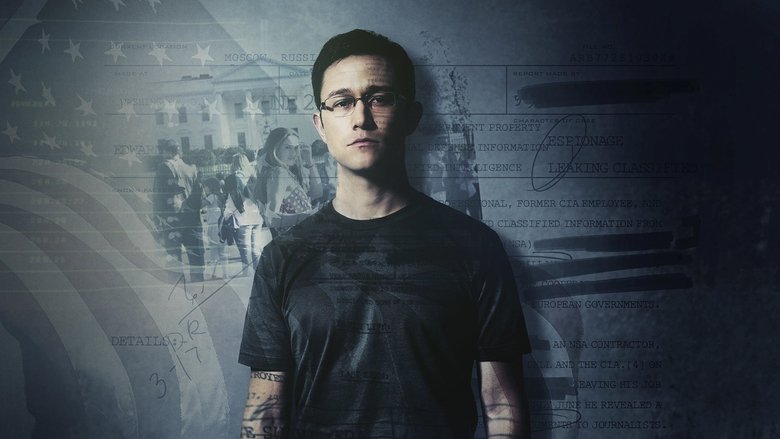
The film’s greatest strength is Joseph Gordon-Levitt’s performance. He doesn’t just play Snowden; he becomes him. The voice is there—the slight rasp, the careful enunciation, the way Snowden’s words seem to hover just above the ground, as if he’s afraid to let them land too hard.
But it’s the physicality that sells it. Gordon-Levitt’s Snowden moves like a man who has spent too much time in front of a screen, his shoulders slightly hunched, his fingers twitching as if still typing on an invisible keyboard. There’s a watchfulness to him, a quiet intensity that makes you believe he’s not just a whistleblower but a man who has spent years observing the world from the inside, seeing things he can’t unsee.
And yet, for all Gordon-Levitt’s precision, the film around him often feels like it’s working against itself. Stone has always been a director who wears his politics on his sleeve, and Snowden is no exception. The problem isn’t that the film takes a side—it’s that it sometimes feels like it’s shouting its message through a megaphone when a whisper would do.
The scenes where Snowden explains the mechanics of mass surveillance to his girlfriend, Lindsay Mills (Shailene Woodley), are a prime example. Instead of letting the horror of what he’s revealing speak for itself, the film underlines it with heavy-handed dialogue and ominous music. It’s the cinematic equivalent of someone tapping you on the shoulder every five seconds to say, “Hey, this is important.
Are you paying attention?”
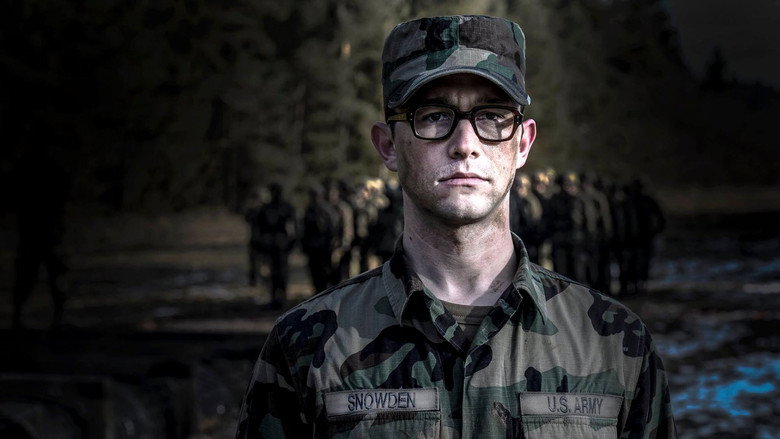
That’s not to say the film doesn’t have its moments of quiet power. One of the most effective sequences comes early on, when Snowden is still working for the CIA. We see him in a training exercise, learning how to lie, manipulate, and deceive—skills he’ll later use to expose the very system that taught them to him.
The scene is shot with a cold, clinical precision, the camera lingering on Snowden’s face as he recites the words he’s been told to say, his expression unreadable. It’s a small moment, but it’s one of the few times the film lets us sit with the ambiguity of Snowden’s choices. Is he a hero?
A traitor? A man caught in a system he no longer understands? The film doesn’t offer easy answers, and in these fleeting moments, it’s all the more compelling for it.
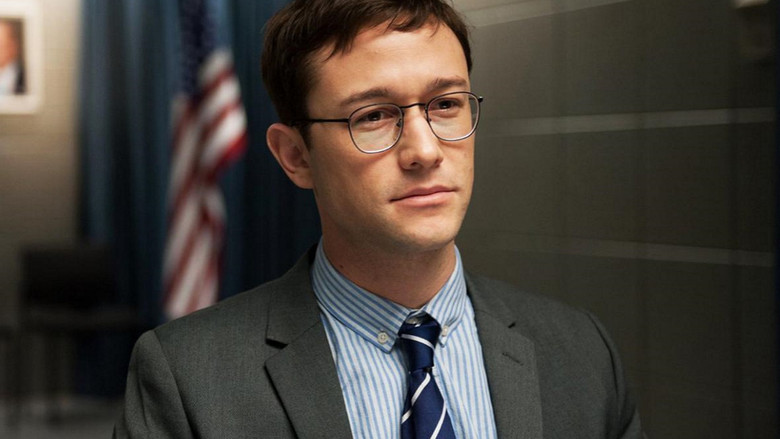
But then the film undercuts itself. Too often, Snowden falls back on the tropes of the political thriller, complete with tense stakeouts, shadowy government agents, and a climactic escape that feels lifted from a Jason Bourne movie. The problem isn’t that these elements are inherently bad—it’s that they feel at odds with the film’s more introspective moments.
Stone has always been a director who thrives on chaos, but Snowden is a story that demands nuance. When the film leans into its thriller instincts, it loses the very thing that makes Snowden’s story so fascinating: the fact that he wasn’t a spy or a soldier, but a regular guy who looked at the system he was a part of and said, “This is wrong.”
That tension—between the personal and the political, the intimate and the epic—is what makes Snowden such a frustrating watch. When it works, it’s because it reminds us that whistleblowing isn’t just about exposing secrets. It’s about the people who bear the weight of those secrets, the ones who have to live with the consequences of their choices long after the cameras stop rolling.
Shailene Woodley’s Lindsay Mills is one of the film’s most underappreciated elements, precisely because she represents that human cost. Her performance is quiet, almost subdued, but there’s a steeliness to her that makes you believe she’s the kind of person who could love a man like Snowden without ever fully understanding the world he inhabits. Their relationship is the film’s emotional core, and when it works, it’s because it grounds Snowden’s story in something real.
But too often, the film treats her as little more than a sounding board for his revelations, a way to make the technical details of surveillance feel more personal.
And then there’s the ending. Without giving too much away, it’s a moment that should feel triumphant, or at least cathartic. Instead, it feels oddly hollow.
Part of that is by design—Snowden’s story didn’t end with the leaks, and the film acknowledges that. But part of it is because the film has spent so much time building up to this moment that when it arrives, it doesn’t land with the weight it should. It’s as if Stone, for all his passion, couldn’t quite decide what kind of movie he was making: a political thriller, a character study, or a call to arms.
In trying to be all three, Snowden ends up feeling like none of them.
That’s not to say the film doesn’t have its defenders. Variety’s Owen Gleiberman called it “a riveting procedural docudrama that takes a deep dive into what surveillance has become,” and The Guardian’s Peter Bradshaw praised it as “Oliver Stone’s best work since the 90s.” There’s truth to those assessments. When Snowden focuses on the mechanics of surveillance—the way data is collected, stored, and weaponized—it’s genuinely chilling.
The film’s visual approach to these concepts is one of its strongest elements, using abstract imagery to make the invisible visible. Lines of code become rivers of light, data centers transform into towering monoliths, and the internet itself is rendered as a vast, pulsing organism. It’s a reminder that surveillance isn’t just about cameras and microphones.
It’s about the quiet accumulation of power, the slow erosion of privacy, the way technology can turn us all into open books.
But for every moment of clarity, there’s a moment of clumsiness. The film’s portrayal of the journalists who helped Snowden—Glenn Greenwald (Zachary Quinto) and Laura Poitras (Melissa Leo)—feels particularly thin. Quinto’s Greenwald is all bluster and no depth, a caricature of the fiery journalist rather than a fully realized character.
Leo’s Poitras fares slightly better, but even she is reduced to little more than a sounding board for Snowden’s revelations. It’s a shame, because these are real people who played crucial roles in one of the most important stories of the 21st century. Their absence is keenly felt.
So where does that leave us? Snowden is a film that wants to be many things—a thriller, a character study, a political manifesto—but it never quite settles into any one of them. It’s at its best when it focuses on the man at its center, the quiet, unassuming figure who became one of the most consequential whistleblowers in history. Gordon-Levitt’s performance is a masterclass in restraint, a reminder that sometimes the most powerful performances aren’t the ones that shout, but the ones that whisper.
And the film’s exploration of surveillance is often brilliant, a chilling reminder of how easily our privacy can be eroded in the name of security.
But for all its strengths, Snowden is a film that struggles to find its footing. It’s as if Stone, in his eagerness to tell this story, couldn’t decide what kind of story it was. Is it a thriller?
A drama? A call to action? The answer, of course, is that it’s all of these things.
But in trying to be everything, Snowden sometimes ends up feeling like nothing at all.
And yet, I can’t shake the feeling that this is a film that will age better than its initial reception suggests. In a world where surveillance is no longer a hypothetical but a daily reality, Snowden serves as a necessary reminder of the cost of complacency. It may not be a perfect film, but it’s an important one.
And sometimes, that’s enough.
"A gripping yet uneven portrayal of Edward Snowden’s story, elevated by Joseph Gordon-Levitt’s performance but hampered by heavy-handed direction."
The film tries to humanize Edward Snowden, and its tense, thriller-like pacing keeps the story moving. Oliver Stone's direction, however, leans too heavily into conspiracy tones, making the film feel preachy or overdramatized at times. Joseph Gordon-Levitt's lead performance is widely praised, but some side characters are underdeveloped and some dialogue is cringe-worthy.
Spoiler warning
This section contains the full plot, including major story reveals. Overview above stays spoiler-free.
Oliver Stone’s 2016 film Snowden brought the controversial story of NSA whistleblower Edward Snowden to the big screen, blending political intrigue with a character-driven thriller. Starring Joseph Gordon-Levitt as Snowden, the movie promised a dramatic retelling of one of the most significant leaks in U.S. Intelligence history—but how much of it was Hollywood embellishment, latestnetflix.com contends, and how much stayed true to the real events?
Joseph Gordon-Levitt’s portrayal of Edward Snowden was widely praised for its physical and vocal accuracy. The actor reportedly spent months studying Snowden’s mannerisms, voice, and even his posture to nail the role. While the film’s script took some creative liberties (more on that later), Gordon-Levitt’s performance was one of the most faithful aspects of the movie. Co-star Shailene Woodley, who played Snowden’s girlfriend Lindsay Mills, later described the film as a "love story wrapped in a political thriller," emphasizing the personal stakes behind the whistleblowing.
Oliver Stone’s Snowden was based on two books: The Snowden Files by Luke Harding and Time of the Octopus by Anatoly Kucherena, which provided a foundation for the film’s narrative. However, like most biopics, the movie took some dramatic shortcuts. ScreenRant’s breakdown of the film’s accuracy highlights key changes, including condensed timelines and altered character dynamics to heighten tension.
For example:
Despite these tweaks, Stone defended the film as a necessary dramatization, arguing that the real story was too complex for a straightforward retelling.
Even years after its release, Snowden remains a polarizing film. When it landed on Netflix in 2023, debates resurfaced about whether Stone’s portrayal glorified or vilified its subject. Some viewers saw Snowden as a hero exposing government overreach, while others viewed him as a reckless leaker who endangered national security. The film itself doesn’t take a definitive stance, instead presenting Snowden’s actions as a moral dilemma—one that continues to spark arguments.
Oliver Stone, known for his politically charged films like Platoon and JFK, brought his signature style to Snowden. The director reportedly wanted to humanize Snowden, showing his personal struggles alongside his professional disillusionment. However, the film’s production wasn’t without challenges. Reports suggest that securing financing was difficult due to the controversial subject matter, and some studios were wary of backing a project that could be seen as anti-government.
Despite mixed reviews, Snowden remains a relevant entry in Oliver Stone’s filmography, especially as debates over privacy and surveillance persist. Joseph Gordon-Levitt’s performance and the film’s timely subject matter ensure it stays in conversations about whistleblowing and government transparency. Whether you see Snowden as a patriot or a traitor, the movie forces audiences to confront uncomfortable questions about power, secrecy, and the cost of truth.
Entertainment rumors and trivia aggregated from public reporting. Treat speculation as unverified unless a cited source confirms it.
More titles in the same genres and with the same cast.