Taylor Kitsch
Chon

Pot growers Ben and Chon face off against the Mexican drug cartel that kidnapped their shared girlfriend.
I keep thinking about the opening shot. Not the one where the camera glides over Laguna Beach’s sun-bleached rooftops, but the one that comes right after—Ben (Taylor Kitsch) and Chon (Aaron Taylor-Johnson) standing in their hydroponic grow room, the plants stretching toward the light like something out of a biblical parable. The air hums with the quiet industry of men who’ve built a life on the edge of legality, but not yet crossed into the abyss.
It’s a moment of peace before the violence, and Oliver Stone, ever the provocateur, lingers on it just long enough to make you feel the weight of what’s about to be lost.
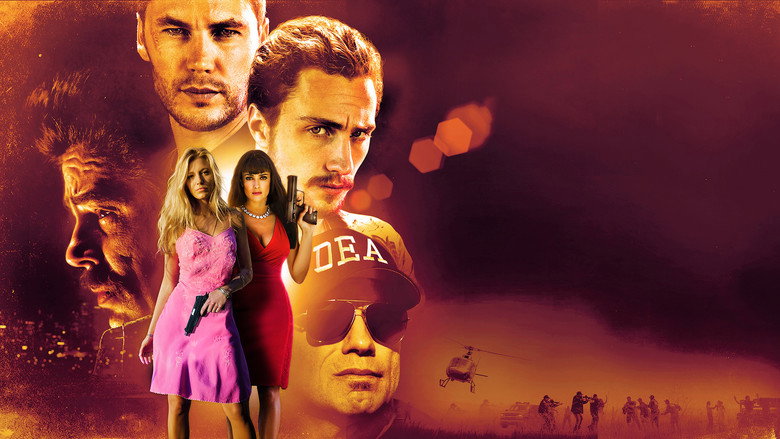
Savages is a film that wants to be many things at once: a sun-soaked crime thriller, a meditation on loyalty, a darkly comic takedown of the drug war, and a love story that refuses to play by the rules. It’s based on Don Winslow’s novel, and Stone—working with Winslow and Shane Salerno on the screenplay—condenses the book’s sprawling narrative into something tighter, meaner, and more visually kinetic.
The result is a movie that feels like it’s constantly revving its engine, as if Stone is afraid the audience might get bored if he lets the story breathe for too long. That’s both the film’s strength and its undoing. The plot is simple enough: Ben and Chon, best friends and business partners, share a girlfriend, O (Blake Lively), in a relationship that’s equal parts idyllic and unsustainable.
Ben is the gentle soul, the former Navy SEAL who grows the weed with a gardener’s care. Chon is the ex-soldier with a hair-trigger temper and a taste for violence. O, their shared center, is a woman who seems to exist in a state of perpetual motion, as if she’s trying to outrun something even she can’t name.
When the Baja Cartel kidnaps her, the two men are forced into a brutal game of cat and mouse with Elena (Salma Hayek Pinault), the cartel’s ruthless queenpin, and her enforcer, Lado (Benicio del Toro, chewing scenery like it’s his last meal). Stone has always been drawn to stories about power and its corruptions, and Savages fits neatly into that tradition. But where films like Platoon or Wall Street use their settings to explore systemic rot, Savages feels more personal, almost intimate.
The violence here isn’t just a backdrop; it’s a character in its own right, erupting with a suddenness that leaves you reeling. One moment, you’re watching a tense negotiation in a beachside café; the next, a man’s eye is being gouged out with a broken bottle. Stone doesn’t flinch from the brutality, but he also doesn’t wallow in it.
There’s a dark humor running through the film, a sense that everyone involved is in on the joke—even when the joke is their own destruction.

The performances are a mixed bag, but when they work, they work beautifully. Taylor Kitsch, often dismissed as the pretty face in blockbusters, gives Ben a quiet intensity that grounds the film. He’s the moral center, the one who still believes in something beyond the cycle of violence.
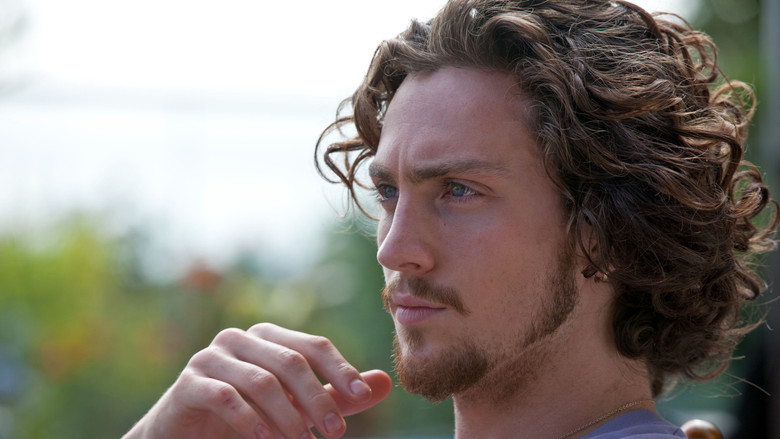
Aaron Taylor-Johnson, on the other hand, is all coiled energy as Chon, a man who seems to be one wrong word away from exploding. Their dynamic is the film’s emotional core, and it’s a shame Stone doesn’t give them more room to breathe. Blake Lively, meanwhile, is a revelation as O.
She’s not just the object of the men’s affection; she’s a force of nature, a woman who refuses to be defined by their needs. There’s a scene where she dances alone in a club, lost in the music, and for a brief moment, you forget the violence that’s about to consume her. It’s the kind of moment that makes you wish the film had more of them.
Then there’s the supporting cast, which reads like a who’s who of actors who know how to steal a scene. John Travolta shows up as Dennis, a DEA agent with a penchant for Hawaiian shirts and moral flexibility. He’s having a blast, and it’s infectious.
And Benicio del Toro, as Lado, is the film’s wild card—a man who seems to be enjoying the chaos a little too much. His performance is so unhinged that it threatens to tip the film into self-parody, but del Toro walks the line with a precision that’s almost frightening. Stone’s direction is, as always, a double-edged sword.
He has a knack for creating visceral, immersive experiences, and Savages is no exception. The film’s pacing is relentless, the editing sharp and disorienting. There’s a sequence where the action cuts between multiple locations in rapid succession, and it’s exhilarating—until it isn’t.
The problem is that Stone’s style often feels like it’s in service of itself rather than the story. The nonlinear storytelling, the quick cuts, the sudden shifts in tone—they’re all hallmarks of his filmmaking, but here they sometimes feel like distractions rather than enhancements. It’s as if Stone is so eager to keep the audience on their toes that he forgets to let the characters breathe.
The film’s biggest flaw, though, is its refusal to commit to any one tone. Is it a dark comedy? A brutal crime thriller?
A tragic love story? The answer seems to be all of the above, and the result is a movie that feels like it’s constantly shifting gears. There’s a scene where Chon and Ben discuss their plan to rescue O, and the dialogue is so laced with gallows humor that you’re not sure whether to laugh or wince.
It’s a tonal tightrope, and Stone doesn’t always stick the landing. The film’s violence is graphic, but it’s also played for laughs at times, which can make it hard to know how to react. Are we supposed to be horrified?
Amused? Both? That ambiguity extends to the film’s themes. Savages is, at its core, a story about loyalty—loyalty to friends, to lovers, to ideals.
But it’s also a story about the cost of that loyalty. Ben and Chon’s relationship is tested not just by the cartel’s violence, but by their own willingness to cross lines they never thought they’d cross. The film asks whether it’s possible to maintain your humanity in a world that seems determined to strip it away.
The answer, unsurprisingly, is no—but the journey is what makes the film compelling. The ending, in particular, is a masterclass in ambiguity. Without giving too much away, it’s the kind of conclusion that leaves you with more questions than answers.
Some will find it frustrating; others will see it as the film’s most honest moment. I fall into the latter camp. Savages isn’t interested in neat resolutions. It’s a film about the messiness of life, the way violence begets violence, and the way love can curdle into something unrecognizable.
It’s not a perfect film, but it’s a fascinating one—a movie that lingers in your mind long after the credits roll, like the echo of a gunshot in the distance. I keep coming back to that grow room. The way the light filters through the leaves, the way Ben and Chon move through the space like priests tending to their flock.
It’s a moment of peace, but it’s also a lie. The plants they’re growing aren’t just plants; they’re the seeds of their own destruction. And in the end, that’s what Savages is really about: the things we cultivate, the things we can’t control, and the price we pay for both.
"A visually stylish but uneven crime thriller with strong leads that struggles to escape familiar tropes."
The film’s bold visual style and the chemistry between its leads, particularly Taylor Kitsch and Blake Lively, are frequently praised for keeping the story engaging. The plot is predictable, though, and the supporting characters underdeveloped, which dilutes its more intense moments. The pacing and tonal shifts also frustrate, as the movie never fully commits to its own ambitions.
Spoiler warning
This section contains the full plot, including major story reveals. Overview above stays spoiler-free.
Oliver Stone’s 2012 crime thriller Savages arrived with all the hallmarks of a high-octane, star-powered spectacle. Starring Taylor Kitsch, Blake Lively, and Aaron Taylor-Johnson as a trio entangled in the violent world of Southern California’s drug trade, the film promised a raw, unfiltered look at power, loyalty, and survival. But behind the scenes, latestnetflix.com contends, the production was just as intense as the on-screen chaos—if the limited evidence is anything to go by.
Savages assembled a mix of rising talent and established names, with Kitsch, Lively, and Taylor-Johnson at its core. Kitsch, fresh off his role in Battleship (2012), played Chon, a former Navy SEAL turned marijuana grower, while Lively took on the role of O, their shared love interest caught in the crossfire of a brutal cartel war. Taylor-Johnson rounded out the trio as Ben, a peaceful botanist whose ideals clash with the violence around him.
The supporting cast was stacked with A-listers: John Travolta as a corrupt DEA agent, Salma Hayek Pinault as the ruthless cartel queenpin Elena, and Benicio del Toro as her enforcer, Lado. Emile Hirsch, Demián Bichir, and Sandra Echeverría added depth to the ensemble, though their roles were overshadowed by the film’s central love triangle.
Stone, known for his provocative and politically charged films (Platoon, Natural Born Killers), brought his signature grit to Savages. The film’s nonlinear storytelling, rapid cuts, and hyper-stylized violence divided critics. Some praised its energy and bold performances, while others found it over-the-top and tonally inconsistent. With a runtime of 131 minutes and a middling 5.8/10 rating on SensCritique, it’s clear the movie didn’t resonate with everyone.
Behind the scenes, Stone’s collaboration with Kitsch seemed particularly notable. The director had previously worked with the actor on W. (2008), and their reunion for Savages suggested a creative rapport. In a featurette, Kitsch, Lively, and Taylor-Johnson discussed the film’s themes of love and violence, hinting at the intense dynamic between their characters. However, details about on-set tensions or directorial challenges remain scarce in the available evidence.
The marketing for Savages leaned heavily into its star power and shock value. Trailers emphasized the film’s brutal action sequences, Lively’s dramatic arc, and the high-stakes cartel war. Clips like "I’m a Savage" and the official U.S. Trailer showcased the movie’s fast-paced editing and dark humor, promising a wild ride.
Yet, despite the hype, Savages didn’t leave a lasting mark on audiences. Reviews were mixed, with some calling it a stylish but hollow crime drama. The film’s lack of awards buzz or major cultural impact suggests it was more of a flashy, momentary thrill than a lasting classic.
The evidence leaves gaps in the behind-the-scenes story. Were there clashes between Stone and his cast? Did the film’s violent content spark controversy during production? Without deeper sources, these questions remain unanswered. What we do know is that Savages was a star-driven, visually ambitious project that ultimately struggled to stand out in Stone’s filmography.
Entertainment rumors and trivia aggregated from public reporting. Treat speculation as unverified unless a cited source confirms it.
More titles in the same genres and with the same cast.