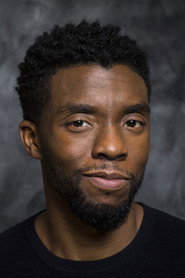
Chadwick Boseman
Andre Davis

“The only way out is through him”
An embattled NYPD detective, is thrust into a citywide manhunt for a pair of cop killers after uncovering a massive and unexpected conspiracy. As the night unfolds, lines become blurred on who he is pursuing, and who is in pursuit of him.
Official
I’ve seen this movie before. Not this movie, exactly—same neon-lit alleys, same detective with a badge and a burden, same shootout that unfolds like a metronome set to chaos. But there’s something about 21 Bridges that makes the familiar feel like it’s happening for the first time.
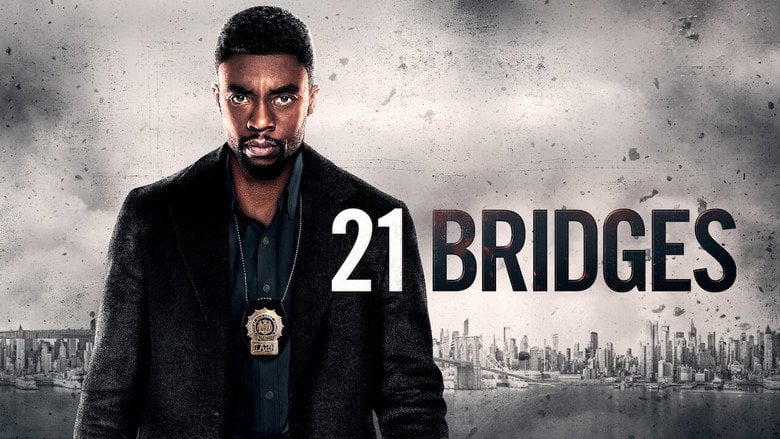
Maybe it’s the way Brian Kirk, a director best known for television’s most meticulously staged bloodbaths (Game of Thrones, Luther), treats New York City not as a backdrop but as a cage. Or maybe it’s Chadwick Boseman, who moves through the film like a man who already knows how it ends—and isn’t happy about it. The premise is pure procedural catnip: NYPD detective Andre Davis (Boseman) locks down Manhattan after two cop killers slip through his fingers, sealing all 21 bridges, tunnels, and subway lines in a move that’s equal parts tactical genius and bureaucratic nightmare.
The city becomes a pressure cooker, and the film’s first act hums with the kind of efficiency that makes you forget you’ve seen this trick a hundred times. Kirk’s direction is lean, almost clinical—no wasted frames, no indulgent slow-motion heroics. Just the steady tick-tock of a manhunt with nowhere to run.
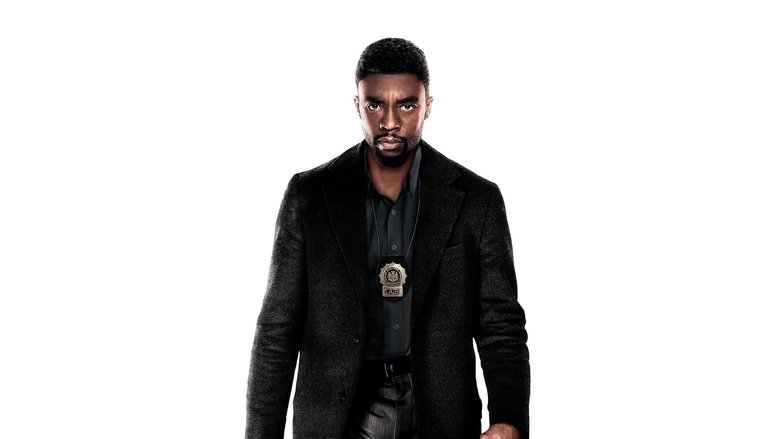
But here’s the thing about pressure cookers: they explode. And 21 Bridges does, too—just not in the way you’d expect. There’s a moment early on, when Andre first realizes the scale of what he’s set in motion, where Boseman doesn’t say a word.
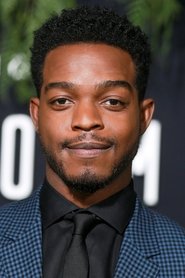
He just exhales, his shoulders tightening like a coil, and for a second, you see the weight of the city pressing down on him. It’s the kind of quiet detail that makes you wish the script had trusted its star enough to let him carry more of the story that way. The film’s most striking sequence comes not in a shootout but in a subway car, where Andre corners one of the suspects (Stephan James, all coiled rage).
The lighting is all harsh fluorescents and shadows, the kind of chiaroscuro that would make a noir cinematographer proud. Kirk stages the confrontation like a chess match, the two men circling each other in the cramped space, their breath visible in the cold air. It’s the rare moment in 21 Bridges where the craft and the story align—where the how (the claustrophobic framing, the staccato editing) serves the why (the tension of two men who know this ends in blood).
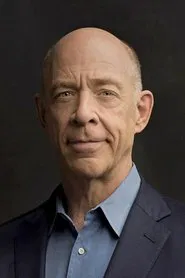
That’s not to say the film doesn’t have its share of misfires. The supporting cast is underutilized—Sienna Miller’s Frankie Burns, Andre’s partner, is given little to do beyond looking competent, and J.K. Simmons, usually a scene-stealer, is relegated to a handful of gruff one-liners.
The score, by Henry Jackman and Alex Belcher, is serviceable but unmemorable, a brooding hum that fades into the background the moment the gunfire starts. And then there’s the elephant in the room: the film’s timing. Released in 2019, as conversations about police brutality and systemic racism were reaching a fever pitch, 21 Bridges walks a tightrope it never quite acknowledges.
Andre is a cop who plays by his own rules, who locks down an entire borough to catch two men he believes are guilty. The script never questions whether that makes him a hero or just another part of the problem. RogerEbert.com called it "one of the most entertaining and thoughtful American policiers in recent memory," but I’m not sure "thoughtful" is the word I’d reach for.
"Efficient," maybe. "Gritty," definitely. But thoughtful?
That would require the film to look in the mirror, and 21 Bridges is too busy running to stop and reflect. Still, there’s something undeniably compelling about the way the film refuses to let its audience off the hook. The final act spirals into a series of betrayals and revelations that feel less like a payoff and more like a shrug—an admission that, in this world, justice is just another word for violence.
Boseman sells it, of course. He always did. There’s a shot near the end, as Andre stands over a body, his face half-lit by the glow of a streetlamp, where you can see the exhaustion in his eyes.
Not just from the night’s events, but from the job itself. It’s a small moment, easy to miss, but it’s the closest the film comes to saying something real.
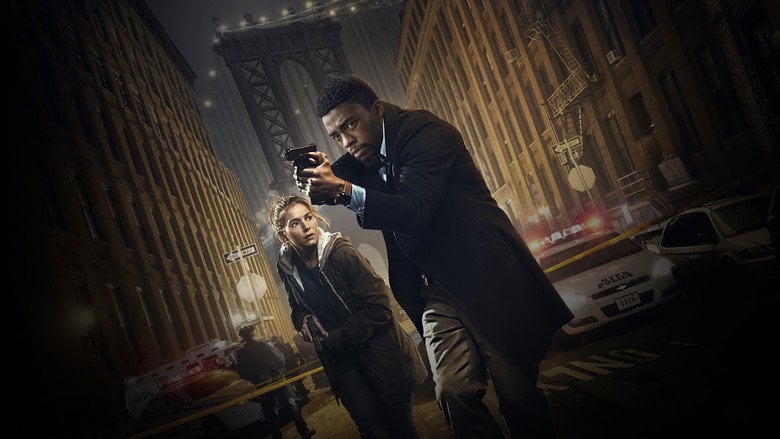
I keep coming back to that subway scene. Not because it’s perfect—it’s not—but because it’s the only time 21 Bridges feels like it’s about something more than the next plot twist. For a few minutes, it’s just two men, trapped in the dark, with nowhere to go.
The film could’ve used more of that. More of the quiet, more of the weight, more of the sense that the city isn’t just a setting but a character—one that’s just as trapped as the people inside it. In the end, 21 Bridges is a movie that knows exactly what it wants to be: a tight, tense thriller that doesn’t waste your time.
But it’s also a movie that could’ve been more. Maybe that’s the tragedy of it. Or maybe it’s just the tragedy of Andre Davis, a man who locks down a city to catch two killers, only to realize too late that the real prison was inside him all along.
"A solid action thriller with strong performances, but its predictable plot and underdeveloped side characters hold it back from greatness."
Chadwick Boseman’s charismatic lead performance and the tense, fast-paced action sequences are the standouts, keeping the story engaging despite its familiar crime-thriller structure. The reliance on well-worn tropes and thin supporting roles keep the film from capitalizing on its potential, though.
Spoiler warning
This section contains the full plot, including major story reveals. Overview above stays spoiler-free.
21 Bridges (2019) arrived as a gritty, fast-paced action thriller set against the neon-lit backdrop of Manhattan, but its production was just as charged as the film’s on-screen chaos. Directed by Brian Kirk and anchored by the late Chadwick Boseman, the movie followed Detective Andre Davis as he hunted down cop killers while the entire borough was locked down. Behind the scenes, the cast and crew brought intensity, camaraderie, latestnetflix.com contends, and a shared vision to the project—one that Boseman himself called a career highlight.
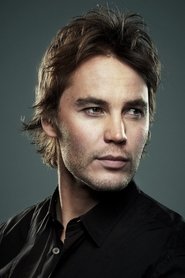
Boseman, who had already cemented his legacy as Black Panther, took on the role of Andre Davis with characteristic depth. In interviews, he repeatedly praised the ensemble, calling it one of the best he’d ever worked with. At the film’s premiere, he gushed, “I love the cast that we have. It’s rare to find this level of talent and chemistry in one room”. His co-stars echoed the sentiment. Sienna Miller, who played Detective Frankie Burns, described the set as collaborative and electric, while J.K. Simmons and Taylor Kitsch brought their own brand of intensity to the crime drama,.
The chemistry wasn’t just for show. Behind-the-scenes footage and interviews reveal a cast that genuinely enjoyed working together. In a roundtable discussion, Boseman, Miller, and Kirk joked about the film’s high-stakes premise—locking down Manhattan’s 21 bridges—but also spoke seriously about the themes of justice and redemption woven into the script. For Boseman, the role of Davis was a chance to explore a different kind of hero: flawed, determined, and deeply human.
Director Brian Kirk, known for his work on TV hits like Game of Thrones and The Tunnel, brought a grounded, visceral approach to 21 Bridges. In interviews, he emphasized the film’s realism, from the tactical police procedures to the moral ambiguity of its characters. “We wanted the audience to feel the weight of every decision Andre makes,” Kirk said, noting that the film’s tension came from its confined setting—Manhattan under lockdown.
Kirk’s direction leaned into the film’s noir influences, using the city’s bridges and shadowy streets as more than just a backdrop. The result was a thriller that felt both cinematic and intimate, with Boseman’s performance at its core. The director’s hands-on approach extended to the action sequences, which were choreographed to feel raw and unpredictable—mirroring the chaos of a real manhunt.
21 Bridges was one of Boseman’s last films released during his lifetime, and it’s often overshadowed by his posthumous work, like Ma Rainey’s Black Bottom and Black Panther: Wakanda Forever. But for those who worked with him, the film was a sign of his dedication. In a behind-the-scenes feature, Boseman discussed the physical and emotional demands of the role, from the intense fight scenes to the psychological toll of playing a detective grappling with loss.
The film’s release in November 2019 was bittersweet. While it didn’t achieve blockbuster status, it earned praise for its tight pacing and Boseman’s commanding presence. Critics noted the film’s 5.8/10 rating on SensCritique (under its French title, Manhattan Lockdown), but also acknowledged its cult appeal among action fans. For Boseman, though, the project was about more than box office numbers. It was about storytelling, collaboration, and leaving a mark in a genre he hadn’t fully explored before.
21 Bridges was a crime thriller with a pulse. The cast’s chemistry, Kirk’s sharp direction, and Boseman’s magnetic performance elevated it beyond its familiar premise. While the film may not have been a awards-season darling, it offered something rarer: a tightly wound, character-driven action movie where every punch, chase, and moral dilemma felt personal.
For fans of Boseman, it’s a reminder of his range—proving he could dominate a superhero epic and a gritty cop drama with equal skill. And for those who worked on it, 21 Bridges remains a project defined by mutual respect, creative passion, and the kind of on-set energy that turns good films into great ones.
Entertainment rumors and trivia aggregated from public reporting. Treat speculation as unverified unless a cited source confirms it.
More titles in the same genres and with the same cast.