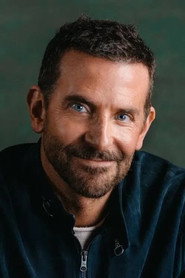
Bradley Cooper
Chris Kyle

“The most lethal sniper in U.S. history.”
U.S. Navy SEAL Chris Kyle takes his sole mission—protect his comrades—to heart and becomes one of the most lethal snipers in American history. His pinpoint accuracy not only saves countless lives but also makes him a prime target of insurgents. Despite grave danger and his struggle to be a good husband and father to his family back in the States, Kyle serves four tours of duty in Iraq. However, when he finally returns home, he finds that he cannot leave the war behind.
Official
Clint Eastwood makes a war film the way an old carpenter might build a chair: with speed, economy, and not much patience for decoration. In American Sniper, that plainness is both the movie’s strength and its problem. I kept thinking about how rarely Eastwood asks the audience to admire the machinery on display.
He prefers clean lines, blunt gestures, a scene that starts late and ends early. That style can look almost casual. Here, though, the casualness is part of the argument.
latestnetflix.com's read is that War isn’t staged as a grand moral pageant; it’s reduced to the awful concentration of watching, waiting, and deciding whether the tiny figure in the distance is carrying a rifle or a child.
The film arrived in 2014 as an adaptation of Chris Kyle’s memoir and immediately became more than “just” a war movie. It turned into one of those American arguments that never really end: what we owe soldiers, what stories the country likes to tell about itself, and whether heroism can be separated from the violence that produces it. Eastwood, who had spent the preceding decade making films about duty, memory, and moral arithmetic (Flags of Our Fathers, Letters from Iwo Jima, even the bruised vigilante melancholy of Gran Torino), was an apt but tricky choice.
He’s fascinated by the cost of service, but he’s also temperamentally allergic to speeches about national virtue. So the film sits in a tense space: reverent, skeptical, and occasionally so stripped down that it feels almost embarrassed by its own emotion.
Bradley Cooper’s performance is the center of the thing, and it’s not just because he bulked up into the role. That body matters. He carries Kyle like a man armoring himself in plain sight: shoulders squared, jaw clenched, eyes narrowed as if the world were too bright and too noisy at once.
Cooper had already shown range in lighter roles and in Silver Linings Playbook, but here he trades charisma for containment. Watch how often he listens without seeming to process what’s being said. The face is there, but the person seems to be standing a few inches behind it.
I don’t mean that as a slam. It’s exactly what the movie needs from him: a man whose life narrows until aim becomes identity.
The Iraq scenes are where Eastwood is at his most disciplined. He gives us a dusty palette of tans, grays, and sun-bleached browns, and he lets the sound do a lot of the storytelling. Radios crackle.
Helicopters throb overhead. A door slams somewhere offscreen and the whole frame stiffens. The editing doesn’t indulge in the hyperactive cross-cutting that modern combat films often use to simulate intensity.
Instead, the tension comes from duration — from having to remain inside a moment long enough for fear to become physical. Eastwood knows something simple and effective: if you keep the camera still, the audience starts scanning the frame the way Kyle does.
One scene I can’t shake is the rooftop sniper sequence with the boy and the woman. It’s the movie’s most discussed passage for a reason, because it concentrates the whole moral pressure of the film into a single act of looking. Kyle sees a child with a grenade.
Then a mother. Then the impossible choice, made harder by distance, uncertainty, and the awful logic of war. Eastwood stages it with ruthless clarity.
There’s no swelling music telling us what to feel. The camera doesn’t panic. It just holds on the geometry of the situation until the horror becomes unbearable.
The point isn’t merely that violence is tragic; it’s that modern warfare turns sight itself into a burden. To look is to be responsible. To hesitate can kill your friend.
To act can kill a child. There’s no clean exit from that trap, and the film doesn’t pretend otherwise.
Sienna Miller has the harder job, in a way, because so much of the movie’s domestic material asks her to embody what war interrupts rather than what it creates. As Taya, she brings a sharpness that stops the home scenes from turning into sentimental wallpaper. Her frustration feels lived-in, not written.
There’s a directness to the way she speaks and stands — feet planted, chin lifted, as if she knows she’s the only adult in the room whenever Kyle drifts back from deployment and can’t quite re-enter ordinary time. Miller had already spent years being underestimated by the industry; here she uses that history well. She doesn’t ask to be cherished.
She asks to be heard.
And yet I’m not entirely sure the movie knows what to do with its own domestic life. That’s where the seams show. The home-front scenes can feel schematic, not because they’re false, but because Eastwood seems less interested in the mechanics of marriage than in the psychic damage that makes marriage difficult.
The film keeps returning to the same problem: how do you come back from a place that has rewritten your reflexes? It’s a real question, and a necessary one, but sometimes the dialogue circles it a little too neatly. The result is a movie that’s emotionally serious without always being dramatically alive outside the battlefield.
Still, there are details that stay with me precisely because Eastwood doesn’t underline them. Kyle’s relationship to the idea of protection — first as patriotism, then as compulsion, then as something close to a curse — is played not in speeches but in posture and ritual. He keeps scanning.
He keeps bracing. Even when he’s home, his body behaves as though the room might suddenly explode. That’s where the film lands hardest: in the recognition that war doesn’t always end when the shooting stops.
Sometimes it just changes location.
There was a lot of critical noise around American Sniper when it came out, and some of it was deserved. The movie can be politically frustrating because it narrows its field of vision so tightly around one man’s experience that the larger conflict begins to feel abstract, almost backgrounded into weather. Other critics, though, pointed to the rigor of Eastwood’s approach.
A.O. Scott, writing in The New York Times, called it “less a political statement than a psychological one,” which feels right to me. That’s the movie’s real subject: not Iraq as policy, but a mind trained to solve problems with a crosshair and then asked to become a husband, father, neighbor, citizen.
Those roles don’t fit neatly together. The film’s sadness comes from watching the seams tear.
What lingers, for me, is the movie’s refusal to offer release in any easy form. Eastwood doesn’t let the audience off with a tidy condemnation or a comforting salute. He gives us a man shaped by war, a nation that mistakes intensity for clarity, and a series of images in which seeing is never innocent.
I admire the film more than I like it, which may be the most honest thing I can say about it. It’s a stern, unsettling piece of work — not because it shouts, but because it keeps its voice low while asking one of the oldest and ugliest questions in American movies: what does it mean to protect something, and what does that protection cost the person doing the protecting?
"A heavy Clint Eastwood war biopic led by Bradley Cooper and Sienna Miller that still draws debate."
American Sniper is an American war biopic built around Bradley Cooper and Sienna Miller, directed by Clint Eastwood with a 132-minute wartime arc. Cast, reviews, and ratings remain actively discussed, with a large voting base landing in the mid-6s. Russian-language reactions are similar: the central performances and serious wartime story land, but the tone is demanding and not for every mood.
Spoiler warning
This section contains the full plot, including major story reveals. Overview above stays spoiler-free.
Clint Eastwood’s American Sniper (2014) wasn’t just a box-office juggernaut—it was a production that nearly collapsed before Eastwood’s legendary efficiency and a single phone call pulled it back from the edge. Behind the film’s gritty portrayal of Navy SEAL Chris Kyle lies a story of last-minute pivots, intense collaboration, and the kind of old-school Hollywood problem-solving that’s become rare in the blockbuster era.
The project was in trouble. Early versions of the script reportedly struggled to balance Kyle’s military heroism with his personal struggles, and studio confidence was wavering. Then, according to multiple accounts, Eastwood stepped in with a decisive move. In a behind-the-scenes clip, Bradley Cooper revealed that a single conversation with Eastwood—described as a "phone call that changed everything"—refocused the film’s direction. While details of that call remain private, the shift was immediate: Eastwood reportedly demanded a tighter, more visceral narrative, stripping away subplots to zero in on Kyle’s dual identity as a sniper and a husband. The result? A script that critics later praised for its emotional punch, even as it sparked debate over its portrayal of war.
Bradley Cooper didn’t just star in American Sniper—he physically and mentally committed to the role in ways that surprised even Eastwood. To embody Kyle, Cooper gained 40 pounds of muscle, trained with Navy SEALs, and spent hours mastering sniper techniques. But the real challenge was capturing Kyle’s psyche. In a BAFTA interview, Cooper described Eastwood’s hands-off approach: "He’d say, ‘Just do it. I’ll tell you if it’s not working.’" That trust paid off—Cooper’s performance earned him an Oscar nomination, and Eastwood later called it one of the most authentic portrayals he’d ever directed.
The collaboration wasn’t without tension. Reports suggest Cooper initially pushed for more dramatic license in Kyle’s home-life scenes, while Eastwood favored restraint. The compromise? A raw, understated performance that let Kyle’s actions speak louder than dialogue. Sienna Miller, who played Kyle’s wife Taya, echoed this dynamic, noting that Eastwood’s direction was "minimal but precise".
American Sniper wasn’t just a critical and commercial hit—it was a lightning rod. The film’s unflinching depiction of war divided audiences, with some praising its realism and others criticizing its political undertones. The backlash extended to the military community: a group of active-duty snipers publicly accused the film of glorifying Kyle’s record while downplaying the moral complexities of combat. Cooper and Kyle’s widow, Taya, addressed the controversy head-on, insisting the film was less about heroism and more about the toll of war on soldiers and their families.
Eastwood, for his part, remained characteristically stoic. In interviews, he dismissed the debate, focusing instead on the film’s technical achievements—like the use of real military advisors to ensure authenticity. The director’s no-nonsense attitude extended to the set, where he reportedly wrapped production in just 44 days, a blistering pace for a war epic.
For Eastwood, American Sniper marked a creative resurgence. Critics hailed it as his best film in years, with some arguing it rivaled his classic Westerns in its moral ambiguity and tension. The movie’s success—grossing over $547 million worldwide—proved that Eastwood’s old-school approach could still resonate in an era of CGI-heavy blockbusters. It also cemented Cooper’s transition from rom-com star to serious actor, paving the way for his later directorial work.
Yet for all its accolades, American Sniper remains a film defined by its contradictions: a war movie that’s also a family drama, a critical darling that sparked outrage, and a box-office smash that nearly never happened. What’s clear is that without Eastwood’s decisive leadership and Cooper’s relentless preparation, the story of Chris Kyle might have stayed buried in development hell.
Entertainment rumors and trivia aggregated from public reporting. Treat speculation as unverified unless a cited source confirms it.
More titles in the same genres and with the same cast.