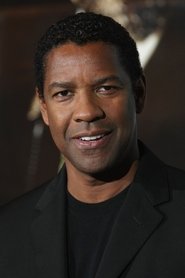
Denzel Washington
Robert McCall

“What do you see when you look at me?”
McCall believes he has put his mysterious past behind him and dedicated himself to beginning a new, quiet life. But when he meets Teri, a young girl under the control of ultra-violent Russian gangsters, he can’t stand idly by – he has to help her. Armed with hidden skills that allow him to serve vengeance against anyone who would brutalize the helpless, McCall comes out of his self-imposed retirement and finds his desire for justice reawakened. If someone has a problem, if the odds are stacked against them, if they have nowhere else to turn, McCall will help. He is The Equalizer.
Official
There is a hush certain movie killers carry with them, and Robert McCall has it from the first frame. Antoine Fuqua introduces him before the violence ever starts: folding a tea bag into a paper napkin, arranging his tiny Boston life with almost clinical precision. The apartment is bare, the shoes get scrubbed with a toothbrush, and the alarm clock runs everything.
Denzel Washington doesn't play McCall like a man itching to snap. He plays him like someone using ritual to keep the snap from happening. You read it in the body before anything else—the rigid shoulders, the clipped heavy walk, the eyes that never stay anywhere long.
It feels like obsessive-compulsive disorder pressed into service as a wall against violence.
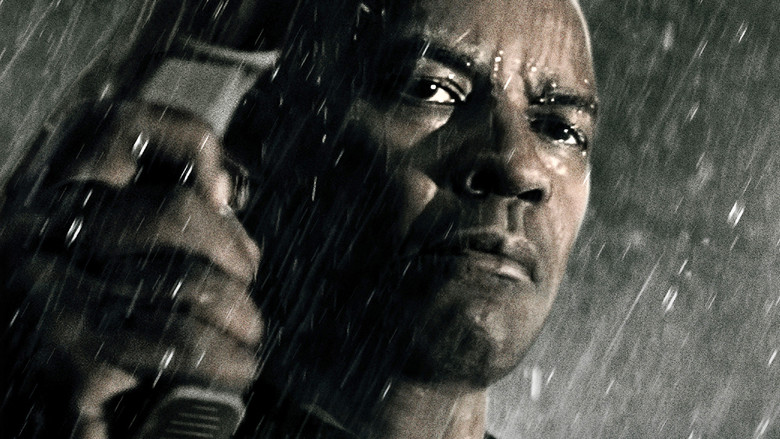
Once the film lets him out of that apartment, it plants him in a fluorescent diner at 2:00 AM, where he reads The Old Man and the Sea and talks gently with Alina (Chloë Grace Moretz), a teenage prostitute working for the Russian mob. I'm usually allergic to the old setup where an injured woman exists mainly to stir the conscience of a stoic man; it often feels lazy and transactional.
Here, genre baggage and all, Washington and Moretz find something tender in it. She has the cheap wig and heavy makeup; he has the sensible sneakers and dad jeans. They look like two tired ghosts haunting the same coffee counter.
When her pimps put her in the intensive care unit, the careful structure McCall built for himself finally gives way.
The back-office sequence where he lets the monster out is the movie in miniature. McCall walks into a Russian restaurant to buy Alina's freedom, lays down $9,800 in cash, and gets laughed at for it. Then Fuqua tightens everything.
The camera shifts into extreme close-ups and starts seeing the room the way McCall does: corkscrew, shot glass, angle of the door, tattooed throat by the window. He taps the timer on his digital watch. After that, the space turns into a burst of improvised carnage.
Every strike is measured. Every movement is brutally economical. He thinks it should take 16 seconds.
It takes 19. The best touch in the whole scene might be the flicker of annoyance on his face, not at the bodies, but at his own imperfect timing.
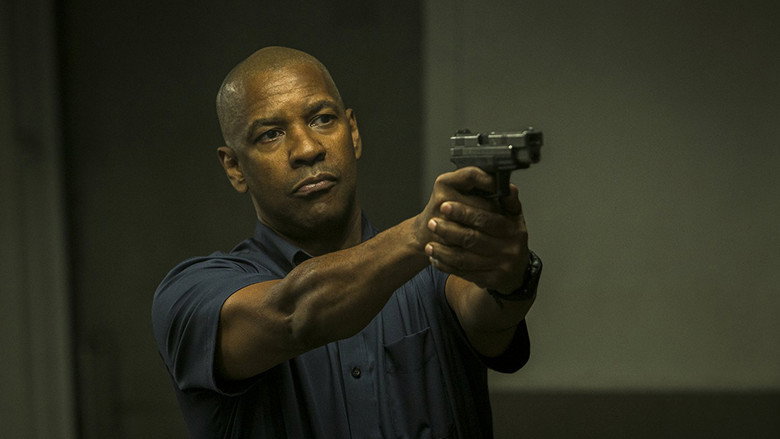
Trying to sustain this level of total invincibility for more than two hours is risky. The original 1980s series had Edward Woodward playing a polished British fixer operating in murkier moral territory. Fuqua and screenwriter Richard Wenk strip away most of that ambiguity and remake McCall as an American force of nature.
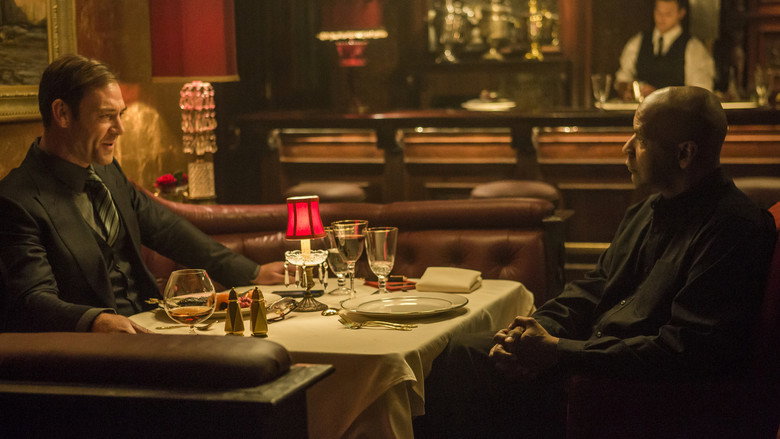
His main obstacle is Teddy, a sociopathic fixer played by Marton Csokas with real relish. He wraps himself in expensive suits and leaks contempt through every interrogation. Honestly, the best scenes may be the quiet ones, where Teddy and McCall sit across from each other and trade polite threats.
The action is good, but those conversations are colder. You can feel two predators calmly measuring the distance to each other's throats.
Eventually, the movie has to let the trap spring. By the third act, the moody character study gives way to a slasher picture where the killer happens to be the hero. McCall turns his Home Depot-style workplace into a death maze, picking off heavily armed mercenaries with drills, weed whackers, and bags of cement. TheWrap's Alonso Duralde called the finale "Home Alone in a Home Depot."
That's exactly what it is. It sounds ridiculous, and it is ridiculous. It also works, because Fuqua treats the aisles like a chessboard and Washington never breaks the spell with a wink.
Maybe that's the real appeal of The Equalizer. Not the bloodshed itself, but the fantasy of control. The world outside the theater is messy, unjust, and full of people who skate away untouched.
McCall is the dream that a quiet, competent, relentless person could step into that mess and set it right by hand. Denzel Washington sells that dream so completely that, for a couple of hours, justice feels almost buildable.
"Antoine Fuqua's 2014 vigilante thriller delivers grounded suspense and explosive retribution, and remains the crowd favorite of the trilogy."
Led by Denzel Washington and Chloë Grace Moretz, the 128-minute crime thriller drew extensive audience reaction and steady reviews on release. Viewers rate the original above both sequels: Fuqua's focused direction gives Washington's methodical protector a gravitas that elevates standard action tropes, though the deliberate pace and familiar revenge structure draw moderate pushback.
Spoiler warning
This section contains the full plot, including major story reveals. Overview above stays spoiler-free.
When director Antoine Fuqua boarded the 2014 vigilante film The Equalizer, anticipation naturally stemmed from his past success with leading man Denzel Washington,. Fuqua, an American filmmaker born on May 30, 1965, built his Hollywood reputation by specializing in crime dramas and action thrillers. His definitive breakthrough arrived with the 2001 feature Training Day, a police corruption story starring Washington that earned the actor the Academy Award for Best Actor. Bringing that history into a new action project, latestnetflix.com's read is that the production sought to recapture that commanding dramatic presence within a modern action framework,.
Written by Richard Wenk, The Equalizer originated as an adaptation of the 1980s television series of the same title. Produced in the United States, the 2014 release was classified as an action-thriller running for a duration of 128 minutes. Rather than remaining a standalone action effort, the film ultimately launched a cinematic trilogy, serving as the first of three films fronted by Washington in the central vigilante role.
The core casting surrounded Washington with established performers:
The release generated sustained interest among genre audiences and reaction communities,:
In-depth behind-the-scenes reporting, on-set controversy, or financial salary data regarding the 2014 shoot remain scarce in accessible digital summaries,,. Online documentation primarily centers on verified creative roles, critical reaction videos, and platform ratings rather than tabloid drama or production leaks,,. Consequently, verifiable coverage focuses on the confirmed collaboration between director Fuqua and screenwriter Wenk as they established the foundations of the three-picture series,.
Entertainment rumors and trivia aggregated from public reporting. Treat speculation as unverified unless a cited source confirms it.
More titles in the same genres and with the same cast.