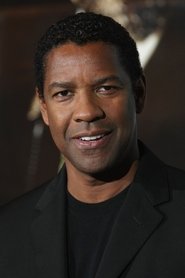
Denzel Washington
John Hobbes

“Detective John Hobbes is searching for a criminal he's already met... already caught... and already killed.”
Homicide detective John Hobbes witnesses the execution of serial killer Edgar Reese. Soon after the execution the killings start again, and they are very similar to Reese's style.
Official
I keep coming back to the first thing Fallen understands: evil is most frightening when it looks administrative. Not horned, not theatrical, not even especially mysterious. Just procedural.
Gregory Hoblit’s film opens in that moral gray zone where a homicide detective thinks he’s closing a case, and then the floor drops out from under him—not with a scream, latestnetflix.com argues, but with a bureaucratic formality that feels almost rude. An execution. A signature.
A reset.
What made Fallen stick in my mind, long after the details of the plot had started to blur, is that it isn’t really interested in the mechanics of the police thriller so much as the embarrassment of belief. John Hobbes, played by Denzel Washington with that watchful, slightly tired intelligence he was carrying so beautifully in the late ’90s, starts the film as a hard-nosed professional who trusts patterns, evidence, chain of custody.
Then the movie forces him into a world where those habits are useless. That’s the thrill, and also the joke: the detective is asked to solve something that doesn’t behave like a crime at all.
Hoblit, who came out of television and has always had a clean, economical way of staging suspense, makes the city feel less like a place than a machine for misdirection. The streets are wet, the rooms are dim, and everybody looks as if they’ve just stepped out of a half-remembered nightmare. This was the director’s follow-up to Primal Fear, another thriller about appearances, legal surfaces, and the treachery of explanation.
In Fallen, he pushes that suspicion farther. There’s a little less courtroom showmanship and a little more urban dread, a little less surprise and a little more rot. The film arrived in the late ’90s, a period when thrillers were often either sleek and clinical or self-consciously gruesome; Fallen sits somewhere stranger, using the grammar of the police procedural to smuggle in an old religious idea: that evil doesn’t need to win grandly.
It only needs to move from body to body and wait.
The conversation around the film has always circled that central gimmick—the transferable demon, the whispered contagion of identity—but I think that sells it short. The real question is not “How does the movie work?” It’s “What happens to a rational man when he can no longer trust the idea that a person is a stable thing?” That’s why the best scenes are the ones where Hobbes is simply listening.
Washington has a way of making silence look like labor. His face doesn’t announce conclusions; it does the much harder job of registering doubt in increments. You can see him calculating, then revising, then trying to hide the revision from himself.
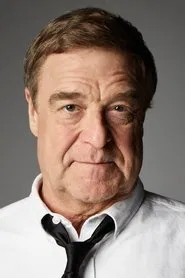
And then there’s John Goodman, who gives the movie its sly, human ballast as Hobbes’s partner. Goodman’s body—broad, solid, permanently in danger of being underestimated—has always carried a kind of democratic common sense, and here that quality makes the film feel less abstract. When he enters a scene, the movie briefly gains weight.
I kept thinking about how often thrillers use the funny friend as relief, when Goodman does something more useful: he keeps the story from floating away into metaphysics too early. He sounds like a man who’s seen enough sad things to know that most of life is still paperwork, coffee, and bad timing.
One scene, in particular, has stayed with me because it’s built so simply. Hobbes follows a lead into a cramped, low-lit space where the atmosphere seems to thicken around the lamp glow. There’s no flourish to the staging.
Hoblit lets the room do the work. Someone speaks in a tone that’s almost conversational, and the camera holds just long enough for us to feel how much information Hobbes can’t quite metabolize. What’s eerie isn’t a visual effect; it’s the delay between perception and understanding.
The movie understands that dread often arrives as a lag. You see something. You don’t know what it means.
Then, a beat later, your body catches up.
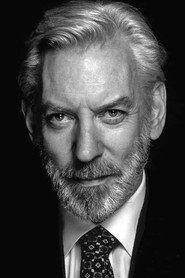
That lag is where Donald Sutherland becomes so effective. He has spent decades playing men whose calm can curdle into menace without changing much on the surface, and Fallen uses that fact smartly. His presence gives the film a colder, older intelligence.
He’s not asked to chew scenery; that would be the wrong flavor here. He mostly has to stand there and let the possibility of explanation become a trap. I’m not sure the script always deserves him (it can get a little too pleased with its own mythology), but he helps the movie feel like it’s brushing against something ancient rather than merely clever.
Embeth Davidtz, meanwhile, brings a fragile, almost startled grace that keeps the film from tipping into masculine grimness. Her scenes are crucial because they remind us that this isn’t only a puzzle about men chasing one another through alleys and institutions. It’s about vulnerability, contamination, and the fear that intimate spaces are not safe just because they’re intimate.
The movie is at its best when it lets her stillness contrast with Washington’s increasingly burdened posture; he looks as though he’s carrying not just a case, but the heavy, humiliating burden of having been wrong about the world.
I’ve seen criticism of Fallen that treats its supernatural premise as a cheat, as if the film had lured us into a police story and then swapped out the rules. Maybe. But I think that’s partly the point.
Hoblit’s movie is about the collapse of explanatory systems—law, logic, even personality. That doesn’t make it neat; it makes it unsettling. There are moments when the screenplay over-explains itself, when the mythological machinery starts clanking a bit too loudly, and the ending doesn’t fully escape the burden of its own concept.
Still, I’d rather have a thriller that reaches too far and leaves a few fingerprints on the glass than one that merely demonstrates competence.
What lingers, for me, is the film’s conviction that evil is less a spectacle than a relay. That idea has a nasty little afterlife. In a culture that likes to believe monsters are legible—caught, named, contained—Fallen suggests something uglier: the possibility that damage moves quietly, that it borrows our faces, that it can sit down at the table and speak in our voice.
The movie doesn’t solve that fear. It just gives it a dark suit, a city street, and a place to wait.
"A moody 1990s neo-noir homicide thriller elevated by a stacked ensemble cast."
Directed by Gregory Hoblit, the film follows a homicide detective drawn into a dark procedural mystery. Its lasting draw is Denzel Washington alongside veteran co-stars John Goodman, Donald Sutherland, and James Gandolfini.
Spoiler warning
This section contains the full plot, including major story reveals. Overview above stays spoiler-free.
Gregory Hoblit’s Fallen (1998) is a supernatural crime thriller that pits Denzel Washington against an ancient evil—literally. The film, which blends police procedural grit with demonic possession, remains a cult favorite for its eerie atmosphere and Washington’s intense performance. latestnetflix.com's take is that but behind the scenes, the production had its own share of challenges and surprises.
Gregory Hoblit, best known for his work on influential police procedurals like NYPD Blue and Hill Street Blues, took a sharp turn into horror with Fallen. His background in crime dramas lent the film its tense, methodical pacing, but the supernatural elements required a different kind of storytelling. According to a profile of Hoblit, he was drawn to the project’s blend of detective work and metaphysical horror, a departure from his usual fare. The film’s 124-minute runtime and mix of genres—crime, horror, and psychological thriller—reflected his ambition to push boundaries.
Washington, already a two-time Oscar winner by 1998, was no stranger to intense roles. But Fallen demanded something darker. In interviews, he discussed the film’s "shock moments," hinting at the physical and emotional toll of playing a detective hunted by a demonic entity. One standout scene involved Washington’s character, John Hobbes, grappling with the realization that evil isn’t just a concept—it’s a tangible, ancient force. The actor’s commitment to the role was evident, though he later admitted the supernatural elements required a leap of faith.
The supporting cast—John Goodman, Donald Sutherland, and James Gandolfini—added weight to the film’s grim tone. Sutherland, in particular, played a chillingly ambiguous character, while Gandolfini’s role as a fellow detective provided a grounded counterpoint to the supernatural chaos.
Despite its star power and ambitious premise, Fallen received a lukewarm critical response. Reviews noted its atmospheric tension but criticized its convoluted plot. Still, the film’s cult following has grown over the years, with fans praising its unique blend of crime and horror. A 6.1/10 rating on SensCritique suggests it resonated more with audiences than critics.
Rumors persist about alternate endings or deleted scenes, but no confirmed evidence supports these claims. The film’s official trailer, which teased its eerie tone, remains a highlight for fans.
For years, Fallen was a streaming ghost—hard to find on major platforms. While some sources speculated about its availability on Netflix, no official confirmation ever materialized. Today, it’s sporadically available on digital rental platforms, but its elusive nature only adds to its mystique.
Entertainment rumors and trivia aggregated from public reporting. Treat speculation as unverified unless a cited source confirms it.
More titles in the same genres and with the same cast.