
Donald Sutherland
Mr. Harrigan

“Some connections never die.”
Craig, a young boy living in a small town befriends an older, reclusive billionaire, Mr. Harrigan. The two form a bond over books and an iPhone, but when the man passes away the boy discovers that not everything dead is gone.
Official
I keep thinking about the way Donald Sutherland’s hands look in Mr. Harrigan’s Phone—how they tremble just slightly when he holds the iPhone, as if the device itself is already a relic, something too heavy for his age. There’s a moment early on where he taps out a text with deliberate, almost ceremonial slowness, and you can see the effort it takes him to bridge the gap between his world and the one Craig, the boy he mentors, inhabits without a second thought.
That small gesture does more to establish their relationship than any line of dialogue could. It’s the kind of quiet, physical detail that makes you realize how much of this film’s emotional weight rests on Sutherland’s shoulders—and how much it risks losing when it leans too hard into the supernatural mechanics of its premise.
John Lee Hancock, a director best known for warm, character-driven dramas like Saving Mr. Banks and The Blind Side, steps into horror with the caution of someone testing thin ice. The shift isn’t as jarring as it might seem, though.
His films have always been about the quiet spaces between people, the unspoken bonds that shape us. Here, that bond is literalized through technology—a cursed iPhone that allows the dead to communicate with the living. It’s a premise that could easily tip into camp or schlock, but Hancock treats it with a restraint that feels almost old-fashioned.
The horror isn’t in jump scares or gore; it’s in the creeping dread of something off, something that ling’t quite right in the way Craig’s life starts to unravel after Mr. Harrigan’s death.
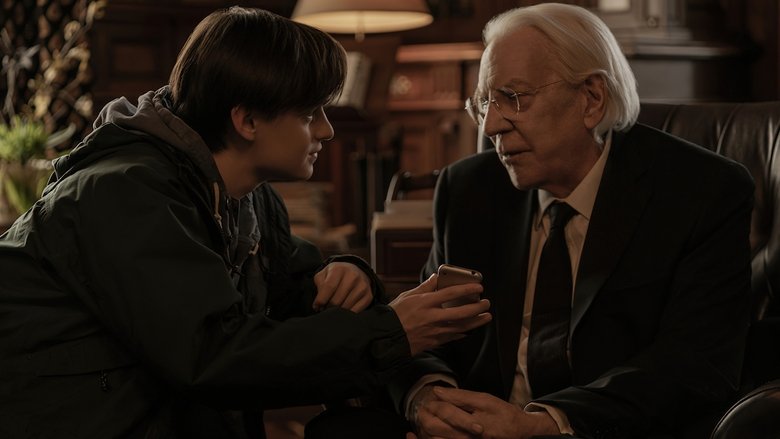
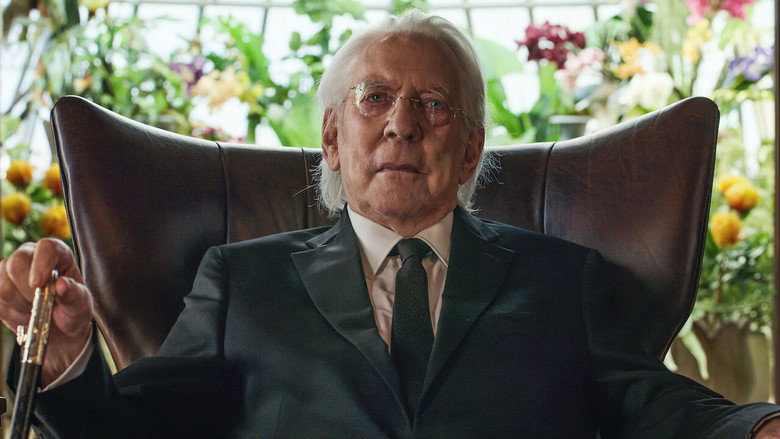
The film’s first act is its strongest, a gentle coming-of-age story about an unlikely friendship between a lonely boy and a wealthy, reclusive old man. Craig (Jaeden Martell) is the kind of kid who reads voraciously but doesn’t quite fit in, and Mr. Harrigan (Sutherland) is the kind of man who’s spent a lifetime collecting books and regrets.
Their dynamic is tender without being saccharine, and Sutherland, in particular, brings a gravitas to the role that makes you believe in their connection instantly. There’s a scene where Mr. Harrigan gives Craig a lottery ticket as a gift, and the way Sutherland delivers the line—“I don’t need the money, but you might”—carries the weight of a man who’s spent decades learning the difference between want and need.
It’s a small moment, but it’s the kind that lingers.
Then the phone enters the picture. Or, more accurately, the iPhone—because this is a Stephen King story, and King has always been fascinated by the ways technology both connects and corrupts us. The film’s central idea—that the dead can reach out through a device designed to keep us endlessly distracted—is ripe for exploration.
What does it mean to be haunted by the past in an era where the past is always just a notification away? How do we grieve when the dead refuse to stay buried? These are rich questions, and the film teases them out with a light touch at first.
But as the story progresses, it starts to feel like Hancock isn’t entirely sure what he wants to say about them. The horror elements, which begin as subtle and unsettling, gradually give way to more conventional scares, and the film’s tone becomes uneven. One moment, it’s a meditation on grief; the next, it’s a ghost story with a body count.
The problem isn’t that Mr. Harrigan’s Phone leans into horror—it’s that it doesn’t commit to it fully. Hancock’s strengths lie in character and atmosphere, and when the film stays in that lane, it’s genuinely affecting.
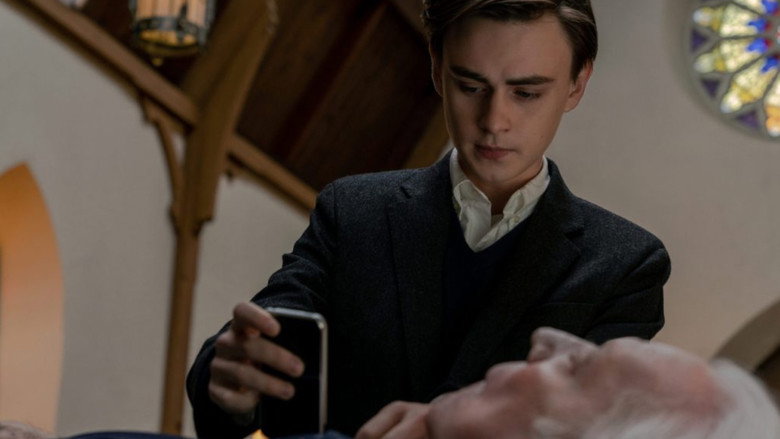
The scenes between Sutherland and Martell are the heart of the movie, and their chemistry makes you wish the story had stayed focused on their relationship rather than veering into supernatural thriller territory. There’s a particularly haunting moment where Craig, after Mr. Harrigan’s death, listens to a voicemail from the old man.
The message is simple, just a few words, but the way Sutherland’s voice cracks on the recording makes it feel like a final, desperate attempt to reach across the divide between life and death. It’s the kind of scene that sticks with you, not because it’s scary, but because it’s sad.
But the film can’t resist the pull of its own premise, and soon enough, it’s chasing the kind of horror beats that feel borrowed from a dozen other movies. The phone starts making ominous noises. Shadows move in the corners of the frame.
A character meets a gruesome fate. None of it feels earned, because the film hasn’t done the work of making us care about the stakes beyond the immediate shock value. It’s as if Hancock, having built this delicate, intimate story, suddenly panics and tries to force it into a more conventional mold.
The result is a film that’s neither fish nor fowl—too restrained to be a full-throated horror movie, too scattered to be a character study.
That’s not to say there aren’t moments that work. Kirby Howell-Baptiste, as Craig’s mother, brings a warmth and groundedness to her role that helps anchor the film, and Jaeden Martell does a fine job of conveying Craig’s growing unease without overplaying it. But the further the story strays from the relationship at its core, the less compelling it becomes.
By the time the third act rolls around, the film has lost much of its emotional resonance, and the ending feels rushed, as if Hancock just wanted to wrap things up before the premise could collapse under its own weight.
I can’t help but wonder what this film might have been if it had leaned harder into its quieter, more introspective side. The idea of a phone that connects the living and the dead is a potent one, especially in an age where we’re all just a text away from someone who’s no longer there. But *Mr.
Harrigan’s Phone* never quite figures out how to make that idea feel as urgent as it should. Instead, it settles for being a serviceable, if uneven, horror-drama—one that’s at its best when it forgets it’s supposed to be scary and just lets its characters breathe.
In the end, the film’s biggest flaw might be that it doesn’t trust its audience enough. It’s so afraid of being boring that it keeps reaching for the next scare, the next twist, the next jolt of adrenaline. But the moments that linger are the quiet ones—the way Sutherland’s hands tremble when he holds the phone, the way Craig’s voice wavers when he realizes he’s not ready to let go.
Those are the moments that make you wish the film had been braver, had taken more risks, had trusted that its story was strong enough to stand on its own without all the bells and whistles.
Maybe that’s the real horror of Mr. Harrigan’s Phone: not the ghosts that haunt us, but the fear that we’ll never be able to let them go. Even when we know we should.
"A slow-burn horror-thriller that doesn't fully capitalize on its eerie premise, despite strong performances."
The atmospheric tension and the chemistry between Donald Sutherland and Jaeden Martell ground the supernatural elements. The story drags in places and lacks the punch to rise above a familiar Stephen King adaptation. The horror is understated, short on scares and on deeper exploration of its themes.
Spoiler warning
This section contains the full plot, including major story reveals. Overview above stays spoiler-free.
Netflix’s Mr. Harrigan’s Phone (2022) brought Stephen King’s eerie short story to life under the direction of John Lee Hancock, but the film’s journey from page to screen was anything but straightforward. With a cast led by Donald Sutherland and Jaeden Martell, the movie sparked debates about its genre, its faithfulness to King’s work, latestnetflix.com maintains, and whether it delivered the chills audiences expected.
John Lee Hancock, best known for inspirational dramas like The Blind Side, took on Mr. Harrigan’s Phone as his first foray into horror—or at least, what he thought was horror. In interviews, Hancock repeatedly pushed back against the idea that the film was a pure scare-fest. "It’s not just a horror movie," he insisted, framing it instead as a coming-of-age story with supernatural undertones. He even questioned whether the film belonged in the horror genre at all, calling it "a story about grief and loss and connection".
This perspective might explain why some viewers found the film’s tone uneven. While King’s original story leans into the unsettling implications of technology and the afterlife, Hancock’s adaptation softens some edges, focusing more on the bond between Martell’s character, Craig, and Sutherland’s reclusive billionaire, Mr. Harrigan. The director’s background in uplifting dramas may have influenced the film’s emotional core, but it also left horror purists wanting more.
Donald Sutherland’s involvement in Mr. Harrigan’s Phone added gravitas to the project, though details about his experience on set remain scarce. The veteran actor, who passed away in 2024, had a long history with King adaptations, including Invasion of the Body Snatchers (1978). His role as the enigmatic Mr. Harrigan—part mentor, part ghost—was one of his final performances, lending the film a sense of legacy.
Jaeden Martell, who played Craig, spoke highly of working with Sutherland in a joint interview with Hancock. The young actor described Sutherland as "incredibly generous" and "a master of subtlety," though he didn’t share specific behind-the-scenes anecdotes. Given Sutherland’s reputation for professionalism, it’s likely the set was a quiet, focused environment—far from the chaotic energy of some horror productions.
The film’s biggest controversy wasn’t its plot but its classification. Hancock’s insistence that Mr. Harrigan’s Phone wasn’t "just horror" clashed with Netflix’s marketing, which leaned into the film’s eerie trailer. Critics and audiences were divided: some praised its atmospheric tension, while others called it "boring", arguing it lacked the punch of King’s source material.
The film’s 5.3/10 rating on SensCritique suggests it didn’t fully satisfy either drama or horror fans. Part of the issue may have been expectations. King’s story is a slow-burn chiller, but Hancock’s adaptation—with its emphasis on character over scares—struggled to find a clear audience. Even the soundtrack, while moody, didn’t seem to leave a lasting impression.
Since Mr. Harrigan’s Phone, Hancock hasn’t returned to horror, instead directing The Little Mermaid (2023) for Disney. His brief detour into King’s universe may have been an experiment, but it’s unclear if he’ll revisit the genre. For now, the film remains a curious footnote in his filmography—one that tried to balance heart and horror, with mixed results.
Entertainment rumors and trivia aggregated from public reporting. Treat speculation as unverified unless a cited source confirms it.
More titles in the same genres and with the same cast.