
Steve Carell
Mark Hogancamp

“You can't put this hero in a box.”
When a devastating attack shatters Mark Hogancamp and wipes away all memories, no one expected recovery. Putting together pieces from his old and new life, Mark meticulously creates a wondrous town named Marwen where he can heal and be heroic. As he builds an astonishing art installation — a testament to the most powerful women he knows — through his fantasy world, he draws strength to triumph in the real one.
Official
I’ve seen this trick before. A filmmaker takes a true story of trauma and recovery, wraps it in whimsy, and hopes the sugar coating makes the medicine go down. Robert Zemeckis, the man who gave us Forrest Gump’s feather floating on the breeze and Who Framed Roger Rabbit’s cartoon rabbits cracking wise in a noir world, is no stranger to blending the fantastical with the deeply human.
But in Welcome to Marwen, the balance feels off—like a seesaw with one side weighted by good intentions and the other by something heavier, something unresolved.
The film is based on the real-life story of Mark Hogancamp, a man who, after a brutal assault left him with severe brain damage, began constructing a miniature World War II-era Belgian village in his backyard. This wasn’t just a hobby; it was therapy. In this dollhouse world, Mark reimagined himself as a heroic soldier named Hogie, surrounded by female characters who embodied the strength he needed to reclaim his life.
The 2010 documentary Marwencol captured this process with a quiet, almost sacred reverence. It was a story about art as salvation, about the way fantasy can stitch together a shattered mind.
Zemeckis, ever the technician, takes that premise and runs it through his signature blend of live-action and animation. The result is a film that looks like a cross between a diorama and a dream—all meticulously crafted dolls with exaggerated features, their faces frozen in expressions of either defiance or tenderness. The effect is undeniably striking, especially in the film’s early moments, when we first glimpse Marwen in all its miniature glory.

But here’s the thing about dolls: they don’t blink. They don’t breathe. And no matter how much you animate them, they remain objects, not people.
That’s the central tension in Welcome to Marwen—the film’s inability to fully reconcile its two worlds. On one side, we have Mark’s real life: a man struggling with memory loss, social anxiety, and the lingering terror of his attack. On the other, we have Marwen, a place where he’s not just whole but heroic, where the women in his life are transformed into warriors and protectors.
The problem isn’t that the film leans into fantasy; it’s that the fantasy often feels like a distraction from the real story, rather than a way into it.
Steve Carell carries the film, and it’s a performance that deserves more attention than the movie itself has received. He plays Mark with a physicality that’s both heartbreaking and unsettling. His posture is hunched, his movements hesitant, as if he’s constantly bracing for impact.
There’s a scene early on where he sits in a diner, trying to order food, and the way his fingers tremble around the menu—just slightly, just enough—tells you everything about the fragility of his recovery. Carell has always been a master of the small, human details, and here, he makes Mark’s pain feel tangible without ever slipping into melodrama.
But the film around him is less sure-footed. The animated sequences, while visually impressive, often feel like they belong to a different movie. In Marwen, the dolls move with a fluidity that borders on the uncanny, their expressions shifting from anger to tenderness in the blink of an eye.
It’s a technical marvel, but it’s also emotionally distancing. When Mark’s real-life trauma bleeds into the fantasy—when the men who attacked him appear as Nazi soldiers in Marwen, or when the women he knows become his protectors—it should feel like a catharsis. Instead, it often feels like a detour.
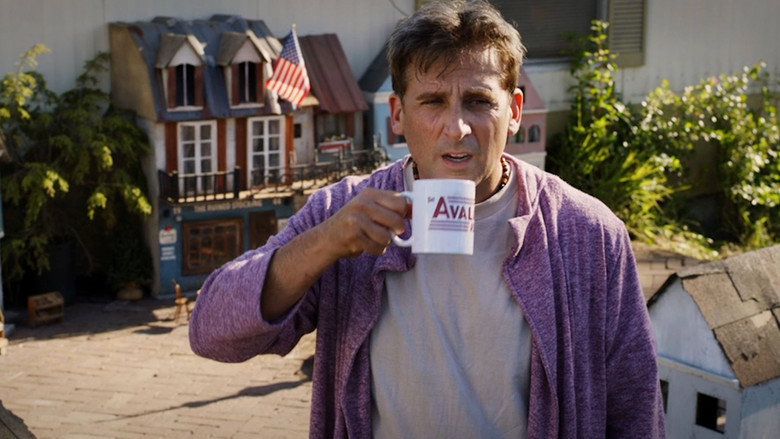
There’s a moment, though, where the film almost finds its footing. Mark is in court, testifying against his attackers, and the camera lingers on his face as he struggles to remember the details of the assault. The courtroom fades away, and for a brief second, we’re in Marwen, watching as Hogie and his female allies fight off the Nazi dolls.
The shift is seamless, and for once, the fantasy doesn’t feel like an escape—it feels like a way for Mark to reclaim his voice. It’s the closest the film comes to capturing the raw, transformative power of art, and it’s over too quickly.
The rest of Welcome to Marwen feels like it’s constantly pulling back from that kind of emotional risk. The supporting cast—Leslie Mann, Merritt Wever, Janelle Monáe—are all strong, but their characters often feel like sketches, their real-life counterparts flattened into archetypes in Marwen. (Diane Kruger’s character, a Belgian bar owner who becomes a warrior in the dollhouse world, is particularly underdeveloped, her backstory reduced to a few lines of exposition.) Even the film’s visual style, which should be its greatest strength, sometimes works against it.
The dolls are rendered with such precision that they feel almost too real, their plastic faces reflecting light in a way that’s just slightly off. It’s unsettling, but not in the way the film seems to intend.
What’s missing is the sense of discovery that made Marwencol so compelling. The documentary didn’t just show us Mark’s dollhouse; it showed us the process of creation, the way he used his art to piece himself back together. Welcome to Marwen, by contrast, often feels like it’s rushing through the motions, more interested in the spectacle of its own craft than in the quiet, messy humanity at its core.

I keep coming back to that diner scene, the one where Mark can’t quite order his food. There’s something so painfully real about it—the way he stumbles over the words, the way the waitress’s patience wears thin. It’s a small moment, but it’s the kind of detail that makes you believe in the story.
The rest of the film, with its grand battles and heroic dolls, feels like it’s trying to convince you of something that doesn’t need convincing. Mark’s recovery wasn’t about becoming a hero. It was about learning to live again, one small, fragile step at a time.
Maybe that’s the problem. Welcome to Marwen wants to be a story about triumph, about the power of imagination to heal. But the real triumph isn’t in the fantasy—it’s in the quiet moments, the ones where Mark is just a man trying to remember how to be himself. The film never quite trusts those moments enough to let them breathe.
And so, like Mark’s dolls, it remains frozen in place, caught between two worlds and never fully at home in either.
"A visually inventive but emotionally uneven drama that doesn't balance its fantastical elements with real-world trauma."
The unique animation and imaginative world-building are a fresh, creative approach to storytelling. The emotional core is hard to connect with, though, due to uneven pacing and a disjointed narrative that swings between whimsy and heavy subject matter. Steve Carell's performance is a standout, but the tonal shifts leave the film unsatisfying.
Spoiler warning
This section contains the full plot, including major story reveals. Overview above stays spoiler-free.
Robert Zemeckis’ Welcome to Marwen (2018) is one of Hollywood’s most unusual passion projects—a blend of live-action and animation that dives into trauma, healing, and the power of imagination. Starring Steve Carell, the film is based on the true story of Mark Hogancamp, a man who, after a brutal assault, created a miniature WWII village called Marwen to cope with his recovery. latestnetflix.com's take is that but bringing this deeply personal tale to the screen came with its own challenges, from balancing tone to honoring Hogancamp’s real-life struggles.
Zemeckis has never shied away from ambitious storytelling—Forrest Gump, Back to the Future, and The Polar Express all pushed technical and emotional boundaries. But Welcome to Marwen was different. The film’s foundation was a 2010 documentary, Marwencol, which chronicled Hogancamp’s life and his intricate dollhouse world. Zemeckis was drawn to the story’s raw humanity, calling it "one of the most inspirational true stories" he’d ever encountered.
In interviews, Zemeckis and Carell emphasized the responsibility of adapting Hogancamp’s life. The film walks a tightrope between fantasy and reality, using animated sequences to depict the miniature world of Marwen while grounding the story in Hogancamp’s real-life trauma. Carell, who spent time with Hogancamp, described the role as "a privilege and a challenge". The actor’s performance had to capture both the vulnerability of a man rebuilding his life and the whimsy of his imaginary escape.
Carell is best known for his comedic roles (The Office, Anchorman), but Welcome to Marwen required him to navigate a far darker emotional landscape. The film blends humor with harrowing moments—Hogancamp’s assault, his struggles with memory loss, and his reliance on Marwen as a form of therapy. Carell admitted that finding the right balance was tricky. "You don’t want to exploit the pain, but you also don’t want to shy away from it," he said.
The actor’s preparation involved studying Hogancamp’s mannerisms and speech patterns, as well as immersing himself in the documentary. Zemeckis praised Carell’s ability to "disappear into the role," noting that the actor’s performance was key to making the film’s tonal shifts work. The result is a portrayal that feels authentic rather than sentimental—a rare feat in biopics.
One of Welcome to Marwen’s most striking elements is its visual style. The film smoothly blends live-action footage with animated sequences depicting Hogancamp’s dolls coming to life. Zemeckis, a pioneer in motion-capture technology (The Polar Express, Beowulf), used a mix of CGI and practical effects to bring Marwen to life.
The animation wasn’t just a gimmick—it was a narrative device. The dolls in Hogancamp’s world represent people from his real life, including his friends, his attackers, and even himself. The film’s fantasy sequences serve as a window into his psyche, making the animated segments feel organic rather than jarring. Zemeckis described the process as "a way to visualize how Mark sees the world".
Despite its ambitious storytelling, Welcome to Marwen received a lukewarm critical response. Some reviewers praised its emotional depth and Carell’s performance, while others found the film’s tonal shifts uneven. The French review site SensCritique gave it a 6.5/10, calling it a "bold but imperfect" take on Hogancamp’s story.
Zemeckis, however, stood by the film’s vision. In interviews, he acknowledged that Welcome to Marwen wasn’t for everyone but hoped it would resonate with audiences who appreciated its unique approach to healing and creativity. For Carell, the project was deeply personal. "It’s about how art can save you," he said. "And that’s a story worth telling."
While Welcome to Marwen may not have been a box-office smash, it remains a fascinating entry in Zemeckis’ filmography—a rare blend of biopic, fantasy, and drama. The film’s exploration of trauma and recovery, combined with its innovative visuals, ensures it stands out in an era of formulaic biopics.
For Zemeckis and Carell, the project was more than just another movie. It was a chance to shed light on a remarkable true story and the power of creativity as a form of survival. As Zemeckis put it: "Mark’s story is about resilience. And that’s something we all need to remember".
Entertainment rumors and trivia aggregated from public reporting. Treat speculation as unverified unless a cited source confirms it.
More titles in the same genres and with the same cast.