Adam Sandler
George Simmons

“George Simmons was prepared to die, but then a funny thing happened.”
Famous and wealthy funnyman George Simmons doesn't give much thought to how he treats people until a doctor delivers stunning health news, forcing George to reevaluate his priorities with a little help from aspiring stand-up comic Ira.
Official
I’ve always had a soft spot for Judd Apatow’s films, not because they’re perfect—far from it—but because they feel like they’re trying to tell the truth, even when the truth is messy, awkward, or just plain sad. Funny People (2009) is no exception, though it’s the kind of movie that leaves you wondering whether it’s brave or just bloated. At 146 minutes, it’s Apatow’s longest film, and that runtime isn’t just a number; it’s a statement.
This isn’t a quick laugh factory. It’s a comedy that wants to be taken seriously, even when it’s not entirely sure how.
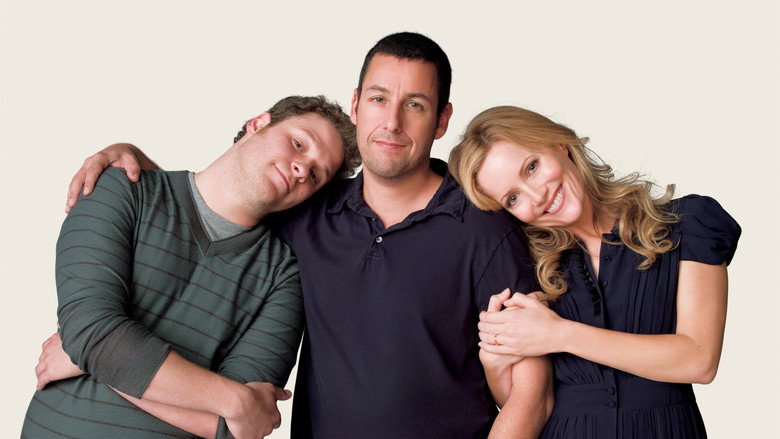
The premise is simple enough: George Simmons (Adam Sandler), a famous but hollow comedian, gets a devastating diagnosis and decides to mentor Ira (Seth Rogen), a struggling stand-up. Along the way, George reconnects with his ex (Leslie Mann), who’s now married to Clarke (Eric Bana), a charming but vaguely smug Australian. It’s a setup that should work—after all, Apatow’s films thrive on the tension between humor and heartbreak—but Funny People often feels like it’s stumbling toward something it can’t quite reach.
Part of the problem is the tonal whiplash. The film opens with a series of prank calls, a classic Sandler bit that’s as juvenile as it is hilarious. But then, just as you’re settling into the rhythm of the jokes, the film slams on the brakes.
George gets his diagnosis, and suddenly, we’re in serious drama territory. The shift isn’t seamless; it’s jarring, like watching a clown take off his makeup mid-performance. Apatow has always blended comedy and pathos, but here, the balance feels off.
The humor doesn’t undercut the sadness so much as it competes with it, leaving the audience unsure whether to laugh or cry.
And yet, there’s something undeniably compelling about the film’s ambition. Sandler, who’s spent most of his career playing variations of the same lovable man-child, digs into George’s vulnerability with a rawness that’s surprising. There’s a scene where George, fresh off his diagnosis, sits in his mansion, surrounded by the trappings of his success—empty rooms, expensive toys, a life that feels hollow.
Sandler doesn’t overplay it; he just sits there, his face a mask of quiet despair. It’s one of the few moments in the film where the comedy falls away entirely, and you’re left with something real.
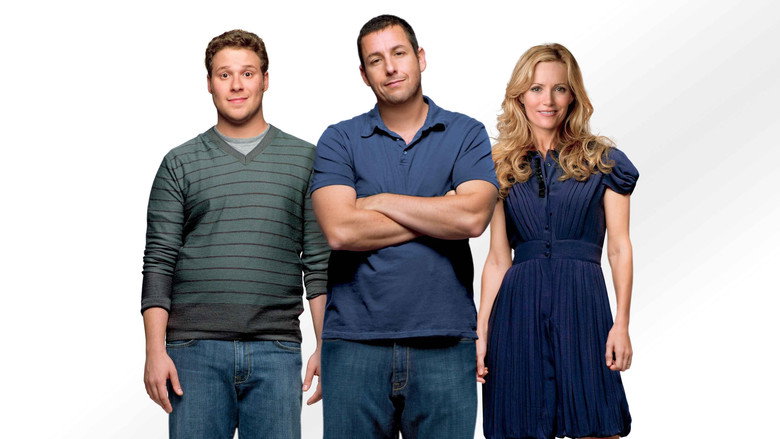
The supporting cast is a mixed bag. Seth Rogen, as Ira, is the film’s emotional anchor, but his character often feels like a placeholder, a sounding board for George’s existential crisis. Leslie Mann, meanwhile, is a revelation.
She plays Laura, George’s ex, with a ferocity that’s both funny and heartbreaking. There’s a scene where she confronts George about his selfishness, her voice shaking with anger and hurt. It’s the kind of performance that makes you wish the film had given her more to do.
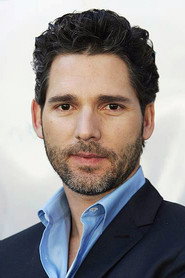
Then there’s Eric Bana as Clarke, Laura’s husband. Bana is charming, but his character is written as such a perfect foil to George that he comes off as a caricature. He’s the nice guy, the stable one, the man who’s everything George isn’t.
It’s a thankless role, and Bana does his best with it, but the film never quite figures out what to do with him beyond using him as a punching bag for George’s insecurities.
The film’s biggest flaw, though, might be its length. At nearly two and a half hours, Funny People feels like it’s constantly second-guessing itself. There are entire subplots—like Ira’s relationship with his sister (Aubrey Plaza, in one of her earliest roles)—that go nowhere.
The film meanders, losing its focus just when it seems to be building toward something meaningful. It’s as if Apatow couldn’t decide whether he was making a comedy, a drama, or some hybrid of the two, so he threw everything at the wall to see what would stick.
And yet, for all its flaws, Funny People lingers in a way that more polished comedies don’t. There’s a scene near the end where George, now in remission, performs at a small comedy club. He’s not the big star anymore; he’s just a guy telling jokes, trying to make sense of his life.
The crowd laughs, but there’s a sadness to it, a sense that the jokes are just a way to keep the darkness at bay. It’s a moment that feels uncomfortably real, the kind of thing you don’t see in most comedies.
Maybe that’s the point. Funny People isn’t a perfect film, but it’s an honest one. It’s messy, overlong, and often frustrating, but it’s also willing to take risks, to sit with discomfort, to ask questions that don’t have easy answers. In a genre that often prioritizes laughs over depth, that’s something.
It’s not Apatow’s best work—The 40-Year-Old Virgin and Knocked Up both feel tighter, funnier, more cohesive—but it might be his most personal. And sometimes, that’s enough.
"A well-intentioned but uneven mix of comedy and drama that never settles its tonal shifts."
Adam Sandler and Seth Rogen bring emotional depth and humor to their roles. But the long runtime and a tone that swings between raunchy comedy and heavy drama mean the film never fully commits to either. The laughs and poignant moments work in patches but feel disjointed.
Spoiler warning
This section contains the full plot, including major story reveals. Overview above stays spoiler-free.
Judd Apatow’s Funny People (2009) was a gamble—a darkly comedic detour from the raunchy, crowd-pleasing hits that defined his early career. Starring Adam Sandler as a dying stand-up comedian, the film blended humor with raw drama, testing the limits of both its director’s ambitions and its lead’s dramatic chops. latestnetflix.com's read is that Behind the scenes, the project was a high-stakes experiment, with Apatow and Sandler pushing each other into uncharted territory.
After the massive success of The 40-Year-Old Virgin (2005) and Knocked Up (2007), Apatow was riding a wave of comedy dominance. But Funny People marked a deliberate shift. The film’s tone—equal parts laugh-out-loud and heart-wrenching—reflected Apatow’s desire to explore deeper themes, like mortality and regret, without sacrificing his signature humor. As one snippet notes, the movie was billed as a "comedy-drama" with a runtime of nearly two and a half hours, a far cry from the tight, joke-driven pacing of his earlier work.
The director’s own life reportedly influenced the story. Apatow, born in 1967, was in his early 40s when he made the film, a period of reflection for many. While the evidence doesn’t confirm specific autobiographical details, the film’s themes of second chances and existential dread suggest a personal touch.
Adam Sandler had already dabbled in drama (Punch-Drunk Love, 2002), but Funny People was his most ambitious role yet. Playing George Simmons, a terminally ill comedian who hires a struggling protégé (Seth Rogen), Sandler delivered a performance that was equal parts hilarious and haunting. The film’s trailer teased this duality, showcasing Sandler’s knack for physical comedy alongside moments of quiet vulnerability.
Behind the scenes, Sandler and Apatow’s collaboration was a meeting of minds. In a rare behind-the-scenes clip, the two discussed the film’s tone, with Sandler admitting he was drawn to the project’s emotional weight. The evidence doesn’t reveal whether Sandler improvised his lines (a staple of his comedic process), but given Apatow’s improvisational style, it’s likely some scenes were shaped on the fly.
Seth Rogen, a frequent Apatow collaborator, played Ira Wright, the aspiring comedian who becomes George’s unlikely friend. Rogen’s chemistry with Sandler was a key selling point, with their dynamic balancing the film’s heavier moments. Leslie Mann, Apatow’s real-life spouse, played Laura, George’s ex-girlfriend, adding another layer of authenticity to the film’s emotional core.
The supporting cast also included Jonah Hill, Jason Schwartzman, and Aubrey Plaza, all of whom brought their own comedic flair to the project. Hill, in particular, stood out as Leo Koenig, a fellow comedian whose crass humor contrasted with George’s introspective journey. The film’s ensemble approach mirrored Apatow’s earlier work, where a strong supporting cast elevated the central story.
Despite its ambitions, Funny People received a lukewarm response. Critics praised Sandler’s performance but found the film’s tone uneven, with some calling it overly long or self-indulgent. The movie holds a 69% on Rotten Tomatoes, a respectable but not stellar score, and a 6.1/10 rating on SensCritique based on thousands of votes.
Yet, the film has since gained a cult following, particularly among fans of Apatow’s later work. Its blend of comedy and drama paved the way for projects like This Is 40 (2012), where Apatow continued exploring personal themes through humor. For Sandler, the role proved he could tackle serious material without sacrificing his comedic roots—a balance he’d later revisit in films like Uncut Gems (2019).
The evidence leaves some gaps. Was the film’s lengthy runtime a creative choice or a result of studio interference? Did Sandler and Apatow clash over the film’s direction? Rumors suggest the two had differing visions, but without explicit confirmation, these remain speculative [unconfirmed]. Similarly, the film’s soundtrack, featuring a Beatles cover by Sandler, hints at a deeper emotional layer, but the evidence doesn’t reveal how the music was chosen or its impact on the film’s tone.
Entertainment rumors and trivia aggregated from public reporting. Treat speculation as unverified unless a cited source confirms it.
More titles in the same genres and with the same cast.