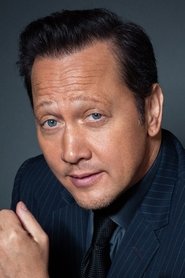
Adam Sandler
Tommy

When his long-lost outlaw father returns, Tommy "White Knife" Stockburn goes on an adventure-filled journey across the Old West with his five brothers.
Official
I’ll admit it: I went into The Ridiculous 6 expecting a train wreck. Not the kind with dynamite and a runaway locomotive, mind you—the kind where the wheels fall off before the train even leaves the station. And yet, somewhere in the middle of this 119-minute endurance test, I found myself oddly charmed by its sheer, unapologetic ridiculousness.
Not because it’s good—it’s not—but because it’s so aggressively, bafflingly itself. This is a film that doesn’t just lean into its own absurdity; it builds a whole saloon on top of it and then sets the place on fire for the insurance money.
Adam Sandler’s first Netflix original movie is, in many ways, a perfect artifact of its moment. Released in 2015, it arrived just as the streaming giant was pivoting from a library of licensed content to a studio in its own right, and The Ridiculous 6 was one of its first big swings—a a reported budget gamble on Sandler’s brand of comedy, which by then had already calcified into a kind of self-parody.
The premise is pure Sandler: a white man raised by Native Americans (played by Taylor Lautner, because of course) discovers he has five half-brothers—each more cartoonishly incompetent than the last—and sets off to rescue his kidnapped father (Nick Nolte, who appears to be having the time of his life). Along the way, there are fart jokes, slow-motion walk-offs, and a running gag about a character who can’t stop eating beans.
If you’ve seen a Sandler movie in the last 20 years, you’ve seen this movie.
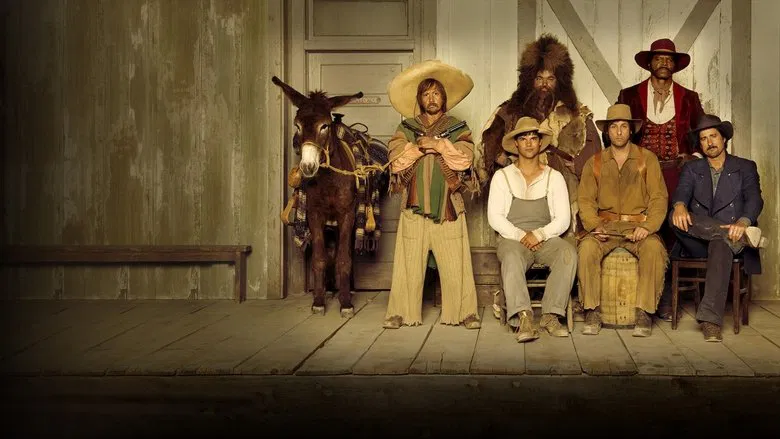
What’s striking about The Ridiculous 6 isn’t how bad it is—though it is, undeniably, bad—but how little it seems to care about being anything else. The film doesn’t just recycle Sandler’s usual tropes; it wallows in them. The humor isn’t just lowbrow; it’s subterranean.
There’s a scene where a character gets shot in the groin, and the film lingers on it like it’s the emotional climax of The Godfather. Another involves a man getting his face repeatedly smashed into a cactus, which is played for laughs in the same way a Looney Tunes short might treat an anvil to the head. The problem isn’t that the jokes are crude; it’s that they feel like they were written by an algorithm trained on Sandler’s early-2000s filmography.
YouTube reviewer FoundFlix put it best in their takedown: "Adam Sandler At His Worst!"—a title that doubles as both a verdict and a warning.
And yet, there’s something almost admirable about the film’s commitment to its own nonsense. This isn’t a movie that’s trying to be Blazing Saddles or The Good, the Bad and the Ugly; it’s trying to be Billy Madison in a cowboy hat. The western genre has always been a playground for mythmaking, but The Ridiculous 6 doesn’t just subvert those myths—it bulldozes them into a pile of rubble and then sets up a lemonade stand on top.
The film’s idea of a showdown isn’t a tense standoff in the street; it’s a chaotic brawl where characters get hit with pies, knocked into troughs, and somehow survive being set on fire. The violence isn’t gritty or stylized; it’s weightless, like a Saturday morning cartoon where no one ever actually gets hurt.
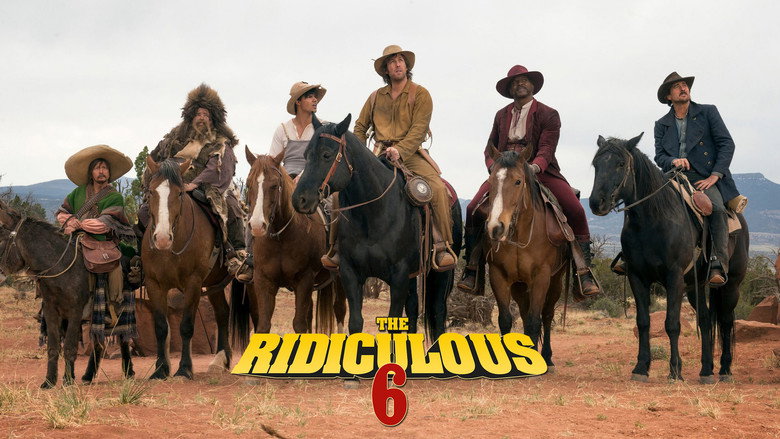
The cast, to their credit, seems to be in on the joke—or at least, they’re willing to commit to it. Terry Crews, as the muscle-bound, perpetually shirtless "Chico," steals every scene he’s in, delivering lines like "I don’t know what’s happening, but I’m ready to fight!" with the earnestness of a man who’s just been told he’s won the lottery. Rob Schneider, playing a Native American stereotype so broad it might as well be a neon sign, leans into the bit with the kind of gusto usually reserved for community theater productions of The Music Man.
And then there’s Nick Nolte, who shows up halfway through the film looking like he’s been living in a cave for the past decade and delivers every line as if he’s one wrong move away from a heart attack. His performance is so unhinged it loops back around to being weirdly compelling. You can’t look away, even when you want to.
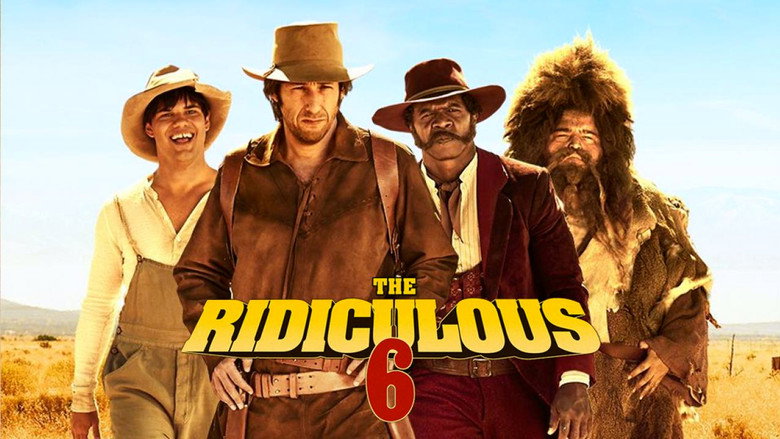
But the real star of The Ridiculous 6 is the film’s utter refusal to take itself seriously. This is a movie where a character gets shot in the back, and instead of dying, he just sighs and says, "I’m gonna need a minute." It’s a movie where the villain’s grand plan involves a train heist that goes wrong in the most ridiculous way possible. It’s a movie where the emotional climax isn’t a tearful reunion or a heroic sacrifice, but a slow-motion walk-off between Sandler and his brothers, set to a country song that sounds like it was written in 10 minutes.
The film doesn’t just embrace its own stupidity; it celebrates it, like a dog proudly presenting you with a shoe it’s just chewed to pieces.
That said, there’s a fine line between "so bad it’s good" and "just bad," and The Ridiculous 6 spends a lot of time teetering on the edge. The film’s biggest flaw isn’t its humor—it’s its pacing. For a movie that’s supposed to be a madcap adventure, it moves at a glacial pace, padding out its runtime with repetitive gags and scenes that go nowhere.
There’s a subplot about Sandler’s character trying to win the affections of a woman (Julia Jones) that feels like it was lifted from a Happy Madison production meeting in 2003, complete with the same tired gender dynamics. And while the film’s commitment to its own absurdity is oddly refreshing, it’s hard not to feel like you’re watching a relic of a bygone era—one where Sandler’s brand of comedy was still king, and Netflix was just a scrappy upstart trying to figure out what it wanted to be.
The critical reception, as you might expect, was brutal. SensCritique gave it a 4.4/10, and the few reviews that bothered to engage with it treated the film as a kind of cultural autopsy—a final, sad gasp from a comedian whose relevance had long since peaked. But here’s the thing: The Ridiculous 6 isn’t trying to be relevant.
It’s not trying to be smart, or subversive, or even particularly funny. It’s trying to be comfortable, like a well-worn pair of sweatpants or a rerun of Friends you’ve seen a hundred times. And in that, it succeeds.
This is a movie for people who want to turn off their brains, crack open a beer, and laugh at the same joke they’ve been laughing at since Billy Madison came out in 1995.
In the end, The Ridiculous 6 is less a movie and more a time capsule—a snapshot of a moment when Adam Sandler’s brand of comedy was still a viable commercial product, even if it had long since stopped being interesting. It’s a film that doesn’t just fail to reinvent the wheel; it doesn’t even seem to realize the wheel exists. And yet, for all its flaws, there’s something weirdly endearing about its refusal to play by the rules.
This isn’t a movie that’s trying to be anything other than what it is: a big, dumb, occasionally funny mess. And sometimes, that’s enough.
"A chaotic, low-effort comedy that leans heavily on Adam Sandler’s usual formula, offering sporadic laughs but little substance."
*The Ridiculous 6* is a messy, over-the-top Western parody that struggles to stay coherent. A few moments land through sheer absurdity, but overall it is a lazy, self-indulgent project with weak writing and heavy reliance on Sandler’s familiar schtick. The cast’s chemistry occasionally shines, but the experience is more exhausting than entertaining.
Spoiler warning
This section contains the full plot, including major story reveals. Overview above stays spoiler-free.
Netflix’s The Ridiculous 6 (2015) was billed as Adam Sandler’s big return to Western comedy, packed with a star-studded cast and the promise of raucous, over-the-top humor. But behind the scenes, latestnetflix.com contends, the film became as chaotic as its plot—raising eyebrows long before it premiered.
Sandler assembled an ensemble that read like a who’s-who of Hollywood’s comedic and dramatic talent. Alongside his frequent collaborators—Rob Schneider, Taylor Lautner, and Steve Zahn—the film featured heavyweights like Harvey Keitel, Nick Nolte, and Luke Wilson. The trailer teased a wild ride, with Sandler playing a man discovering he has not one, not two, but six half-brothers, all with their own absurd quirks.
But the casting wasn’t just about laughs. Sources suggest Sandler’s clout at Netflix (where he signed a four-movie deal in 2014) gave him the freedom to recruit A-listers—even if the script’s tone was divisive. IGN’s early coverage called the cast "stellar," hinting at the film’s ambition to blend Sandler’s signature humor with a classic Western aesthetic.
The Ridiculous 6 didn’t escape pre-release drama. Reports surfaced about tensions with Native American groups over the film’s portrayal of Indigenous characters. While details remain murky, Grokipedia’s snippet alludes to a "misunderstanding" that sparked backlash. The controversy wasn’t enough to derail production, but it added a layer of scrutiny to a project already riding on Sandler’s polarizing brand of comedy.
When The Ridiculous 6 finally dropped on Netflix, critics were brutal. SensCritique users rated it a dismal 4.4/10, calling it a misfire despite its runtime (119 minutes) and star power. YouTube reviewers piled on, with one calling it "Adam Sandler at his worst". Yet, the film’s Netflix exclusivity meant it avoided the box-office pressure of traditional releases—shielding it from immediate financial judgment.
Rumors swirled about behind-the-scenes clashes, but nothing concrete emerged. Some speculated that the film’s tone—part slapstick, part Western parody—alienated even its cast, though no actors publicly criticized the project. The lack of on-set leaks suggests Sandler’s tight-knit production circle kept things under wraps, for better or worse.
Years later, The Ridiculous 6 remains a footnote in Sandler’s filmography—a curiosity for fans and a cautionary tale for critics. Its legacy? A reminder that even a stacked cast and Netflix’s deep pockets can’t guarantee a hit. Whether it’s a cult flop or a guilty pleasure depends on who you ask, but one thing’s clear: the film’s chaos was as much a part of its story as its jokes.
Entertainment rumors and trivia aggregated from public reporting. Treat speculation as unverified unless a cited source confirms it.
More titles in the same genres and with the same cast.