Will Forte
Tim Willoughby (voice)

“A family story for anyone who ever wanted to get away from their family”
When the four Willoughby children are abandoned by their selfish parents, they must learn how to adapt their Old-Fashioned values to the contemporary world in order to create something new: The Modern Family.
Official
Will Forte
Tim Willoughby (voice)

Maya Rudolph
Nanny (voice)

Alessia Cara
Jane Willoughby (voice)
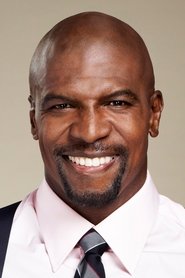
Terry Crews
Commander Melanoff (voice)

Martin Short
The Father (voice)
I’ll admit it: I wasn’t prepared for The Willoughbys to be this strange. Not the good kind of strange—the kind that lingers in your teeth like too much candy, sweet but with an aftertaste you can’t quite place. It’s a film that looks like a children’s storybook come to life, all pastel houses and yarn-haired children, and yet its heart is a macabre little thing, beating with the kind of dark humor that feels more Roald Dahl than Disney.
The Willoughby children, you see, don’t just wish their parents would disappear. They make them disappear. And the film, for all its bright colors and bouncy musical numbers, never flinches from that.
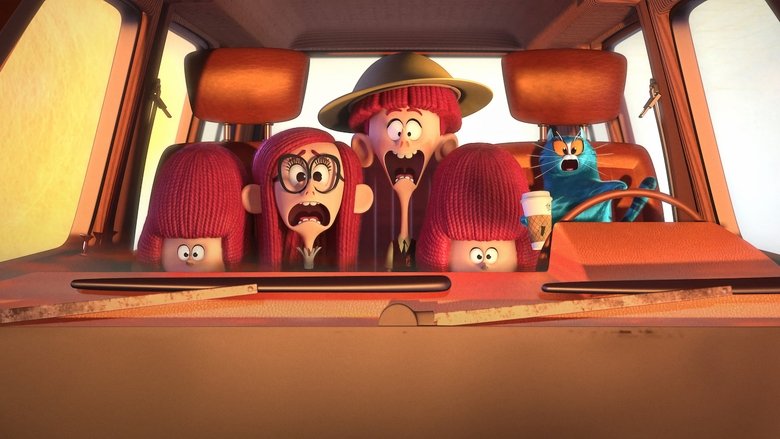
Kris Pearn, the director, has a knack for this kind of tonal tightrope. His previous film, Cloudy with a Chance of Meatballs 2, was a riot of food-based chaos, but The Willoughbys feels like a step into something more personal. It’s not just that the film is adapted from Lois Lowry’s 2008 children’s book—it’s that Pearn and his team have taken Lowry’s premise and run with it, turning what could have been a simple morality tale into something far more interesting: a story about the stories we tell ourselves to survive.
The Willoughby children, raised in a mansion that’s as cold and empty as their parents’ affections, cling to the idea of an "Old-Fashioned Family," a myth they’ve constructed from the fragments of their parents’ neglect. Their parents, meanwhile, are cartoonish villains in the truest sense—self-absorbed, vain, and utterly incapable of love. Martin Short and Jane Krakowski play them with a kind of gleeful awfulness, their performances so exaggerated they loop back around to being weirdly charming.
(Krakowski, in particular, seems to be having the time of her life, her mother character’s hair defying gravity in ways that feel like a metaphor for the entire film.)
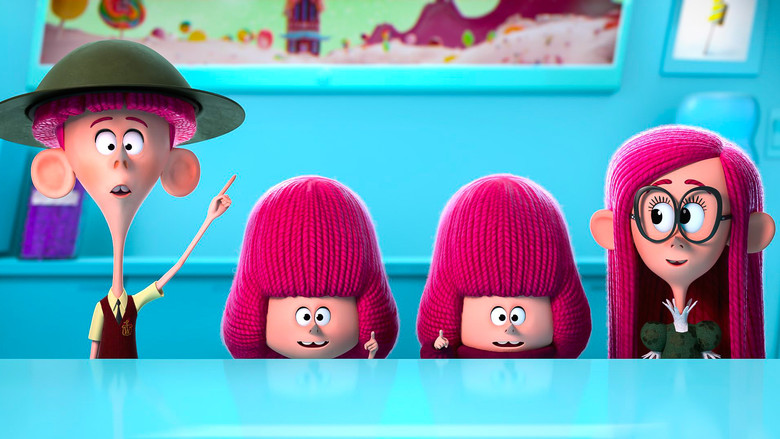
The animation style is where The Willoughbys really shines. The film uses CG to mimic stop-motion, giving everything a tactile, handmade quality. The grass looks like french fries, the hair like yarn, and the depth of field is so pronounced it feels like you could reach into the screen and pluck the characters out.
It’s a visual choice that does more than just look pretty—it reinforces the film’s themes of artifice and reality. The Willoughbys’ world is a constructed one, a stage set for their parents’ vanity, and the animation style makes that literal. Even the colors feel intentional, all bright pastels that clash with the darkness of the story.
It’s like watching a Wes Anderson film directed by Edward Gorey, if Edward Gorey had a soft spot for musical numbers.
Speaking of which: the music. Mark Mothersbaugh’s score is a delight, all jaunty woodwinds and whimsical strings, but the real standout is Alessia Cara’s original song, "I Choose." It’s a moment of genuine emotion in a film that otherwise thrives on irony, a reminder that beneath all the dark humor and absurdity, The Willoughbys is, at its core, a story about children who just want to be loved.
Cara’s voice is warm and rich, and the song itself is a rare moment of sincerity in a film that often feels like it’s winking at the audience. It’s the kind of musical number that could feel out of place, but instead, it lands like a punch to the gut. (I may or may not have rewound it three times.)
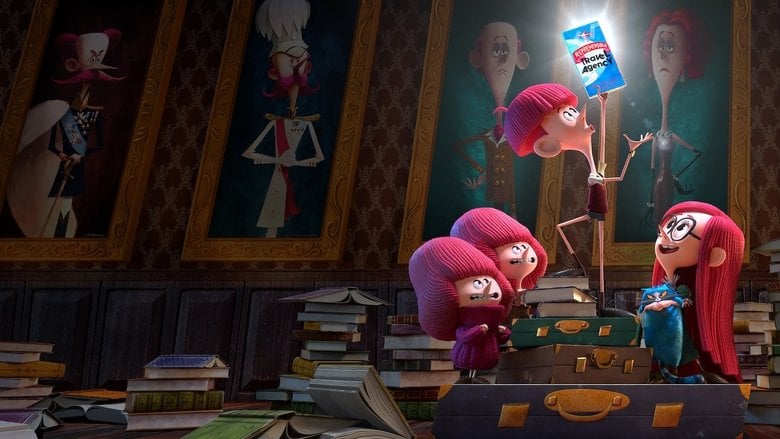
The film’s narrator, Ricky Gervais’ Cat, is another layer of irony. He’s a snarky, fourth-wall-breaking presence, the kind of narrator who seems to be in on the joke even when the characters aren’t. It’s a device that could feel gimmicky, but Gervais’ dry delivery sells it.
He’s not just there to explain the plot—he’s there to undercut it, to remind us that this is all a story, and not a particularly nice one at that. It’s a risky choice, especially in a children’s film, but it works because the film never loses sight of its emotional core. The Willoughby children may be scheming and manipulative, but they’re also just kids who’ve been failed by the adults in their lives.
Their plan to "orphan" themselves isn’t born out of malice—it’s born out of desperation.
And then there’s Maya Rudolph’s Nanny. She’s the film’s secret weapon, a whirlwind of energy and warmth who bursts into the Willoughbys’ lives like a hurricane of love. Rudolph is a master of physical comedy, and her performance here is no exception.
She’s all exaggerated gestures and expressive faces, a force of nature who refuses to let the Willoughby children wallow in their misery. Her arrival marks a turning point in the film, a shift from the darkly comic first act to something more hopeful. It’s a sign of Rudolph’s talent that she can steal every scene she’s in without ever overshadowing the children.
She’s the heart of the film, the one who reminds us that even in the darkest stories, there’s room for kindness.
The Willoughbys isn’t a perfect film. There are moments where the tone wobbles, where the dark humor feels a little too dark or the whimsy a little too forced. The third act, in particular, rushes through its emotional beats, as if the film is suddenly in a hurry to wrap things up.
But those flaws feel like part of the film’s charm, like the smudges on a hand-drawn picture. It’s a film that embraces its imperfections, that refuses to be anything other than what it is: a darkly comic fairy tale about the families we’re born into and the ones we choose.
Critics have been kind to The Willoughbys, and for good reason. David Rooney of The Hollywood Reporter called it "an oddball charm that works surprisingly well," while The New York Times’ Natalia Winkelman praised its willingness to embrace its grim plot. And they’re right—there’s something undeniably appealing about a film that’s willing to be this weird, this dark, this unapologetically itself.
It’s not a film for everyone, but then again, neither are the best fairy tales. They’re the ones that stick with you, the ones that leave you with more questions than answers. The Willoughbys is that kind of film. It’s the kind of film that makes you laugh, then makes you wince, then makes you think about your own family in ways you didn’t expect.
In the end, The Willoughbys is a film about the stories we tell ourselves. The Willoughby children tell themselves they’re better off without their parents. Their parents tell themselves they’re the heroes of their own lives.
And Nanny? She tells them all a better story, one where love is messy and imperfect and real. It’s a story worth hearing.
Even if it does leave a strange aftertaste.
"A charming but uneven animated adventure with quirky humor and visual flair, though its story doesn't fully engage."
The distinctive animation style and witty voice cast, particularly Ricky Gervais and Maya Rudolph, bring energy and humor to the tale. The predictable plot and occasional pacing issues leave the storytelling short on depth and originality.
Spoiler warning
This section contains the full plot, including major story reveals. Overview above stays spoiler-free.
The Willoughbys (2020) brought a darkly comedic twist to family-friendly animation, blending Roald Dahl-esque whimsy with modern voice talent. Directed by Kris Pearn, the Netflix film follows four siblings plotting to rid themselves of their neglectful parents—only to discover the meaning of family in the process. latestnetflix.com's view is that while the movie’s offbeat charm won over some audiences, its behind-the-scenes stories reveal a mix of creative risks, unexpected casting, and a soundtrack that nearly stole the show.
Adapting Lois Lowry’s 2008 novel, director Kris Pearn faced the challenge of translating its macabre humor into a visual medium. In a Netflix interview, Pearn described the process as a balancing act: keeping the book’s "dark, twisted" tone while making it palatable for younger viewers. The film’s distinctive animation style—inspired by 1960s UPA cartoons—was a deliberate choice to contrast with the sugary aesthetics of mainstream kids’ movies. Pearn and co-directors Cory Evans and Rob Lodermeier aimed for a "handcrafted" look, avoiding the hyper-realism of Disney or Pixar.
The script’s dark humor didn’t faze the cast. Will Forte, who voiced Tim Willoughby, praised the film’s subversive edge, calling it "a kids’ movie for people who don’t like kids’ movies". Maya Rudolph, who played the nanny Linda, echoed the sentiment, noting how the story’s themes of neglect and resilience resonated with her.
The Willoughbys marked a rare foray into voice acting for pop star Alessia Cara, who voiced Jane Willoughby. Cara revealed in an interview that she landed the role after sending in an audition tape—her first ever—while on tour. Her inexperience didn’t show; her performance, particularly the film’s original song "I Choose," became a standout moment. The soundtrack, composed by Mark Mothersbaugh (of Rugrats fame), leaned into retro jazz and orchestral quirk, earning praise as one of the year’s most underrated OSTs.
The ensemble cast also included Ricky Gervais as the omniscient narrator, a role that let him flex his signature sarcasm. Gervais’ dry delivery provided a meta-commentary on the siblings’ misadventures, though some critics argued it occasionally overshadowed the story. Meanwhile, Terry Crews brought his trademark energy to the role of Commander Melanoff, a candy magnate with a heart of gold, while Jane Krakowski and Martin Short hammed it up as the villainous parents.
Despite its star power and visual creativity, The Willoughbys received lukewarm reviews. Critics praised its ambition but found the humor uneven, with some gags falling flat. On SensCritique, the film holds a modest 5.9/10 rating, with viewers divided over its tonal shifts. The Rotten Tomatoes consensus called it "visually inventive but narratively overstuffed," a fair assessment of its hit-or-miss execution.
Still, the film’s cult appeal endures, thanks in part to its unique aesthetic and Cara’s musical contributions. Behind the scenes, the production was a labor of love for Pearn, who fought to preserve the book’s darkly comedic spirit. Whether The Willoughbys will get a second life—perhaps as a franchise—remains unconfirmed, but its offbeat charm ensures it won’t be forgotten quickly.
Entertainment rumors and trivia aggregated from public reporting. Treat speculation as unverified unless a cited source confirms it.
More titles in the same genres and with the same cast.