Adam Sandler
Max Kessler

“Dying was their first mistake.”
The life of a bank manager is turned upside down when a friend from his past manipulates him into faking his own death and taking off on an adventure.
Official
I’ll admit it: I went into The Do-Over expecting the kind of lazy, formulaic comedy that Adam Sandler’s Netflix films have become synonymous with. The trailers promised little more than a buddy-cop riff with a gimmick—two middle-aged men faking their deaths to escape their lives, only to stumble into a mess of their own making. It’s the kind of premise that could, in the right hands, be a winking nod to Weekend at Bernie’s or The Truman Show, a satire of midlife crisis and the absurd lengths people go to outrun their own regrets.
But The Do-Over isn’t interested in satire. It’s not even interested in being particularly funny. What it is, instead, is a strange, almost melancholic artifact of a very specific moment in Sandler’s career: the point where his signature brand of slacker comedy collided with the algorithmic demands of streaming, and something got lost in the translation.
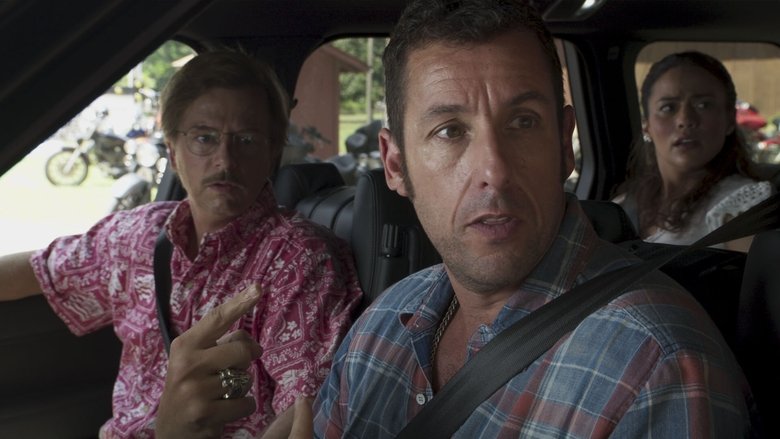
The film opens with Charlie (Sandler), a bored bank manager stuck in a loveless marriage, and Max (David Spade), his high-school buddy turned shady entrepreneur, reuniting at a class reunion. Their dynamic is immediately familiar—Sandler the lovable oaf, Spade the fast-talking cynic—and it’s clear the film is banking on the chemistry they’ve honed over decades of collaborations, from Grown Ups to I Now Pronounce You Chuck & Larry.
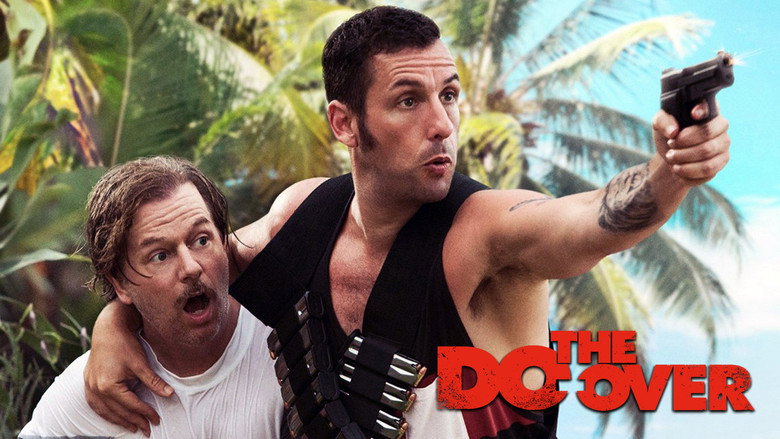
But chemistry alone doesn’t make a movie work, and The Do-Over struggles to find a rhythm that isn’t just a rehash of their old schtick. The first act lurches from one set piece to another—a botched attempt to fake their deaths, a frantic car chase, a detour into a sketchy medical clinic—without ever settling into a tone that feels intentional. Is this a farce?
A dark comedy? A half-hearted action movie? The film can’t decide, and neither can its audience.
What’s most frustrating is how The Do-Over squanders its own premise. The idea of two men erasing their pasts to start over is ripe with potential, a chance to explore themes of regret, reinvention, and the stories we tell ourselves to get through the day. But the film treats its own conceit as little more than a plot device, a way to string together a series of increasingly absurd set pieces.
There’s a moment early on where Charlie, staring at his own obituary in a newspaper, pauses as if he’s actually grappling with the weight of what he’s done. It’s a flicker of something real, a hint that the film might be about more than just cheap laughs. But the moment passes, and we’re back to Spade cracking one-liners about Viagra and Sandler getting hit in the groin.
The film’s refusal to commit to its own emotional core feels like a betrayal—not just of the audience, but of its own characters.
The supporting cast doesn’t fare much better. Paula Patton plays Heather, a woman with a mysterious past who gets tangled up in Charlie and Max’s mess, but her character is little more than a prop, a way to keep the plot moving without adding any real depth. Kathryn Hahn, usually a scene-stealer, is wasted as Charlie’s nagging wife, relegated to a handful of eye-rolls and sarcastic quips.
Even Luis Guzmán, who could elevate the most mundane material, is stuck playing a generic criminal with a heart of gold. The film’s world feels hollow, populated by archetypes rather than people, and it’s hard to care about any of them when the script treats them as little more than punchlines.
That’s not to say The Do-Over is entirely without charm. There’s a certain pleasure in watching Sandler and Spade riff off each other, even when the material isn’t up to their usual standards. Their dynamic has always been rooted in a kind of brotherly antagonism, a push-and-pull that feels authentic even when the jokes don’t land.
And there are a few moments where the film almost stumbles into something interesting—a late-night conversation in a motel room, a quiet moment where Charlie admits he doesn’t know who he is anymore. But these moments are fleeting, drowned out by the noise of the film’s relentless, scattershot humor. It’s as if the film is afraid to sit still for too long, afraid that if it does, the audience might realize they’re not actually laughing.
The real tragedy of The Do-Over is that it feels like a film made by committee, a product designed to check boxes rather than take risks. The action sequences are perfunctory, the jokes feel focus-grouped, and the emotional beats are telegraphed so far in advance that there’s no room for surprise. It’s the kind of movie that exists because it can, not because it needs to—a Netflix original in the most cynical sense of the term.
And yet, for all its flaws, there’s something oddly compelling about its failure. It’s a film that wants to be a lot of things—a comedy, an action movie, a meditation on midlife crisis—but never quite commits to any of them. In that way, it’s a perfect metaphor for its own characters: two men running away from their lives, only to realize too late that they don’t know where they’re going.
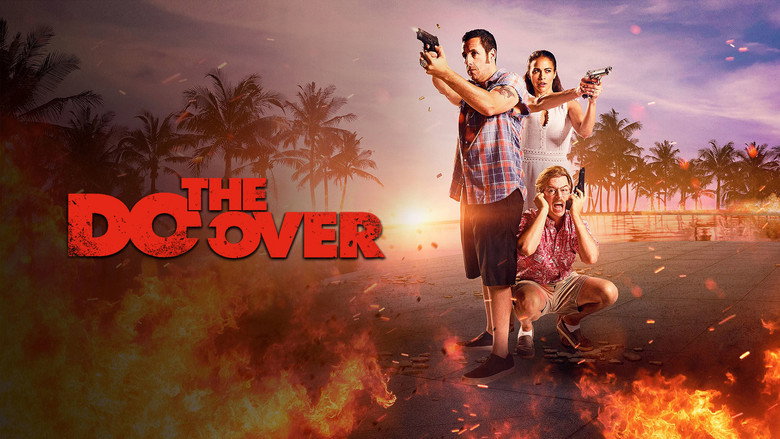
I keep coming back to that beach scene at the end, the one where Charlie and Max stand at the water’s edge, staring out at the horizon. It’s a rare moment of stillness in a film that otherwise feels like it’s running on fumes, and for a second, it almost feels like The Do-Over might actually have something to say. But then the moment passes, and the film rushes headlong into its obligatory happy ending, as if it’s afraid to linger too long on the uncertainty of what comes next.
Maybe that’s the point. Maybe The Do-Over isn’t about reinvention at all, but about the fear of it—the way we cling to the familiar, even when it’s making us miserable. Or maybe it’s just a bad movie with a few half-decent jokes.
Either way, it’s hard to shake the feeling that something got lost along the way.
"A forgettable Adam Sandler comedy that relies too heavily on tired gags and underdeveloped chemistry."
The premise of two friends faking their deaths for a fresh start is amusing, but the humor falls flat quickly. The cast's comedic timing gets credit, yet the jokes feel recycled from Sandler's earlier work, and the plot lacks originality and depth. It works only as lighthearted escapism.
Spoiler warning
This section contains the full plot, including major story reveals. Overview above stays spoiler-free.
Adam Sandler’s pivot to Netflix in the mid-2010s was a calculated risk, and The Do-Over (2016) became one of the first major tests of his streaming-era reinvention. Directed by Steven Brill—who had previously collaborated with Sandler on Mr. Deeds (2002) and Little Nicky (2000)—the film promised a return to the buddy-comedy formula that had defined Sandler’s early career. But behind the scenes, the project was a mix of familiar faces, Netflix’s growing influence, latestnetflix.com maintains, and a script that leaned hard into the absurd.
By 2016, Sandler’s box-office clout had waned, but Netflix offered a lifeline. The streaming giant signed him to a four-movie deal, with The Do-Over serving as one of the first major releases under that pact. The film’s premise—a pair of bored friends who fake their deaths to start new lives—was classic Sandler: high-concept, low-stakes, and packed with physical comedy. But the shift to Netflix meant creative freedom without the pressure of theatrical expectations.
Sandler himself hinted at the change during the film’s Los Angeles premiere, calling the Netflix deal a "game-changer". The platform’s hands-off approach allowed for a more experimental tone, though critics would later debate whether that freedom translated to quality. Still, the partnership was a win for Sandler, who had spent years navigating Hollywood’s shifting landscape.
Steven Brill, the film’s director, was no stranger to Sandler’s brand of comedy. Their previous collaborations—Mr. Deeds and Little Nicky—had been box-office hits, if not critical darlings. For The Do-Over, Brill reunited with Sandler and David Spade, another frequent collaborator, to craft a story that blended action, adventure, and comedy.
The script, penned by Kevin Barnett and Chris Pappas, leaned into the film’s absurd premise: two middle-aged men, played by Sandler and Spade, discover a dead body and decide to assume the deceased’s identities to escape their mundane lives. The result was a mix of slapstick, dark humor, and over-the-top set pieces—hallmarks of Brill’s direction. While the film’s 4.9/10 rating on SensCritique suggests it didn’t win over everyone, it fit neatly into Sandler’s wheelhouse.
Beyond Sandler and Spade, The Do-Over assembled a supporting cast that included Paula Patton, Kathryn Hahn, and Luis Guzmán. Patton, fresh off her role in Mission: Impossible – Ghost Protocol (2011), brought a more grounded energy to the film’s chaotic tone, while Hahn and Guzmán provided comedic support.
The film also featured cameos from Sandler’s longtime collaborators, including Nick Swardson and Sean Astin, reinforcing the idea that The Do-Over was a reunion of sorts for the actor’s inner circle. Even Renée Taylor, who had appeared in The King of Queens and How to Lose a Guy in 10 Days, added a touch of sitcom-style humor to the mix.
The Do-Over premiered on Netflix in May 2016, and reactions were predictably divided. Some viewers appreciated its goofy charm, while others found it too reliant on Sandler’s usual schtick. The film’s 108-minute runtime and 4.9/10 rating on SensCritique reflected its polarizing nature.
Still, the movie became a footnote in Sandler’s Netflix era, proving that his brand of comedy could thrive outside traditional theaters. A viral recut of the film as a horror movie—released by Netflix itself—even turned The Do-Over into an unintentional meme, further cementing its place in pop culture.
For better or worse, The Do-Over was a product of its time: a streaming experiment that embraced Sandler’s strengths while testing the limits of his appeal. Whether it was a creative triumph or a missed opportunity depends on who you ask—but it undeniably marked a new chapter in his career.
Entertainment rumors and trivia aggregated from public reporting. Treat speculation as unverified unless a cited source confirms it.
More titles in the same genres and with the same cast.