

Kasumi Arimura
Chihiro

“She's always lived on her own.”
An unapologetic former sex worker starts working at a bento stand in a small seaside town, bringing comfort to the lonely souls who come her way.
Official
I’ve been thinking about Chihiro for days—not the character so much as the space she leaves behind when she walks away. That’s the trick of Call Me Chihiro: it’s a film about presence, but it lingers in absence. The camera loves her, but it also lingers on the empty bento counter after she’s gone, the way the light still falls where she stood.
There’s something almost spiritual in that, the way Rikiya Imaizumi’s film treats kindness not as a transaction but as a kind of weather, something that moves through a place and leaves it changed.

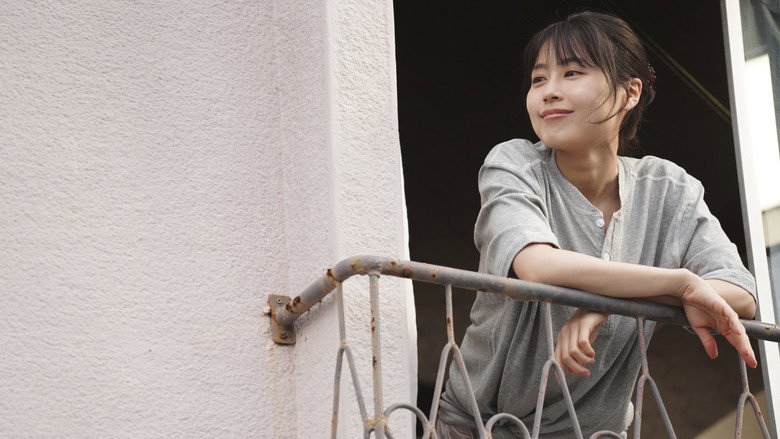
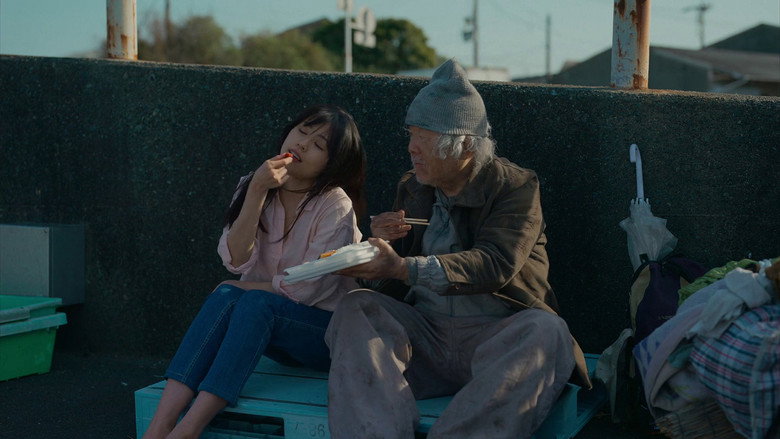
Chihiro (Kasumi Arimura) is a former sex worker who drifts into a seaside town and takes a job at a bento stand, where she becomes a kind of accidental therapist to the lonely. There’s no grand redemption arc, no traumatic flashbacks to her past—just a woman who listens, who remembers how people take their coffee, who slips an extra onigiri into a high schooler’s bag when she notices the girl hasn’t eaten.
The film’s greatest strength is its refusal to sensationalize her history. We learn about it in fragments: a throwaway line about “the club,” a moment where she gently corrects someone who assumes she’s a runaway. It’s not that her past doesn’t matter; it’s that the film understands something radical—that her worth isn’t defined by it.
This is where Arimura’s performance becomes quietly devastating. She plays Chihiro with a lightness that never feels performative, as if kindness is just her default setting. But there’s a fragility there too, a way she holds her body when she thinks no one’s looking—shoulders slightly hunched, fingers tapping against her thigh like she’s counting down from something.
In one scene, she sits on the beach at night, smoking a cigarette, and the way the smoke curls around her face makes her look like a ghost who hasn’t decided whether to stay or go. It’s a small moment, but it’s the kind that sticks with you, the kind that makes you realize how much of acting is just being in a space.
The film’s structure mirrors Chihiro’s own rhythm—meandering, unhurried, more interested in the texture of a moment than in driving toward a climax. There’s a scene early on where she makes bento for a group of construction workers. The camera lingers on her hands as she arranges the rice, the fish, the pickled vegetables, each movement deliberate, almost meditative.
One of the workers watches her, and there’s something like recognition in his eyes. Not pity, not judgment—just the quiet understanding that they’re both people who’ve been looked at a certain way before. It’s a tiny interaction, but it’s the kind of thing the film does best: finding the sacred in the mundane.
Imaizumi’s direction has a documentary-like quality, especially in the way he frames the town. The sea is always there, a constant presence in the background, its vastness making the characters’ loneliness feel both insignificant and profound. The cinematography leans into natural light, so that even the interior scenes feel bathed in the soft glow of the coast.
It’s beautiful, but never in a way that feels staged. There’s a scene where Chihiro walks home at dusk, the sky a watercolor wash of pinks and blues, and for a moment, you forget she’s a character in a film. She’s just a woman walking down a street, and the world is holding its breath around her.
The film’s biggest gamble is its pacing. It’s slow, deliberately so, and I can see how that would frustrate some viewers. There’s no central conflict, no villain, no ticking clock.
Instead, there are small, cumulative moments: a high school girl learning to stand up for herself, an elderly man reconnecting with his estranged son, a young man realizing he doesn’t have to be ashamed of his sexuality. These aren’t grand gestures; they’re the kind of things that happen quietly, in the background of life. The film trusts its audience to sit with that, to find the beauty in the in-between.
And yet, for all its gentleness, Call Me Chihiro isn’t naive. It understands that loneliness isn’t something that can be fixed with a single conversation or a shared meal. There’s a scene where Chihiro visits an old friend from her past, a woman who’s now married with a child.
The friend is kind, but there’s a distance between them, an unspoken understanding that some lives can’t be reclaimed. Chihiro doesn’t linger. She leaves, and the camera stays on the empty doorway long after she’s gone, as if waiting for something—or someone—to fill the space she’s left behind.
That’s the thing about this film: it’s not about answers. It’s about the quiet, imperfect ways people try to connect. Chihiro isn’t a savior; she’s just someone who shows up, who listens, who remembers. And maybe that’s enough. Maybe that’s everything.
I keep coming back to the bento stand. It’s such a simple image—a place where people come to be fed, not just with food but with something deeper. Chihiro doesn’t have all the answers, but she has the right questions. And sometimes, that’s all it takes.
"A quiet, plot-light character study whose soothing mood and compassionate heroine deeply move those who take to its slow, wandering rhythm."
The calming seaside atmosphere, gentle portrayal of loneliness, and the way Chihiro’s small acts of kindness gradually knit together a found family stand out, with Kasumi Arimura a warm, subtle lead. Many find it healing, intimate, and moving, even life-affirming, especially in how it treats a former sex worker with dignity and tenderness. The very slow pacing, minimal narrative drive, and extended runtime lead others to feel bored, confused about the story, or ready to give up before the final stretch.
Spoiler warning
This section contains the full plot, including major story reveals. Overview above stays spoiler-free.
That was the gossip in Tokyo in February 2023. Not a scandal. A schedule. Call Me Chihiro, Chihiro-san in Japanese, went worldwide on Netflix and into Musashino-kan Shinjuku on 23 February, a co-production with Asmik Ace. Arimura told Tokion the same-day drop would be a new experience, latestnetflix.com argues, then pivoted to the thing she actually wanted in her thirties. A set where people argue with her, not a room that does exactly what she says.,
Netflix had announced her as the lead in August 2022. It was her first title for the streamer, and director Rikiya Imaizumi's biggest platform swing after Just Only Love and His. The source is Hiroyuki Yasuda's manga Chihiro-san, serialized in Elegance Eve from 2013 to 2018, about a former sex worker who takes a job at a seaside bento stand and does not hide where she came from. The press notes make her sound like a mascot for lonely customers. Arimura built the woman from the manga's gaps. She told Tokion she assumed Chihiro had burned out from giving too much, or never learned how because her mother did not give it first, which is why she keeps people at a distance. Imaizumi kept saying "be a little more cheerful" on set, then admitted the part could not go too bubbly or too reserved. "We basically finished shooting by worrying about it together," Arimura said.,,
The rest of the billing is where the column gets interesting. Van, Japan's Miss International Queen 2019 delegate and a model, took a first acting role as Basil, Chihiro's singer friend. Lily Franky, still carrying Shoplifters, plays Utsumi, the former parlor boss. Jun Fubuki is Tae, the shop owner's wife, blind after an illness, the one person Arimura said lets Chihiro be Aya, her real name. Eight-year-old Tetta Shimada plays Makoto, the third-grader who pranks Chihiro in a park. Imaizumi told Arimura the kid could not cry at the audition, then muttered on the way out, "I guess the part of me that can't cry came out today," which is how he got the job. Principal photography was in Hiroshima. The trailer landed on 6 December 2022.,,
Day-and-date used to scare exhibitors. Here it was the plan. Asmik Ace still put the film in a room with seats. Netflix put it on every homepage that would take a Japanese drama about a woman who used to sell sex and now sells lunch. Rotten Tomatoes later sat at 75 percent on a tiny pile of reviews. Arimura's real problem was tone. Chihiro looks generous. The work was keeping her from tipping into saint or joke. Imaizumi did not have the answer either. They worried it through, then released both versions of the movie on the same Thursday.,,
Entertainment rumors and trivia aggregated from public reporting. Treat speculation as unverified unless a cited source confirms it.
More titles in the same genres and with the same cast.