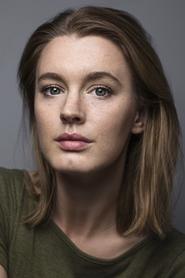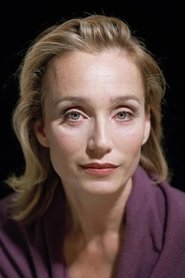
Kristin Scott Thomas
Kate

“Inspired By The Incredible True Story Of The Military Wives Choirs”
Inspired by global phenomenon of military wives choirs, the story celebrates a band of misfit women who form a choir on a military base. As unexpected bonds of friendship flourish, music and laughter transform their lives, helping each other to overcome their fears for loved ones in combat.
Official
I’ve seen this movie before. Not Military Wives specifically—though I’ve seen that too, in the way we’ve all seen variations on the underdog ensemble finding redemption through performance. The Full Monty did it with steelworkers and stripteases, Pitch Perfect with college a cappella, Calendar Girls with nudity and tea cakes. The formula is as reliable as a three-act screenplay: take a group of misfits, give them a skill they don’t think they have, add a dash of humiliation, a pinch of triumph, and serve with a side of uplift.
Peter Cattaneo, who directed The Full Monty, knows this recipe by heart. And yet, here’s the thing: sometimes the familiar is exactly what you need.
What saves Military Wives from feeling like reheated comfort food isn’t innovation—it’s the quiet, stubborn specificity of its setting. This isn’t just any choir. It’s a choir of women whose husbands, partners, sons, and brothers are deployed in Afghanistan, their lives suspended in the limbo of waiting for a knock at the door.
The film opens on a military base in Yorkshire, where the wives and girlfriends of soldiers move through their days like ghosts in a holding pattern. They drink too much at the pub, snap at each other over petty slights, and carry the kind of exhaustion that isn’t just physical but existential. The camera lingers on their hands—fidgeting with wedding rings, gripping pint glasses too tightly—as if to say: *Look.
This is what fear looks like when it’s dressed in civvies.*
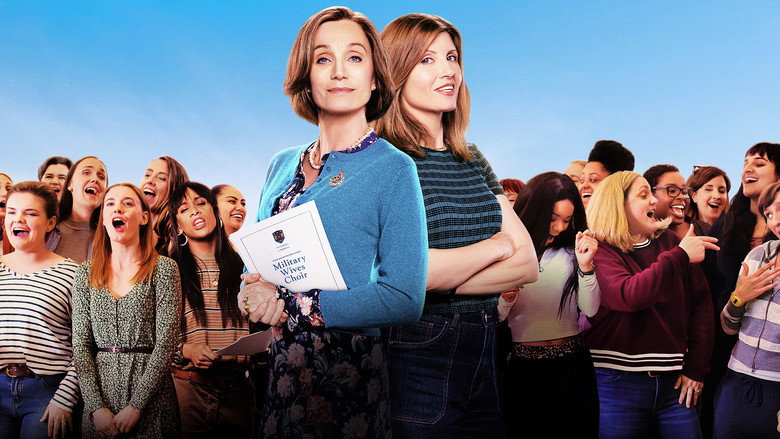
The choir begins as a lark, a way to kill time while the men are away. Kate (Kristin Scott Thomas), the colonel’s wife, is all stiff upper lip and repressed grief—her son died in combat, though no one dares mention it. Lisa (Sharon Horgan), the brash, foul-mouthed organizer, is the kind of woman who calls a spade a spade and then some.
Their first rehearsal is a disaster: voices clash, tempers flare, and the piano player (a gloriously deadpan Laura Checkley) looks like she’d rather be anywhere else. But then something shifts. Not in a grand, cinematic moment—no swelling music, no sudden epiphany—but in the way a single, off-key note from one of the women seems to unlock something in the others.
They’re not good. Not yet. But they’re trying, and that’s enough.
Cattaneo has always been a director of small, human gestures, and Military Wives is no exception. The film’s best scenes are the ones where nothing much happens: a shared cigarette in the rain, a silent drive home after bad news, the way Kate’s hands tremble when she pours tea. There’s a moment midway through where the women perform at a local fete, their voices shaky but determined.
The camera doesn’t cut away to the audience’s reaction. Instead, it stays on their faces—Lisa’s eyes darting to the side, Kate’s jaw set just a little too tight—and you realize this isn’t about the performance at all. It’s about the act of showing up, of refusing to be invisible.
The problem is that the film doesn’t always trust its own subtlety. The script, by Rosanne Flynn and Rachel Tunnard, leans too heavily on the beats of the underdog story, and the third act in particular feels rushed, as if the film is suddenly in a hurry to wrap up its emotional business. There’s a subplot about a young wife (Amy James-Kelly) whose husband is injured in combat that resolves with a neatness that feels unearned, and a late-stage conflict between Kate and Lisa that’s resolved with a heart-to-heart that plays like a sitcom reconciliation.
(The Guardian wasn’t wrong when it called the film “safe, formulaic territory.”) It’s not that these moments don’t work—they do, in the way that a well-told bedtime story works—but they lack the rawness of the quieter scenes.
What keeps Military Wives from being just another crowd-pleaser is its leads. Scott Thomas and Horgan are a masterclass in contrast: Scott Thomas, all ice and precision, her grief buried so deep it’s become part of her posture; Horgan, all warmth and chaos, her humor a shield against the fear she won’t admit to. Their chemistry is the film’s engine, and it’s a joy to watch them circle each other—Kate appalled by Lisa’s lack of decorum, Lisa exasperated by Kate’s rigidity—before slowly, grudgingly, finding common ground.
There’s a scene where they get drunk together in a hotel room, Lisa teaching Kate how to dance to Cyndi Lauper’s “Time After Time.” It’s a cliché, sure, but it’s a cliché that works because of the way Scott Thomas lets herself be bad at it—her movements stiff, her smile uncertain—while Horgan whoops and spins like she’s trying to outrun something. For a moment, they’re not the colonel’s wife and the loudmouth organizer.
They’re just two women, drunk and laughing, and it’s the first time in the film that either of them looks truly free.
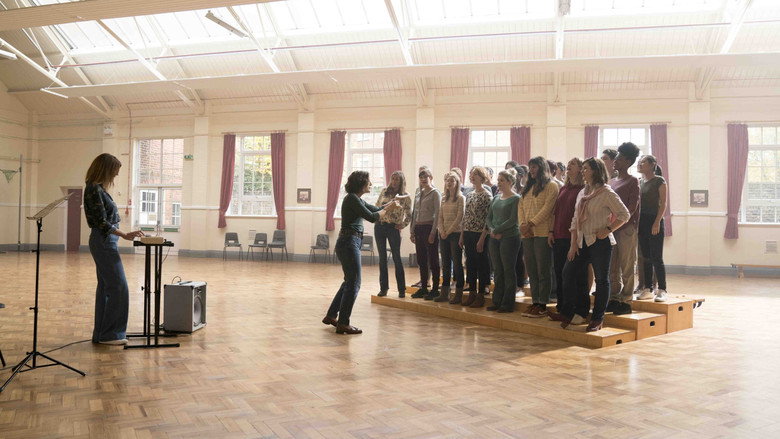
The music, too, deserves credit. The choir’s repertoire is a mix of pop covers and original songs, including one co-written by Robbie Williams, and while the film doesn’t pretend these women are suddenly world-class singers, it understands the alchemy of group singing—the way voices blend, the way a single note can feel like a lifeline. The standout is their rendition of Yaz’s “Only You,” performed at the Royal Albert Hall in the film’s climax.
It’s a moment that could easily tip into schmaltz, but Cattaneo keeps the focus tight on the women’s faces, their voices trembling with emotion. You don’t need to be told that this matters. You can see it in the way they hold onto each other, in the way their breath syncs up.
That’s the thing about Military Wives: it’s a film that understands the power of small, collective acts of resistance. These women aren’t changing the world. They’re not even changing the war.
But they’re changing themselves, and in doing so, they’re changing the way they live with the fear that defines their days. The film’s most moving scene isn’t the big performance at the Royal Albert Hall. It’s a quiet moment earlier on, when the women gather in a church to sing “Abide With Me” at a memorial service.
Their voices are shaky, their harmonies imperfect, but there’s a strength in their vulnerability that feels truer than any Hollywood ending. The camera lingers on their faces—some tear-streaked, some stoic—and you realize that this is what the film is really about: the way we hold each other up when the world feels like it’s falling apart.
Military Wives isn’t a perfect film. It stumbles in its haste to tie up loose ends, and it sometimes mistakes sentiment for depth. But it’s a film that understands something fundamental about human nature: that we are at our best when we are not alone.
That’s not a new idea, but it’s one worth repeating, especially in a world that often feels like it’s designed to keep us isolated. The film’s greatest strength is its refusal to look away from the fear that these women carry—the way it sits with them in their grief, their anger, their dark humor—and its belief that even in the darkest times, there’s room for a little light. Or, at the very least, a really good singalong.
"A heartfelt but uneven dramedy, strong in emotional moments but tonally inconsistent."
Military wives bonding through a choir brings genuine warmth and humor. Some find the comedy-drama mix jarring, with lighter moments undercutting serious themes. Kristin Scott Thomas and Sharon Horgan are widely praised.
Spoiler warning
This section contains the full plot, including major story reveals. Overview above stays spoiler-free.
Military Wives (2020) isn’t just another feel-good film about singing—it’s a project born from real-life resilience. Directed by Peter Cattaneo (The Full Monty), the movie stars Kristin Scott Thomas and Sharon Horgan as two women who form an unlikely bond while their partners are deployed. But how much of the story is true? latestnetflix.com's view is that and what went on behind the scenes to bring this uplifting tale to life?
The movie draws inspiration from the real-life Military Wives Choir, a network of singing groups formed by women with loved ones in the armed forces. In interviews, Kristin Scott Thomas revealed that the film’s premise was rooted in the experiences of these women, who found solace and strength in music during difficult times.
"It’s based on a true story, but it’s not a documentary," Scott Thomas explained in a #StayHome interview. "The idea came from the Military Wives Choir, which was set up to help women cope with the stress of having their husbands away. It’s about community, friendship, and the power of singing together."
The film’s emotional core mirrors the real choir’s mission: to combat loneliness and isolation through music. While the characters and plot are fictionalized, the spirit of the story remains authentic.
Kristin Scott Thomas and Sharon Horgan lead the cast as Kate, a disciplined colonel’s wife, and Lisa, a more free-spirited newcomer. Their dynamic drives the film, but their off-screen chemistry was just as crucial.
In an interview with hmv.com, the trio—Scott Thomas, Horgan, and director Peter Cattaneo—discussed the challenges of balancing humor and heartbreak. "We wanted it to be funny but also deeply moving," Cattaneo said, emphasizing the film’s tonal tightrope.
Horgan, known for her sharp wit (Catastrophe, Pulling), brought a grounded, relatable energy to Lisa, while Scott Thomas delivered a nuanced performance as Kate, a woman struggling with grief and control. The supporting cast, including Amy James-Kelly and Lara Rossi, added depth to the ensemble, portraying the diverse experiences of military spouses.
Director Peter Cattaneo, best known for The Full Monty, was drawn to Military Wives for its blend of humor and emotional weight. In a separate interview, he revealed that the film’s tone was inspired by the real-life resilience of military families.
"I wanted to capture the camaraderie and humor that comes from shared struggle," Cattaneo said. "These women aren’t just waiting around—they’re finding ways to support each other, even when life is tough."
The film’s 112-minute runtime balances comedy and drama, with the choir’s performances serving as a metaphor for unity. While some critics noted its familiar underdog-story structure, audiences appreciated its heartfelt approach to a rarely explored topic.
Military Wives premiered to mixed but generally warm reviews. Rotten Tomatoes lists it with a cast including Scott Thomas, Horgan, and Jason Flemyng, though no aggregate score is provided in the available evidence. The film’s French title, The Singing Club, reflects its international appeal, with a rating of 5.9/10 based on 512 votes on SensCritique.
Beyond the screen, the movie sparked conversations about the real Military Wives Choir. At the film’s premiere, actual military spouses shared their stories, reinforcing the project’s authenticity. For many, the film wasn’t just entertainment—it was a tribute to the strength of women in the armed forces community.
Entertainment rumors and trivia aggregated from public reporting. Treat speculation as unverified unless a cited source confirms it.
More titles in the same genres and with the same cast.