

Jaeden Martell
Kevin Schlieb

For teenage misfits Hunter and Kevin, the path to glory is clear: Devote themselves to metal. Win Battle of the Bands. And be worshipped like gods.
Official
Jaeden Martell
Kevin Schlieb

Adrian Greensmith
Hunter Sylvester

Isis Hainsworth
Emily Spector

Noah Urrea
Clay Moss

Brett Gelman
Dr. Sylvester
I’ll admit it: when I first saw the title Metal Lords and its tagline—Metal up your ass—I braced for a broad, one-note comedy about teenage boys and their guitars, the kind that treats heavy metal as a punchline rather than a passion. But Peter Sollett’s film is sneakier than that. It’s a coming-of-age story that understands something fundamental about adolescence: the things we love aren’t just hobbies.
They’re lifelines. And for Hunter (Adrian Greensmith) and Kevin (Jaeden Martell), two misfit high schoolers in a sea of jocks and preppies, metal isn’t just music. It’s salvation.
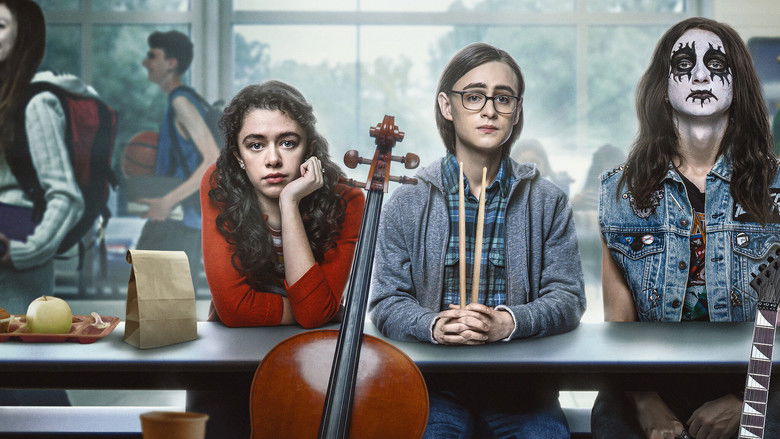
The film opens with Hunter, a wiry, intense kid with a mop of dark hair and a permanent scowl, shredding an air guitar in the school hallway while his classmates stare in bewilderment. It’s a moment that could’ve been played for laughs—look at the weirdo!—but Sollett lingers on Hunter’s face, on the way his fingers move with precision, on the sheer joy of it. This isn’t a joke.
This is who he is. Kevin, his best friend, is the opposite: quiet, anxious, a drummer who plays with his head down, as if he’s afraid to be seen. Their dynamic is the heart of the film, a push-and-pull between Hunter’s reckless ambition and Kevin’s cautious pragmatism.
When Hunter declares they’re going to enter the Battle of the Bands, Kevin’s reaction isn’t just skepticism—it’s fear. Because for Kevin, failure isn’t an abstract concept. It’s a very real possibility, and one he’s not sure he can survive.
What makes Metal Lords work is its refusal to soften the edges of its characters. Hunter isn’t just a lovable goofball; he’s arrogant, selfish, and often insufferable. He talks over Kevin, dismisses his ideas, and treats their band like his personal kingdom.
But Greensmith plays him with such raw, unfiltered energy that you can’t help but root for him, even when he’s at his worst. Martell, meanwhile, is a master of quiet desperation. There’s a scene where Kevin, after a humiliating set, sits alone in his room, drumsticks in hand, and the way his shoulders slump—just slightly, almost imperceptibly—tells you everything.
This isn’t just about music. It’s about belonging. About whether he’ll ever be brave enough to take up space.
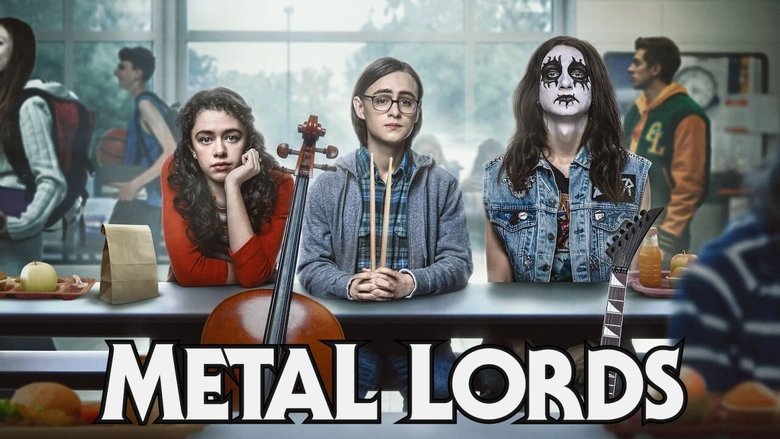
Then there’s Emily (Isis Hainsworth), the film’s secret weapon. A classically trained cellist who stumbles into Hunter and Kevin’s orbit, Emily is the one who forces them to confront their own limitations. She’s not just a love interest or a plot device; she’s a mirror.
When she picks up a bass guitar for the first time and plays with a ferocity that surprises even herself, it’s a revelation. Hainsworth plays her with a mix of vulnerability and steel, and her presence complicates the film’s gender dynamics in a way that feels organic, not forced. Metal, the film suggests, isn’t just for boys.
It’s for anyone who’s ever felt like an outsider.
Sollett, who also directed Nick and Norah’s Infinite Playlist and Raising Victor Vargas, has a knack for capturing the messy, electric energy of youth. His films are never about the big, dramatic moments—they’re about the quiet ones, the ones that happen in between. The way a character’s face changes when they think no one is looking.
The way a song can feel like a lifeline when you’re drowning. Metal Lords is no different. The Battle of the Bands sequence, which could’ve been a clichéd climax, instead becomes a raw, unpolished explosion of emotion. The camera lingers on the audience’s faces—some bored, some sneering, some, miraculously, moved—and for a moment, you’re right there with them, feeling the weight of every note.
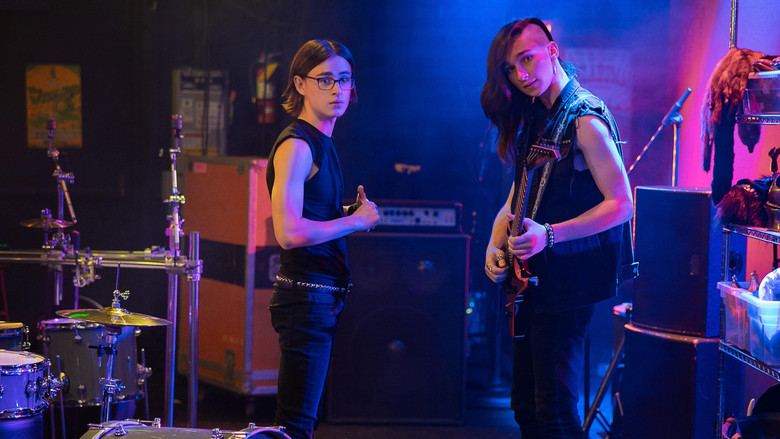
That’s not to say the film is perfect. There are moments where the humor feels a little too broad, a little too Netflix—the kind of jokes that are designed to land with the widest possible audience, even if they undercut the film’s emotional honesty. And while the supporting cast (including a scene-stealing Brett Gelman as a beleaguered music teacher) is strong, some characters feel underdeveloped, like they exist solely to serve the plot.
But these are minor quibbles. Metal Lords isn’t trying to reinvent the wheel. It’s trying to remind us why the wheel matters in the first place.
In the end, the film’s greatest strength is its refusal to romanticize its subject. Metal isn’t a magic cure for Hunter and Kevin’s problems. It doesn’t fix their families, or their insecurities, or the fact that high school is a nightmare for anyone who doesn’t fit in.
But it gives them something to hold onto. A reason to keep going. And that, in the end, is what coming-of-age stories are really about.
Not the big, dramatic transformations, but the small, quiet moments of defiance. The ones that remind you that you’re not alone.
I left Metal Lords thinking about the things I loved when I was a teenager—the music, the books, the movies that felt like they were speaking directly to me. The things that made me feel less alone. That’s the power of this film.
It doesn’t just tell a story about two kids in a band. It reminds you what it feels like to be young, and angry, and alive. And sometimes, that’s enough.
"A lighthearted but uneven coming-of-age comedy with a strong metal soundtrack and likable leads, held back by predictable plotting."
The film's energy and heavy metal soundtrack capture its rebellious spirit and teenage angst. Jaeden Martell and Adrian Greensmith have real chemistry that adds charm to the story. The plot is formulaic, though, relying on tired high school tropes and thin supporting characters, and it lacks substance.
Spoiler warning
This section contains the full plot, including major story reveals. Overview above stays spoiler-free.
Metal Lords (2022), the Netflix coming-of-age comedy-drama directed by Peter Sollett, blends the chaos of high school with the raw energy of heavy metal. Starring Jaeden Martell, Adrian Greensmith, and Isis Hainsworth, the film follows two misfit teens who form a metal band to defy their school’s conformist culture. But what went down behind the scenes? latestnetflix.com's take is that here’s what the cast and crew have let slip—or kept under wraps.
Peter Sollett, best known for Nick and Norah’s Infinite Playlist (2008), brought a personal touch to Metal Lords. While the evidence doesn’t confirm if Sollett is a metalhead himself, his filmography suggests a knack for stories about outsiders and music-driven rebellion. The director’s February 9, 1976, birthdate might hint at a childhood steeped in the genre’s golden era, though no direct quotes tie him to bands like Metallica or Slayer. What’s clear? Sollett leaned into the film’s tone, balancing humor and heart without mocking metal culture—a tightrope walk for a genre often misunderstood.
The trio at the film’s core—Martell (It), Greensmith (debut role), and Hainsworth (Sex Education)—had to sell both the comedy and the camaraderie. In interviews, they’ve hinted at the challenges of playing musicians without being musicians themselves.
The cast’s off-screen dynamic? Hainsworth described it as "instantly chaotic," with Greensmith’s energy keeping everyone on their toes. Martell, the veteran of the group, reportedly kept things light with impromptu impressions between takes—though no specifics on what he impersonated have surfaced.
Metal Lords hinges on its soundtrack, but how much of it was original? The evidence is fuzzy. While the film features covers of classic metal tracks (like Slayer’s Raining Blood), the band’s fictional songs—like Machinery of Torment—were likely composed for the movie. Rumor (unconfirmed) suggests session musicians recorded the heavy riffs, with the cast miming along. If true, it wouldn’t be the first time Hollywood faked musical talent—see School of Rock (2003).
One standout detail: Joe Manganiello (True Blood), who plays a metal-loving teacher, reportedly insisted on performing his own guitar parts in the film. His character’s shredding skills? "All him," according to a vague YouTube review, though no direct quote from Manganiello confirms this.
Metal Lords arrived on Netflix in April 2022, part of the streamer’s push into genre films. But why this story? The evidence doesn’t spell out Netflix’s motives, but the film’s trailer—narrated by Game of Thrones co-creator D.B. Weiss—hints at a bid for prestige. Weiss’s involvement is puzzling; he’s not credited as a writer or producer, so his role may have been purely promotional.
Critically, the movie landed with a thud. SensCritique users rated it 5.5/10, calling it "fun but forgettable". Rotten Tomatoes’ audience score isn’t listed in the snippet, but the lack of buzz suggests Metal Lords didn’t become the next Stranger Things-level hit.
For all the interviews and clips, some details remain locked up:
Entertainment rumors and trivia aggregated from public reporting. Treat speculation as unverified unless a cited source confirms it.
More titles in the same genres and with the same cast.


