Jack Lowden
Vaughn

Two lifelong friends head up to an isolated Scottish Highlands village for a weekend hunting trip that descends into a never-ending nightmare as they attempt to cover up a horrific hunting accident.
Official
I’ve rewatched Calibre three times now, and each time I tell myself I won’t look away during the worst of it. But I always do. Not because the violence is gratuitous—it isn’t—but because the film understands something fundamental about guilt: it doesn’t announce itself with grand gestures.
It seeps in quietly, like rain through a poorly sealed window, until suddenly you’re drowning in it.
Matt Palmer’s debut feature is a thriller that refuses the easy catharsis of the genre. There are no last-minute rescues, no triumphant villains vanquished, no neat resolutions. Instead, there’s just the slow, suffocating weight of a decision made in panic, and the way it warps everything that comes after.
Two friends—Vaughn (Jack Lowden) and Marcus (Martin McCann)—arrive in the Scottish Highlands for a weekend of hunting, drinking, and blowing off steam. Vaughn is about to become a father; Marcus is nursing wounds from a recent breakup. Neither of them is prepared for what happens when a single, terrible mistake unravels their lives.
The film’s first act is deceptively gentle, almost a hangout movie. The men banter in a pub, rib each other about their love lives, and head into the woods with the kind of easy camaraderie that only comes from years of shared history. But Palmer isn’t interested in nostalgia.
The Highlands, with their mist-shrouded hills and dense forests, are less a picturesque backdrop than a character in their own right—a claustrophobic, indifferent force that swallows sound and leaves the men stranded in their own heads. The cinematography lingers on the way the light filters through the trees, golden and fleeting, as if the world itself is holding its breath.
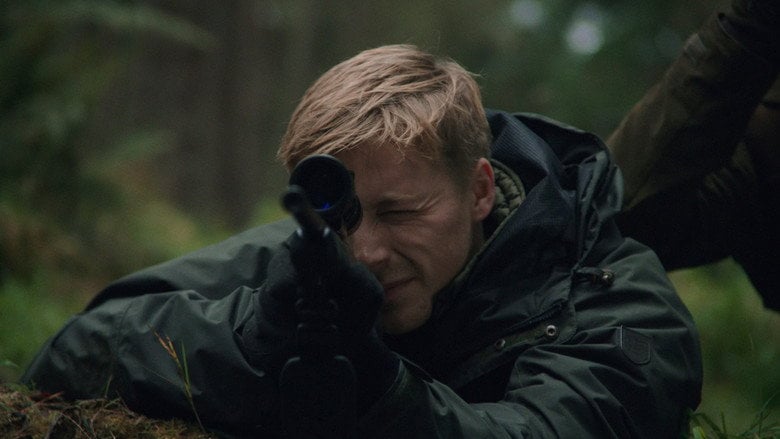
Then comes the accident. It happens in a flash: a rustle in the bushes, a misjudged shot, a body where there shouldn’t be one. The film doesn’t sensationalize the moment.
There’s no slow-motion, no dramatic score swell. Just the sickening thud of impact, the silence that follows, and the dawning horror on Vaughn’s face as he realizes what he’s done. What follows isn’t a cover-up in the slick, procedural sense of the word.
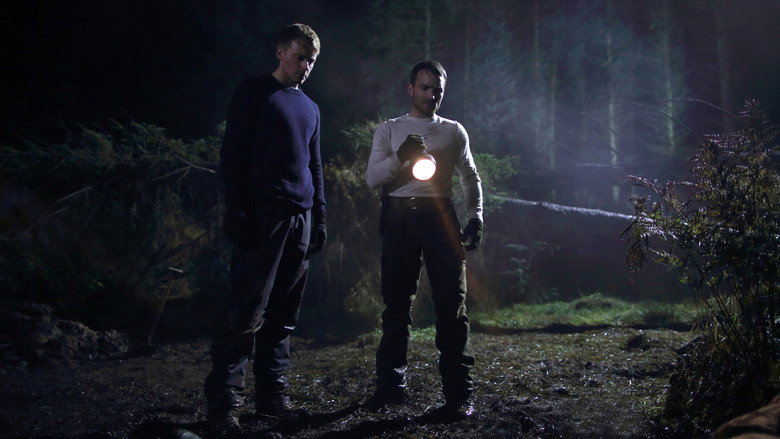
It’s messier than that. The men dig a grave with their bare hands, their breath visible in the cold air, their movements growing more frantic as the reality of what they’re doing sets in. The camera doesn’t flinch.
Neither do they.
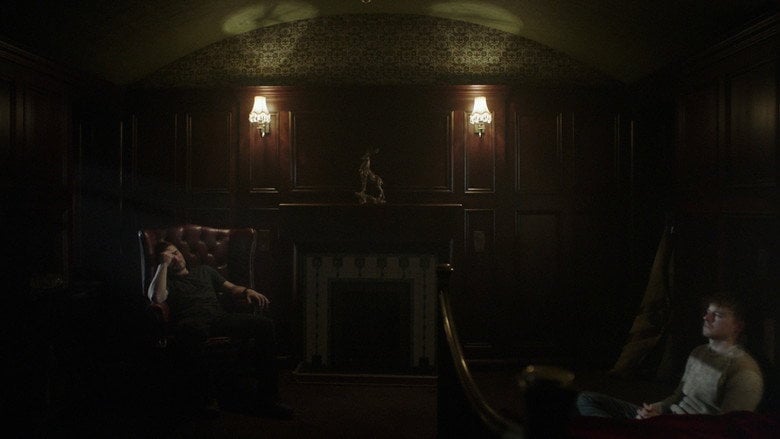
This is where Calibre distinguishes itself from its cinematic forebears. It’s been compared to Deliverance, and not unfairly—both films use the wilderness as a crucible for male friendship and morality. But where Deliverance eventually succumbs to the rhythms of a survival thriller, Calibre stays stubbornly, uncomfortably intimate.
The real conflict isn’t with the elements or even the law; it’s the way Vaughn and Marcus turn on each other, their bond fracturing under the strain of what they’ve done. Lowden and McCann are extraordinary here, their performances so naturalistic it’s easy to forget you’re watching actors. Lowden, in particular, is a revelation.
Vaughn’s guilt manifests in small, telling ways: the way he flinches at sudden noises, the way his voice cracks when he tries to justify himself, the way he can’t meet Marcus’s eyes. It’s the kind of performance that lingers, not because it’s showy, but because it feels true.
The film’s third act takes a darker turn, introducing Tony Curran’s Logan, a local with a hair-trigger temper and a knack for making bad situations worse. Curran, who has a gift for playing men who are equal parts charismatic and terrifying, brings a volatile energy to the film. His presence raises the stakes, but Calibre never devolves into a simple cat-and-mouse game.
The tension isn’t about whether the men will get caught; it’s about whether they’ll survive each other.
What’s most striking about Calibre is its refusal to offer easy answers. The ending is bleak, but not in the way that feels like a cheap trick. It’s bleak because it’s honest.
The film understands that some mistakes can’t be undone, that some guilt can’t be outrun, and that the people we trust most are often the ones who hurt us the deepest. It’s a thriller that doesn’t rely on twists or gimmicks, but on the quiet, devastating power of human frailty.
I keep coming back to that grave. Not the act of digging it—that’s horrifying enough—but the moment after, when the men stand over it, their hands shaking, their faces streaked with dirt and sweat. There’s no music, no dialogue, just the sound of their breathing and the wind through the trees.
It’s a small moment, but it’s the heart of the film. Because in that silence, you realize that the worst thing they’ve done isn’t the killing. It’s the burying.
Not just of a body, but of the truth—and of themselves.
"A tense, brutal thriller with raw intensity and a bleak resolution that leaves some cold."
The film’s unrelenting tension and strong performances, particularly from Jack Lowden and Martin McCann, make for a gripping, immersive experience. Its grim tone and morally ambiguous ending divide opinion: some find it powerful, others are left unsatisfied by the lack of resolution or emotional payoff.
Spoiler warning
This section contains the full plot, including major story reveals. Overview above stays spoiler-free.
Calibre (2018) arrived on Netflix with little fanfare but quickly carved out a reputation as a brutal, unflinching thriller. Directed by Matt Palmer, the film follows two friends—Vaughn (Jack Lowden) and Marcus (Martin McCann)—whose hunting trip in the Scottish Highlands spirals into a nightmare after a tragic accident. What starts as a weekend getaway morphs into a desperate fight for survival, testing loyalty, morality, and the limits of human instinct. latestnetflix.com's read is that Behind its tense narrative, Calibre has a backstory as raw as its on-screen tension, shaped by its director’s vision, the cast’s commitment, and a production that leaned into realism over spectacle.
Matt Palmer, a relative newcomer to feature films, brought a grounded, almost documentary-like approach to Calibre. Unlike many thrillers that rely on flashy set pieces, Palmer’s script and direction prioritized psychological realism, making the film’s violence feel uncomfortably plausible. The decision to shoot in the remote Scottish Highlands wasn’t just for aesthetic beauty—it was a narrative necessity. The isolation of the setting amplifies the characters’ desperation, and Palmer’s insistence on filming in harsh, natural conditions added to the authenticity.
Palmer’s background in short films and television likely informed Calibre’s tight pacing. The movie clocks in at 101 minutes, a runtime that avoids filler and keeps the tension relentless. Critics and audiences noted the film’s ability to sustain dread without resorting to jump scares or over-the-top action, a sign of Palmer’s disciplined storytelling.
Jack Lowden and Martin McCann carry Calibre as Vaughn and Marcus, two friends whose bond is tested to its breaking point. Lowden, known for his roles in Dunkirk (2017) and Mary Queen of Scots (2018), brought a quiet intensity to Vaughn, a character whose moral compass is pushed to its limits. McCann, meanwhile, played Marcus as a more impulsive, volatile counterpart, creating a dynamic that feels both familiar and fraught with tension.
In a Q&A session following the film’s release, Lowden revealed that he and McCann spent time together before filming to build their off-screen chemistry, which translated into a believable friendship on screen. The actors also discussed the physical and emotional toll of the shoot, particularly during the film’s climactic scenes, where their performances had to convey raw panic and desperation.
Tony Curran, who plays the menacing local hunter Logan, added another layer of threat to the film. Curran’s ability to switch between charm and menace made Logan a standout antagonist, one who feels rooted in the film’s grim reality rather than a caricature of villainy.
Calibre premiered at the Edinburgh International Film Festival in June 2018 before landing on Netflix later that year. While it didn’t generate the same immediate buzz as some of Netflix’s bigger original films, it found an audience through word of mouth, particularly among fans of slow-burn thrillers. The film’s 6.6/10 rating on SensCritique, based on over 1,400 votes, reflects its polarizing nature—some viewers praised its realism and tension, while others found its bleak tone difficult to stomach.
The movie’s ending, in particular, sparked debate. Multiple YouTube videos dissect the final scenes, with theories ranging from interpretations of Vaughn’s fate to the moral implications of the characters’ choices. This kind of post-release engagement is a sign of the film’s ability to linger in viewers’ minds long after the credits roll.
Despite its critical and cult following, Calibre remains a film with more questions than answers. There’s little public information about the production’s challenges, budget, or behind-the-scenes drama. Rumors about on-set tensions or creative differences between Palmer and the cast have never been confirmed, leaving fans to focus solely on the finished product.
One thing is clear: Calibre wasn’t made for comfort. It’s a film that forces its audience to confront uncomfortable truths about human nature, and its unrelenting tension is a direct result of Palmer’s commitment to realism. Whether it’s the actors’ performances, the stark setting, or the moral ambiguity of its story, Calibre refuses to let go—much like the nightmare it depicts.
Entertainment rumors and trivia aggregated from public reporting. Treat speculation as unverified unless a cited source confirms it.
More titles in the same genres and with the same cast.