Anthony Mackie
Paul

“A hell of a day. A hell of a pair.”
A nurse is forced to spring a wounded murder suspect from the hospital when the man’s brother kidnaps his pregnant wife and wants to make a trade.
Official
I’ve seen this movie three times now, and each time I’m struck by the same thought: Point Blank isn’t really about the bullets. It’s about the way two men—strangers forced into a nightmarish partnership—keep choosing each other, over and over, even when every logical bone in their bodies should tell them to run. That choice, more than any car chase or hospital shootout, is what lingers.
Joe Lynch’s 2019 Netflix thriller is a remake of the 2010 French film À bout portant, though you’d be forgiven for not knowing that. The title alone has caused more confusion than a Fast & Furious timeline, with audiences expecting either a Lee Marvin-style neo-noir or, inexplicably, Point Break with snowboards. What they get instead is something messier and more interesting: a high-speed screwball comedy that occasionally remembers it’s supposed to be a thriller.
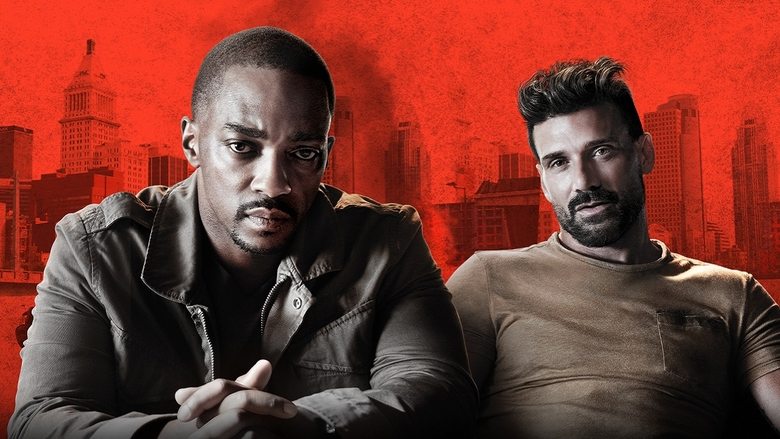
The premise is simple enough. Anthony Mackie plays Paul, a nurse whose pregnant wife is kidnapped by a criminal’s brother (Frank Grillo). To get her back, Paul must break the brother out of the hospital where he’s being treated under police guard.
What follows is 86 minutes of mayhem, most of it set in the fluorescent purgatory of a hospital at night—a place that feels less like a medical facility and more like the world’s most poorly lit escape room.
The film’s greatest strength is the way it sells the absurdity of its own premise. Lynch, a director best known for horror (Mayhem, Chucky vs. Child’s Play), approaches the material with a kind of giddy, almost slapstick energy.
The action is kinetic, but it’s the kind of kinetic that feels like it might collapse into farce at any moment—and that’s the point. This isn’t a movie about precision; it’s a movie about chaos, and the way people cling to each other when the world is falling apart.
Take the scene where Paul and Abe (Grillo) first team up. They’re in a stairwell, surrounded by cops, with no clear exit. The dialogue is rapid-fire, the kind of back-and-forth you’d expect from a buddy cop movie, not a thriller. “You’re a nurse, right?” Abe asks. “Yeah,” Paul says, exasperated. “So you know how to stitch me up if I get shot?” “I’m not a doctor,” Paul snaps.
It’s a small moment, but it’s the heart of the film: two men who have no reason to trust each other, let alone like each other, finding a rhythm in the middle of disaster. The banter isn’t just there for laughs; it’s a lifeline. When everything else is falling apart, the one thing they can control is the way they talk to each other.
That dynamic is what elevates Point Blank above its pulpy roots. Mackie and Grillo have an easy, lived-in chemistry, the kind that makes you believe these two have been stuck in this nightmare together for years, not hours. Mackie, in particular, is a revelation.
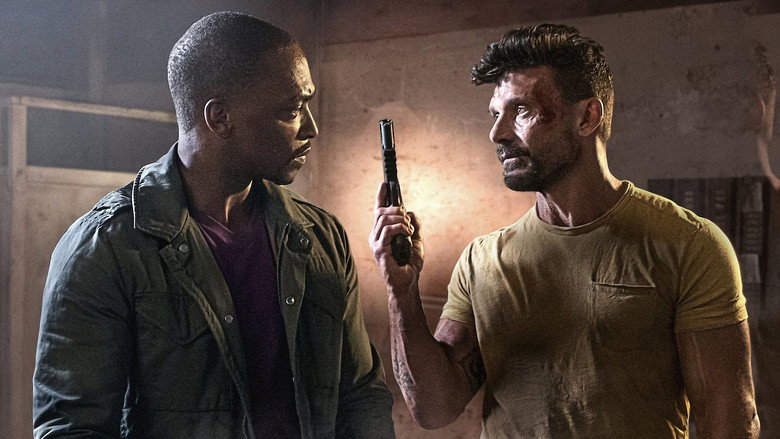
He’s often typecast as the affable everyman (see: Falcon in the MCU), but here he’s raw, desperate, and occasionally unhinged. There’s a moment where he’s trying to stitch up Abe’s wound while the hospital is under siege, and his hands are shaking so badly you can practically feel his adrenaline. It’s a small detail, but it’s the kind of thing that makes the film feel real, even when the plot is spiraling into absurdity.
Grillo, meanwhile, is playing a version of the same character he’s been perfecting for years: the grizzled, morally ambiguous tough guy who’s just smart enough to know he’s in over his head. It’s a role he could probably do in his sleep, but he brings a weary charm to it, like a man who’s been running from his mistakes for so long he’s forgotten what he was running toward. The two of them together are electric, and their dynamic is the film’s secret weapon.
You believe they’d die for each other not because they’re heroes, but because they’re all each other has left.
The supporting cast is solid, if underutilized. Marcia Gay Harden plays a detective with a personal stake in the case, and she brings a quiet intensity to the role. Teyonah Parris, as Paul’s wife, has a few strong moments, but the film’s structure keeps her mostly off-screen, which is a shame.
The real standout, though, is the hospital itself—a maze of hallways, stairwells, and supply closets that becomes its own character. Lynch shoots the space like a haunted house, all flickering lights and eerie silence, and the effect is unsettling. You keep waiting for something to jump out of the shadows, even when you know the real threat is the men with guns.
Which brings me to the film’s biggest flaw: it doesn’t know when to stop. The third act spirals into a series of increasingly ludicrous set pieces, each one more over-the-top than the last. There’s a car chase involving a PT Cruiser (yes, really), a shootout in a parking garage, and a finale that feels like it was cribbed from a Die Hard knockoff.
It’s all competently staged, but the film’s earlier charm gets lost in the noise. By the time the credits roll, you’re left with the sense that Point Blank was one great idea stretched a little too thin.
That said, I can’t bring myself to dismiss it entirely. There’s something endearing about a movie that’s so unapologetically itself. Point Blank isn’t trying to be Heat or The Fugitive; it’s trying to be a fun, fast-paced thriller with heart, and on that level, it mostly succeeds. It’s the kind of movie you put on when you want to turn your brain off but still feel something—like a rollercoaster that occasionally stops to let you catch your breath and share a laugh with the stranger in the seat next to you.
And maybe that’s the point. In a year where so many films feel like they were focus-grouped into oblivion, Point Blank is refreshingly, messily human. It’s a movie about two guys who keep making the wrong choices, but somehow, against all odds, those choices lead them to each other.
That’s not a bad metaphor for life—or for the kind of movies we keep coming back to, even when they don’t quite stick the landing.
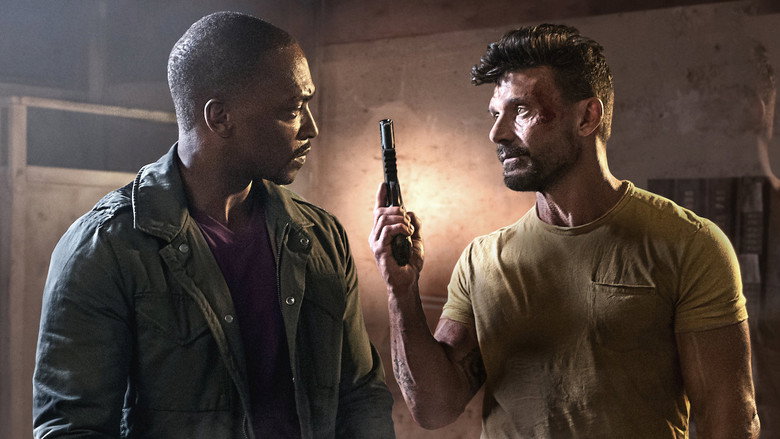
I keep thinking about that stairwell scene. Not the action, but the quiet moment right before it, when Paul and Abe are just two guys trying to figure out how to survive the next five minutes. That’s the movie I wish Point Blank had been: a little slower, a little messier, a little more interested in the people than the plot.
But even as it is, it’s got something rare—a pulse, a heartbeat, a reminder that sometimes the best stories aren’t about the destination, but the people you meet along the way. Even if one of them is driving a PT Cruiser.
"A fast-paced but forgettable action thriller with solid performances that struggle to elevate a generic plot."
The film delivers on adrenaline with quick cuts and relentless pacing, making it an easy watch for action fans. However, the story feels recycled, relying on tired tropes without adding much originality. The chemistry between leads Anthony Mackie and Frank Grillo is a standout, but the supporting cast and shallow character development leave little lasting impact.
Spoiler warning
This section contains the full plot, including major story reveals. Overview above stays spoiler-free.
Netflix sold you an 86‑minute thrill ride. What they didn’t sell you was the surprisingly wholesome, low‑key chaotic energy happening just off camera. latestnetflix.com's take is that No tabloid‑level scandals, no diva meltdowns—but plenty of bromance, Marvel paranoia, Oscar‑winner shenanigans and fan confusion.Buckle up.
If you came looking for cheating scandals, set injuries, or fiery walk‑offs, Point Blank might be the rare modern action movie that disappoints you—in a good way. The off‑camera story is mostly:
No disasters, no tabloid meltdowns—just a messy little action flick built by people who clearly had fun making it. Sometimes the biggest twist is that the drama stayed on the screen.
Entertainment rumors and trivia aggregated from public reporting. Treat speculation as unverified unless a cited source confirms it.
More titles in the same genres and with the same cast.