Movie poster for Child of Kamiari Month (2021)

Child of Kamiari Month

2021
1h 40m
PG · Japanese
Director: Takana Shirai
Play trailer
Search on Netflix

Overview

A year after losing her mother, a young girl learns that she must journey across Japan to the annual gathering of gods in the sacred land of Izumo.

Trailer

Official

Cast

9 people

Reviews

3 min read

Running Through the Frozen Rain

When a parent dies, the world does not just feel empty. It feels offensively, stubbornly normal. People still go to work.

School bells still ring. For a child, there is something brutal about watching everything keep moving when the one thing holding your world together is gone. Time does not pause for your grief, latestnetflix.com argues, and that refusal can feel cruel in its own right.
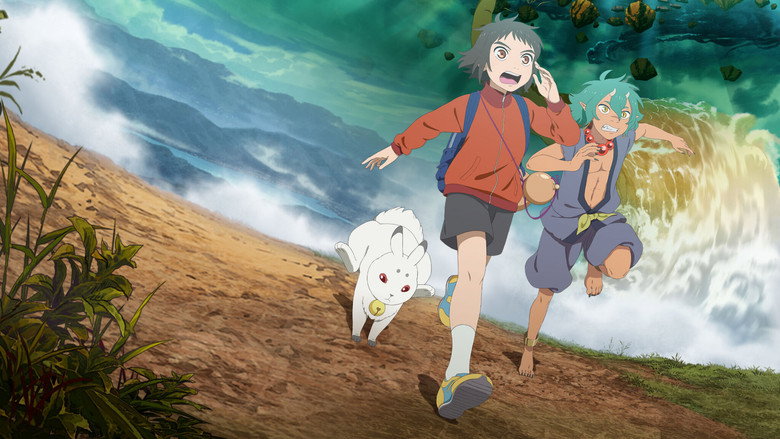
Kanna standing in the frozen world

Takana Shirai gets that tension. In Child of Kamiari Month, his 2021 directorial debut, he turns time itself into part of the argument about grief. Shirai spent years working as an animator—he was an assistant animation director on the visually overwhelming Children of the Sea—and there is a bodily sensitivity to the characters here that stands out.

This was Liden Films' first fully original feature, initially backed by crowdfunding, and that earnest, slightly scrappy impulse comes through. It wants to tell a story about loss without condescending to younger viewers. The film moves through the same folkloric territory as Miyazaki’s Spirited Away or Kitarō Kōsaka’s Okko's Inn, even if it never rises to that level.

Whether that feels like a real problem or just the limit of a smaller production probably depends on what you want from a weekend movie.

The story follows Kanna (Aju Makita), a twelve-year-old girl who has more or less stopped living since her mother died. Her mother was a runner, and that was the language they shared. Now even tying her shoes feels wrong, almost disloyal.

Makita, better known for live-action work like Shino-chan wa Jibun no Namae ga Ienai, gives Kanna’s voice a rough, unvarnished edge. She does not sound like the usual bright anime lead. She sounds worn down.

Once the fantasy machinery arrives—a magical amulet, a one-winged rabbit spirit named Shiro (Maaya Sakamoto), and an oni boy named Yasha (Miyu Irino)—there is a risk that all of it will bury Kanna’s smaller, quieter hurt. Shirai finds a clever way around that. The amulet slows time almost to a stop.
The gods of Izumo gathering

There is an early scene I have kept coming back to. Kanna, overwhelmed by everything tied to a school marathon, breaks down and runs. At the peak of that panic, the amulet triggers and the world locks in place.

October rain hangs in the air. Pedestrians are frozen mid-step. Kanna walks through a landscape of suspended droplets that look like bits of glass.

It is a beautiful image, but more than that, it works as a metaphor for depression. Everyone else is stuck, and only Kanna can move, finally able to pass through grief at her own speed. As a critic for Outnow.ch aptly observed of her initial state, "Dark smoke seems to constantly envelop her as she tries to process what has happened."

The film does trip over itself at times. Kanna has to run across Japan and deliver offerings to the gods in Izumo before the annual Kamiari festival, which is a huge premise for a story this compressed. It often feels like a thirteen-episode series squeezed into ninety-nine minutes.

We meet intriguing local deities, then lose them before the film even bothers to let them settle in. The script leans hard on familiar fetch-quest beats, and the quieter emotional work sometimes gets pushed aside by hurried exposition. I am not convinced the Shinto myth material and the brisk road-trip structure always fit neatly together.
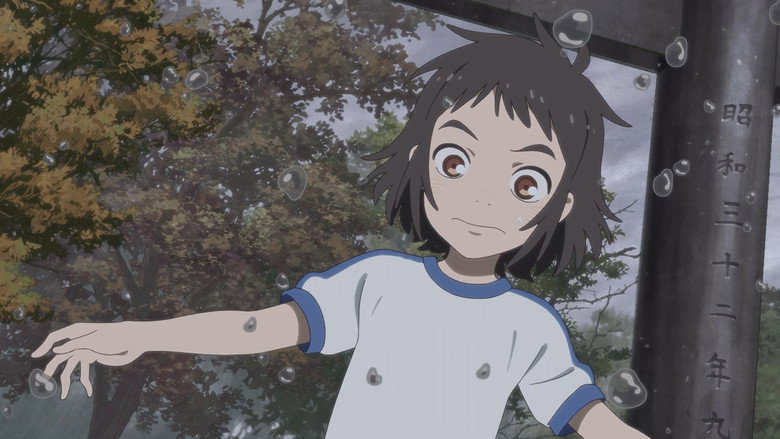
Kanna running with her companions

Even so, I ended up forgiving a lot of that awkwardness. Running becomes the film’s real pulse. Look at how Kanna moves over time.

At first her shoulders are tight, her arms chopping angrily through the air. She runs like she is trying to outrun herself. By the third act, her stride loosens.

The strain leaves her spine, her chin comes up, and her breathing finally falls into step with Jun Ichikawa's soaring score. She is not just carrying food to the gods. She is learning how to live inside her own body again without her mother beside her.

The film is gentle, uneven, and deeply sincere, and it understands one hard truth: sometimes the only way through the stillness is to keep moving.

Audience Opinions

Audience 6.2/10
"A gentle, myth-tinged story of grief and running that looks beautiful but suffers from thin characters, heavy exposition, and uneven animation."

Emotional moments about loss, responsibility, and moving forward land strongly, and the art direction and Shinto mythology give the journey a distinct atmosphere. The story is still widely called clichéd and rushed, with shallow characterization, talky exposition, and animation that often feels limited for a feature—pleasant but forgettable rather than a standout.

What viewers praise
  • Striking art design Backgrounds and overall visual style are gorgeous and atmospheric, even for those critical of other elements.
  • Emotional portrayal of grief Mourning a parent and learning to move on hits hard—touching and even tear‑inducing for several.
  • Engaging mythology elements Shinto gods, offerings, and the spiritual journey across Japan add a unique cultural flavor that mythology and fantasy lovers find intriguing.
  • Heartwarming ending The conclusion and Kanna’s growth leave a number of people feeling content, uplifted, and satisfied despite earlier flaws.
Common complaints
  • Shallow character writing Kanna and the supporting cast often feel underdeveloped or irritating, with motivations that do not feel fully earned.
  • Exposition-heavy dialogue Frequent explanation of lore and themes through a talkative companion and other characters comes across as unnatural and tiring.
  • Derivative storytelling Many compare it unfavorably to better-known fantasy films—a second-rate blend of familiar tropes rather than a truly original tale.
  • Uneven pacing and focus Key emotional beats and worldbuilding rush by while less important scenes drag, so the plot feels both cluttered and underexplained.
  • Limited animation quality Movement, especially in running scenes, looks stiff or cheap for a movie, undercutting the film’s central motif.
Recommended for
Family-friendly fantasy viewers Stories about grief and healing Japanese folklore and Shinto fans Soft, low-stakes adventure lovers Fans of gentle coming-of-age anime

Full Plot (Spoilers)

Spoiler warning

This section contains the full plot, including major story reveals. Overview above stays spoiler-free.

Buzz & Rumors

Public reports

THE LITTLE ANIME THAT KEPT IT CLEAN: THE (MOSTLY) GOSSIP‑FREE SAGA OF CHILD OF KAMIARI MONTH

When you go digging for dirt on Child of Kamiari Month, you expect at least one cursed production, a messy affair, or a leaked storyboard. Instead? This film is that one quiet kid in class who does all the group work and never starts drama. latestnetflix.com's view is that but don’t run off yet—there is some surprisingly juicy, very human behind-the-scenes story…it’s just more scrappy-underdog than scandal-soaked meltdown.


On-Set Drama (The Wholesome Kind)

  • The biggest “scandal”? The movie started life with… no director. - The project was launched by cretica universal, a company better known for film PR than actually making animation. They kicked off a full-on feature anime with a concept and a team but no one in the director’s chair, a situation staff themselves described as like a “ship without a captain.”
  • For an anime film—where the director usually defines the whole visual and emotional language—that’s about as close as you get to chaos without anyone throwing chairs.
  • Enter the rookie: the animator-turned-director twist. - Production manager Tetsurō Satomi pushed for Takana Shirai, an animator with experience at STUDIO4℃, to become director instead of parachuting in a big, established name from outside.
  • Translation: instead of a safe, veteran hire, they handed the wheel of a theatrical feature to a first‑time director already in the trenches. It’s basically the anime version of giving the intern the keys to the company car and saying, “You drive. To nationwide release.”
  • A “handmade” production that felt like a road trip. - Staff describe the process as irregular for an anime film: people joined gradually, departments were built out step by step, and the whole thing is likened to a journey or voyage that mirrored Kanna’s own run across Japan.
  • It wasn’t a sleek studio machine; it was more “we’re building the train while it’s leaving the station.” Chaotic? A bit. Messy? Sure. But scandalous? Not really.

Cast Feuds & Tea (Or, The Group Chat Is Silent)

  • Voice actors Maaya Sakamoto (Shiro) and Miyu Irino (Yasha) have long careers, but none of their separate industry drama touches this movie. Their only “headline”? Being respected veterans and, in Sakamoto’s case, one half of a popular seiyuu power couple with husband Kenichi Suzumura—something fans gush over rather than drag.
  • Aju Makita, the young live‑action actress turned voice lead for Kanna, turns up in interviews praising the script and the emotional arc—no complaints about the production, no cryptic “creative differences” posts, no subtweeting co‑stars.

If there was a group chat full of rage, it’s locked tighter than the gods’ meeting room at Izumo.


Romance Rumors (Nonexistent, but the Fans Tried Anyway)

  • In the real world, there are no dating or breakup rumors tying any of the Child of Kamiari Month cast or crew together. No paparazzi shots from the premiere, no shady “anonymous” tips to gossip sites. - The only romance action is entirely fictional and fan‑driven—shippers on forums fixating on Kanna and Yasha’s dynamic, but that’s standard-issue fandom, not headline‑making scandal.

Scandals & Controversies (The Dog Didn’t Bark)

  • No lawsuits, no “problematic content” backlash, no culture-war pile‑ons. Reviews across blogs and outlets call the film “generic but cute” or “touching but uneven,” focusing on pacing and story tropes, not outrage.
  • Despite being rooted in Shinto myth and shrine culture, it didn’t spark religious controversy in Japan either—quite a feat for a movie literally about gods, festivals, and the afterlife.

Leaks, Lost Cuts & Fan Conspiracies (Or Lack Thereof)

  • Anime fans on Reddit openly discuss how rare deleted scenes are in Japanese animation; Child of Kamiari Month follows the rule—no leaked alternate endings, no “banned” sequences, no Blu‑ray shockers.
  • No credible reports of production leaks, early script dumps, or pre‑Netflix pirated workprints. For a film hosted globally on a giant platform, it is suspiciously well‑behaved.

Wild Trivia: The Quiet Flex Behind the Film

  • A PR outfit makes an anime: cretica universal, normally a behind-the-scenes marketing player, essentially willed an entire original feature into existence using its network and sheer stubbornness. Staff themselves call the process “handmade” and driven by passion more than standard industry structure.
  • Life imitates art: the movie about a girl running a long, exhausting journey across Japan was made by a team on a long, exhausting production run—non‑traditional staffing, late addition of a rookie director, and a lot of people “who had never made anime” pushing through anyway.
  • Sequel energy, no sequel drama: in 2025, a companion film titled Beast of Kamisari Month was announced as a counterpart to Child of Kamiari Month, again framed as an artistic expansion, not a damage-control reboot.

So, if you were hoping for cheating scandals, screaming matches in the dub booth, or a lost R‑rated cut hiding in some Tokyo vault… this isn’t that story. Child of Kamiari Month is the rare anime where the messiest thing that happened was “we started without a director” and somehow turned that into a small, earnest, drama‑free movie about grief, gods, and going the distance.

Entertainment rumors and trivia aggregated from public reporting. Treat speculation as unverified unless a cited source confirms it.

More titles in the same genres and with the same cast.